
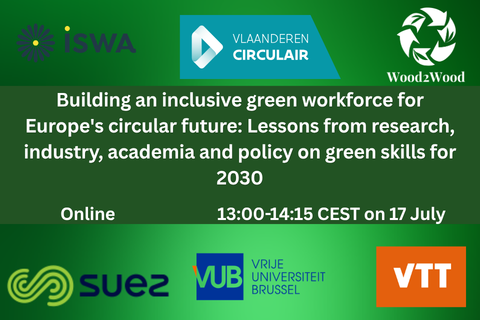
Building an inclusive green workforce for Europe's circular future: Lessons from research, industry, academia and policy on green skills for 2030
The shift to a circular economy is not just a technological challenge - it is a human one. Between 2000 and 2022, employment in the environmental economy grew faster than in the overall economy in the European Union, indicating real opportunity. However, the transition to a green economy also carries risks: skills shortages are already straining businesses and the impacts of the transition are unlikely to be felt equally — with some sectors, regions and workers, and in particular women, facing far greater disruption than others.
The EU policy architecture is ambitious. The European Green Deal, the Clean Industrial Deal, the Just Transition Mechanism and instruments such as the European Social Fund Plus and the Recovery and Resilience Facility all point in the same direction. But ambition on paper does not automatically translate into workforce readiness on the ground.
EU industries are navigating multiple constraints: supply chain dependencies, intensifying global competition, high energy prices and competing investment priorities.
This webinar will explore how Europe is building the workforce it needs to deliver its circular ambitions by 2030. Speakers from research, industry, academia and regional policy will examine what green and circular skills development looks like in practice, who is being left behind and what systemic change is needed to ensure the transition is both ambitious and fair.
Drawing on lessons from EU-funded projects, industry, academic research and policy, the conversation will move beyond technical solutions to ask the key question: can Europe build a circular-ready workforce that is skilled, inclusive and leaves no worker or region behind?
This webinar will take place at 13:00-14:15 CEST on 17 July. Registration.