
Nine EU-funded projects focused on making the textiles industry more circular
Date
23 Jul 2026
News type
Sector
Scope
Key Area
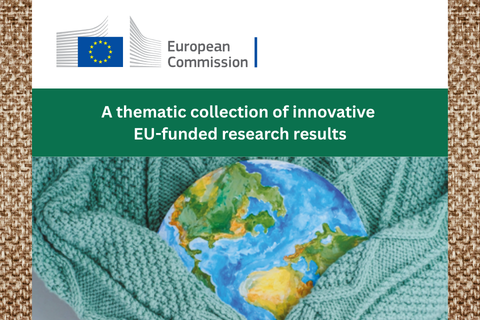
The textile industry is fundamental to the economy. However, it is also both a major consumer of resources and significant emitter of greenhouse gases and pollution. This CORDIS Results Pack on the future of textiles highlights how the EU is tackling this challenge, funding research and innovation to create a sustainable, climate-neutral and circular textile sector.
It showcases nine Horizon research projects focused on optimising resource use and minimising waste across the entire textile production and consumption cycle:
- The Glaukos project tackled ocean pollution by plastics from textiles and fishing gear by developing bio-based textile fibres and textile coatings.
- The New Cotton project applied chemical recycling technology to pioneer a revolutionary method for converting discarded textiles into a unique new textile fibre that looks and feels like cotton.
- HEREWEAR valorised three waste streams, seaweed, manure and straw to produce man-made cellulosic fibre that can be used instead of cotton.
- The MY-FI project developed non-woven fabrics made of mycelium fibres for the textile industry (mycelium leather), which provide an alternative to plant-based and animal-based products.
- SCIRT improved the quality of recycled yarn by developing technologies for accurately sorting and trimming textiles at high speed and a True Cost Calculator for assessing a garment’s real societal cost.
- The TRICK project investigated blockchain data traceability, uncovering many underlying issues that need to be addressed in the textile value chain to ensure effective textile traceability.
- T-REX piloted an EU-based circular textile value chain for post-consumer textile waste,
- CISUTAC developed and implemented three semi-industrial-scale pilots to increase textile circularity in Europe.
- tExtended created a knowledge-based blueprint for the optimised circular flow of textiles for a more eco-friendly textile ecosystem.