
Event on 'One Year of Textile Waste Separate Collection' explores the challenges facing the textile value chain
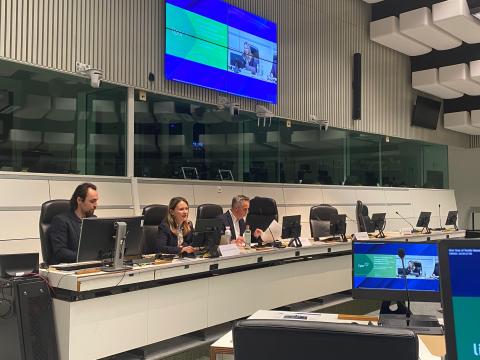
On 29 January, the European Committee of the Regions hosted Municipal Waste Europe for a partnership event on textile waste in which ECESP Coordination Group members RREUSE and Recycling Europe took part and Corina Murafa Benga, a member of the European Economic and Social Committee and one of the three EESC members attached to the ECESP, moderated a session on Municipalities in Action – Good Practices and Barriers.
The event – attended by policymakers, academics and representatives of the textile sector – took stock of the first year of mandatory separate collection of textile waste in the EU. It focused on implementation challenges, investment needs and policy levers to enable effective circularity in the textile sector.
The discussions highlighted a number of systemic issues. On the supply side, the event highlighted that structural overproduction of textiles overwhelms limited storage capacity, while the declining quality and wide variety of materials complicate sorting and recycling. The structural imbalance between supply and demand means regional surpluses coexist with shortages elsewhere.
Speakers also raised concerns on the demand side, as demand for recycled and reused textiles is insufficient and inconsistent. Without reliable outlets, collected textiles struggle to achieve real circularity, undermining both economic viability and public trust. Instead, demand must be stimulated with pull measures, such as mandatory targets for recycled fibre content, incentives and obligations for textile producers.
Lastly, speakers pointed out that the policy framework should be strengthened: coherence between industrial policy and circular economy objectives is key. Although insufficient without demand-side measures, Extended Producer Responsibility schemes need to be improved. National-level coordination and transparency of these schemes should be bolstered, with effective eco-modulation of fees and the inclusion of Producer Responsibility Organisations.