
The European List of Ship Recycling Facilities has been updated!
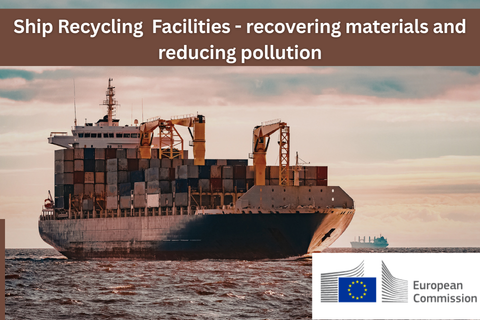
Ship recycling plays a key role in advancing the circular economy - after all, ships do contain large amounts of high-quality steel and other valuable materials. Keeping these resources in use for longer cuts demand for virgin raw materials and supports more sustainable industrial value chains.
The EU has considerable leverage in this area: European ship owners possess around 30% by weight of the world's fleet. The problem is that many ships are dismantled outside the EU, mainly in South Asia, where low wages, inadequate tools and little protection often result in injuries, deaths and significant pollution.
The EU’s Ship Recycling Regulation was adopted to provide a regulatory framework for the recycling of large seagoing vessels sailing under an EU Member State flag. It aims to prevent, reduce and minimise accidents, injuries and other negative effects on human health and the environment when ships are recycled and the hazardous waste they contain is removed.
Since 31 December 2018, this Regulation has required all large seagoing vessels sailing under an EU Member State flag to be recycled at approved facilities from the European List. These facilities can be located inside or outside the EU, but they must comply with a series of requirements related to workers' safety and environmental protection.
The List is regularly updated, adding ship recycling facilities which meet the requirements and removing those that don't.
The European Commission has just adopted the 15th edition of the European List of Ship Recycling Facilities. The updated List now contains 41 ship recycling facilities: 30 in Europe (EU, Norway and the UK), 10 in Türkiye and one in the United States. Several of these shipyards can recycle large vessels.