
Machinery manufacturing in the circular economy – an unexplored ally in the circular transition?
The transition to a circular economy is reshaping Europe’s industrial landscape, yet the role of machinery manufacturing remains underexplored.
As a key enabler of durability, remanufacturing and resource efficiency across value chains, the sector has significant potential to strengthen Europe’s competitiveness and resilience.
This workshop brought together modelling insights, industrial experience and policy perspectives to better understand this role. It explored how current EU frameworks align with industrial circumstances and where gaps may persist.
Together, participants identified practical policy messages to support a more circular and competitive European machinery industry.
Key takeaways:
Machinery is an underexplored but strategic circular economy sector. It is both a major material- and emissions-relevant product category and a key enabler of circular production across the wider economy.
The current machinery framework is safety-oriented. EU machinery legislation secures safety and free movement, while circularity is mainly addressed through adjacent sustainability and product-policy frameworks.
New EU policy initiatives could be decisive. The Circular Economy Act and European Product Act could improve rules for circular products, secondary raw materials, documentation, digital product passports and market surveillance.
Data quality is a major bottleneck. LCA and input-output evidence show the scale of the issue, but results vary widely. Better, more systematic data on material composition, use, condition, maintenance history and end-of-life pathways are needed.
Use-phase impacts dominate today, but manufacturing will matter more. As machinery becomes more energy efficient and electrified, embodied emissions and material choices in manufacturing become more important.
Circular strategies should be tailored to machinery archetypes. Low-utilisation and high-manufacturing-intensity machinery may call for lifetime extension and sharing, while high-utilisation machinery may call for energy efficiency, retrofitting and modular upgrades.
Industrial cases show substantial savings. Examples from ELWEMA, Bosch, Liebherr and Herrenknecht demonstrate large potential for material savings, cost savings and embodied carbon reductions.
Trust and quality assurance are central. Clients need confidence that remanufactured parts are safe, certified, reliable and equivalent in performance to new parts. Diagnostics and information on the state of health of used components could help.
Waste classification can constrain circularity. Participants highlighted that returning products and components for reuse or remanufacturing can trigger waste-related obligations, creating legal and logistical barriers, particularly across borders.
Circularity requires value-chain collaboration. Successful reuse and remanufacturing depend on long-term relationships, supplier cooperation, feedback loops, quality control, and business models that allow components to return after use.
Digital product passports are promising but not sufficient alone. They can support transparency and compliance, but their value depends on what data they contain, how accessible the data are, and how the information is used to enable practical decisions.
Policy alignment matters. Stakeholders called for better alignment across product safety, chemicals, repairability, waste, raw materials and sustainability reporting frameworks, while recognising that policy must balance circularity with safety, environmental protection and competitiveness.
Our speakers:

Sebastian Edmaier, Policy Officer, DG GROW, European Commission
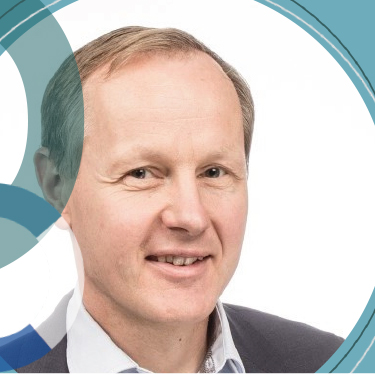
Edgar Hertwich, Professor at Norwegian University of Science and Technology and the International Institute for Applied Systems Analysis

Tobias Viere, Professor of Energy and Material Flow Analysis at the Institute for Industrial Ecology at Pforzheim University

Alejandro Arias Castillo, Researcher the Institute for Industrial Ecology at Pforzheim University

Dominic Schultze, Circularity expert and engineer at Herrenknecht