
Vorarlberg Environmental Festival: a circular approach to event organisation!
Ghörig Feschta is a programme from Vorarlberg, Austria that promotes sustainable event culture. It is run by the Association of Municipalities of Vorarlberg and contributes to the Green Events Austria network. Their approach shows that sustainability can be achieved through small, creative and practical measures.
One of their biggest projects to date is the annual Umweltfestival (Environmental Festival). Rather than creating an event exclusively for sustainability enthusiasts, the festival combines culture, family activities, community engagement and environmental education to attract a diverse audience.
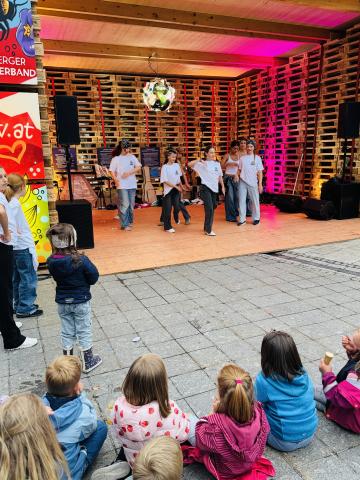
In 2026, the centrepiece was a stage constructed entirely from 420 Euro pallets and 20 ratchet straps, demonstrating how materials designed for different purposes can be creatively reused. The programme combined entertainment with practical environmental awareness. Reducing waste was key, and a good way to reduce waste is to prevent it through thoughtful event design. Reuse was another top feature: families could exchange toys at the toy swap market, and visitors were encouraged to bring unwanted but reusable household items.
The Umweltfestival connects the circular economy with culture, social participation and community life. This audience development strategy lowers barriers and creates positive first experiences with sustainability for people who might otherwise never engage with environmental issues. In doing so, the festival demonstrates how the circular economy can become accessible, inclusive and relevant to everyday life, making lasting behavioural change more likely than information campaigns alone.
See the videos about the festival:
- Three key success factors are highlighted: cooperation with cross-sector partners, essential for reach and diversity; engaging audiences through community-based formats that may feel unfamiliar; reducing waste through intentional event design.
- Each year, the Umweltfestival has attracted 1000-1500 visitors.
- Meaningful event design significantly reduces waste (only 40 kg generated in 2026!).
- Involvement of children and schools strengthens intergenerational participation, while a yearly poster project on the circular economy reaches wider audiences.
- Cultural formats such as an open-air cinema and a circular economy pub quiz combine entertainment with education.
- Rotating host municipalities helps anchor the festival locally and create lasting impact.