
Building a circular economy with the EU Ecolabel
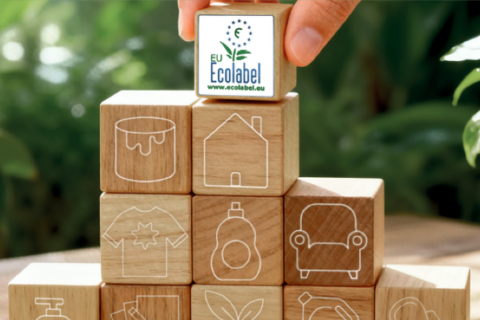
Europe's circular economy transition is changing what is expected from goods, services and businesses. Products need to last longer, use resources more efficiently, contain fewer harmful substances and generate less waste. At the same time, consumers need reliable information so they can choose genuinely worthy products and services.
The EU Ecolabel can help with this! It's a practical tool for linking policy objectives to everyday choices.
Circularity starts at the design stage. The choice of materials and ingredients, the durability of a product, its reparability, its chemical profile and its end-of-life options all influence whether resources remain in use or become waste.
The label covers a wide range of products, with specific criteria for each. For instance, for furniture, criteria address material sourcing, product lifetime, repairability and emissions.
It translates circular economy principles into requirements, pushing better choices across a product's life cycle.