
Energy and Climate Summit 2026: how to make the clean industrial transition feasible
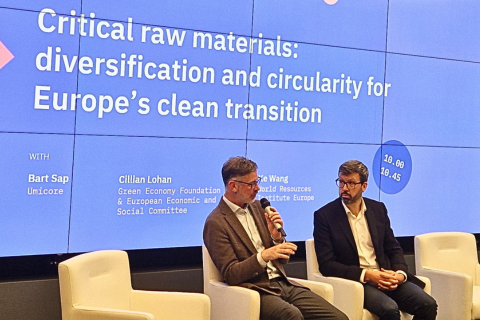
This summit on 13 October organised by Friends of Europe brought together ministers, European institutions, industry leaders, investors and civil society to focus on the practical choices to make the clean industrial transformation both investable and competitive.
Cillan Lohan, European Economic and Social Committee member who has been involved in the ECESP since it was set up, took part in the session on critical raw materials: diversification and circularity for Europe's clean transition. It looked at what role Europe can play in the global supply chain of critical raw materials, whether circularity is a real option, and the steps required to build a single market for secondary resources in Europe.
Cillian was positive about the impact and potential of the circular economy, while acknowledging that there are costs involved. The circular economy can deliver huge environmental benefits along with net economic gains and social benefits. It is becoming a strategic necessity for Europe's resilience, competitiveness and sustainable prosperity - but it must be recognised that it is a new way of doing business and this is always a difficult adjustment for the economy and society as a whole. Despite this, the business sector is already ahead of the legislation on the circular economy. There is a domino effect here: if a big company starts applying circular principles, the entire supply chain is pushed in the same direction.
The Circular Economy Act must provide a framework that rewards resource efficiency, circular business models and responsible resource consumption within planetary boundaries. That framework will be implemented by means of collaboration across value chains and with everyone playing a role in implementing the transition on the ground.
Social, environmental and economic: three sides of a triangle!