Loopami is a Milan-based platform which creates local communities of people interested in sharing and reusing items. It's still in the testing phase, but the initiative reduces consumption and waste while also forging closer ties between neighbours.
Digital Product Passports are intended to provide the information needed to repair a product, reuse its components and enable efficient disposal at end of life.
However, a DPP only does circular work if the person holding the product can read it. WIARA makes multilingual publication the default rather than a paid extra.
The Association for Farmers Rights Defence (AFRD) in Georgia is working with farmers, researchers, innovators, SMEs and local communities to develop circular value chains. Agricultural waste is used as a raw material, cutting waste and helping farmers.
DPP Envoy is a B2B software platform that helps manufacturers and importers build EU-compliant Digital Product Passports for batteries, textiles and construction products.
Their website also includes a wide range of practical guides which will be very useful for SMEs familiarising themselves with this area.
Biopolus has developed the BioMakery, a modular hub which processes wastewaste into useable resources. The BioMakery also offers awareness raising, energy recovery, urban farming and community function options – in a single attractive facility!
BIO2CHP is working to make decentralised biomass energy generation accessible for industries that lack economically viable waste recovery options. The organic waste used as input requires little pre-processing, and the units are suited to small and medium-sized agri-food companies.
The first pre-commercial pilot is being built in August 2026.
Biogas Thrace S.A. is setting up three biogas plants which will be supplied with agricultural and industrial organic waste by a network of local farmers working on long-term contracts. The farmers will receive fertiliser and reduce their waste disposal costs, and the plants will each generate 24GWh/y.
French industry discards a huge percentage of its production output. Maximum uses those valuable rejects to make standardised furniture, such as chairs, tables and benches.
In June 2026, the German federal government adopted an action programme to accelerate the circular transition. This is in line with the 2024 National Circular Economy Strategy.
Key points:
A platform for finding partners for projects and mobilising private capital.
The new funding programme Future Circular Economy will support innovative production processes, CRM recovery and digital applications from the end of 2026.
Recycled products will be given priority in public procurement.
A digitisation initiative covering DPPs, new data rooms and AI applications.
Legal improvements, such as a new national textile law and the intended ban on disposable electronic cigarettes, the amendments to the Circular Economy Act, packaging law and the Substitute Building Materials Ordinance.
The strategy aims to make a robust and successful circular economy a central pillar in driving Scotland’s innovation and growth towards a sustainable future.
Published in March 2026, it sets out what Scotland aims to achieve by 2045. It focuses on sectors and products in order to optimise the impacts of individual materials, such as plastics, critical materials and chemicals, across the supply chain as a whole.
The goal is to make Scotland a net zero and nature-positive nation, helped by the significant progress in transitioning towards a circular economy with sustainable levels of material use. Scotland will have a thriving economy that meets societal needs and is based on circular economy principles, and will have reduced the negative global impact of its production and consumption.
This strategy positions circularity as pivotal for Ireland's economic competitiveness, environmental sustainability and social wellbeing.
It aims to take Ireland from a linear model to a regenerative, closed-loop system where materials are kept in use for as long as possible. Actions and targets for specific sectors (construction, agriculture, retail, packaging, textiles & electronic equipment) are included, with a view to reducing material resource consumption and boosting repair, reuse and re-usable products and materials.
Core objectives:
Raise Ireland’s circular material use rate from 2.7%
Support economic expansion
Enhance competitiveness and innovation
Enhance social equity
Empower people
Actively support local authorities
Establish digitalisation as an enabler of the circular economy
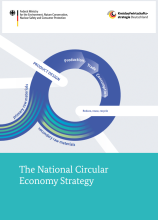
Germany's National Circular Economy Strategy adopts a strategic vision focused on reducing the consumption of primary raw materials. This approach is guided by the proposal from the International Resource Panel, under the United Nations Environment Programme (UNEP), which sets a global target of 6-8 tonnes of raw material consumption per capita per year by 2050.
The strategy considers every stage of the cycle: product design, material selection, production, maximising the use phase and, finally, reuse and recycling. It aims to prevent waste from being created in the first place. This can be achieved through smart product design, efficient manufacturing, extended product lifespans, easier repairability and maximising the recycling of all materials.
The aim is to boost circular construction in Noord-Holland, use fewer raw materials and thus contribute to the region's objective of switching to a fully circular economy by 2050 and reducing the use of primary raw materials by 50% in 2030.
The deal stipulates that all Participating Parties will:
apply circular harvesting as standard;
where possible, disclose how much released material has been processed in a circular manner and by what means;
share knowledge and collaborate on creating new circular chains and identifying and linking up existing chains, platforms and circular raw material hubs.
See also the Dutch and German versions of the deal.
Italy's National Strategy for Circular Economy identifies the administrative and fiscal tools designed to strengthen the secondary raw materials market in terms of availability, performance and costs; contribute to the achievement of climate neutrality objectives; and implement a roadmap of actions and measurable targets up to 2035. It sets out the legislative framework governing the objectives and the ways and means of achieving them.
Macro-objectives include: enhance competitiveness of secondary raw materials; consolidate EPR schemes; develop fiscal reforms promoting the circular economy; improve traceability of waste streams; mandatory minimum environmental criteria for GPP; focus on strategic industrial supply chains; support industrial symbiosis; and foster circular skills.
This programme builds on the solid foundations laid by previous programmes.
Chapter 1 sets out a vision of the circular economy up to 2030 and 2050.
Chapter 2 addresses general measures used to help deliver a circular economy in the Netherlands. They affect the various phases of the product value chains.
Chapter 3 describes measures that relate to specific product groups, such as furniture, plastic packaging and housing.
Chapter 4 addresses supporting measures for a number of topics, such as knowledge & innovation, the Circular Netherlands Accelerator!, market incentives, financing instruments and circular procurement.
Chapter 5 covers the collaboration between the parties involved in this programme.
Chapter 6 describes which resources are available for the plans in this programme.
On 17 July 2024, the Catalan government launched the Roadmap for the Circular Economy in Catalonia (Full de Ruta de l’Economia Circular a Catalunya, FRECC), highlighting its push for sustainable development and accelerating the transition to a more circular and equitable economy that maximizes the value of resources by 2030.
The plan, developed by the Catalan government (Generalitat de Catalunya), experts and citizens, aims to decouple economic growth from resource consumption and greenhouse gas emissions.
The roadmap will be implemented by means of two action plans: one for 2024-2026 and another for 2027-2029.
This strategic plan is about making the circular economy in Wales a reality.
The Welsh Government set out their commitment to use the powers and levers available to them to accelerate the transition to a circular, low-carbon economy. Wales is already doing well in terms of recycling, but further efforts are needed. The strategy recognises that resource use is key, and states that a circular economy is a critical element of a green and just recovery because it will reduce consumption and prevent waste.
The strategy lists 8 headline actions for delivering a circular economy in Wales, from helping Welsh businesses reduce their carbon footprint by becoming more resource efficient to phasing out unnecessary single-use items, especially plastic.
In 2022 the Podravje region (Slovenia) became part of the Circular Cities and Regions Initiative (CCRI) and was selected as one of the 12 CCRI pilots being supported for the implementation of Circular Systemic Solutions (CSS) which could provide answers to major challenges beyond resource management and waste/water recovery.
The region is now developing a circular bioeconomy strategy which is the key document describing the available regional resources and linking them to suitable CSSs.
So far, two rounds of consultations with regional stakeholders have been organised and 9 key CCSs have been identified as the key activities within 4 priority areas:
This report is part of the overarching project Circular.ie and was presented during the inaugural conference 'Circularity Communicated' in Dublin, on 30 September 2026.
It brings together insights from national public opinion research, behavioural research, campaign performance data and community-level activity to provide a comprehensive picture of public awareness, understanding and engagement with the circular economy in Ireland.
The report seeks to identify not only what the public knows about the circular economy, but also how awareness translates into understanding, trust, participation and behavioural change.
The report highlights the importance of a Pan-European approach, including cooperation with neighbouring countries to strengthen resource security and prevent waste leakage.
Based on 20 EU-funded projects, it recommends:
Harmonising End-of-Waste criteria, Digital Product Passports and circularity data frameworks
Creating a stronger Single Market for Secondary Materials.
Supporting circular ecosystems
Embedding circularity by design and circularity by default in all policies
It concludes that the EU must move beyond a linear economic model towards a regenerative, resource-efficient and resilient economy.
The analysis of 23 EU-funded research and innovation projects highlights significant opportunities to advance the circular economy, particularly in waste electrical and electronic equipment (WEEE) and the recovery of critical raw materials (CRMs). The projects covered sectors including WEEE, batteries, photovoltaic panels, energy-intensive industries, advanced manufacturing and digital circular solutions.
The review found that successful circular economy initiatives combine reliable feedstock supply, effective reverse supply chains, appropriate technologies and strong value chain collaboration.
This report assists the Commission in fostering the ideal conditions for secondary resource markets and increasing the uptake of secondary raw materials across the Union.
It argues that the challenge is no longer innovation, but deployment at scale. Therefore, the Circular Economy Act should focus on five priorities:
Harmonised End-of-Waste criteria,
Mandatory recycled content targets
Operational Digital Product Passports
Stronger economic incentives through EPR
A risk-based approach to the waste–chemicals–product interface
This report analyses 27 high-impact Horizon Europe and Horizon 2020 projects to inform the regulatory design of the forthcoming Circular Economy Act.
While the portfolio covers key intervention areas - as circular public procurement, critical raw material recovery, and industrial symbiosis, its primary focus is the reform of Extended Producer Responsibility (EPR).
The findings show that achieving the Act's ambitions will require a fundamental shift in EPR, from a waste-management financing mechanism to a strategic, data-driven instrument supporting industrial competitiveness, resource security, and circular value creation across Europe.
Europe has built ambitious rules for circular batteries, but regulation alone does not create functioning markets. As growing volumes of EV batteries leave vehicles with useful life remaining, fragmented diagnostics, valuation, regulation, logistics and cross-border processes risk leaving valuable capacity stranded or prematurely recycled.
Rebattex estimates that up to 180 GWh could become accessible by 2035. This paper argues that Europe must develop the “missing middle”: trusted market infrastructure connecting manufacturing and recycling through repair, reuse, remanufacturing and repurposing, supported by common standards, traceability, regulatory clarity and digital transaction infrastructure.
This report analyses 17 Horizon 2020 and Horizon Europe research and innovation projects relevant to circular public procurement to identify solutions that are sufficiently mature, transferable and policy-relevant to inform the Circular Economy Act.
Covering sectors including construction, bioeconomy, healthcare, renewable energy and cross-sector governance, the portfolio demonstrates that public procurement can be a powerful driver of circular transition by creating demand for secondary materials, supporting the uptake of circular solutions and strengthening the conditions needed for circular markets to grow.
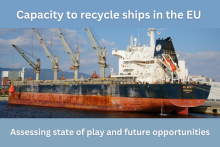
This report shows that the EU has the capacity to recycle its end-of-life ships safely and responsibly. It argues that rather than a lack of capacity, the main reason for ships being sent to South Asian beaches for dismantling under poor environmental and labour conditions is loopholes that allow shipowners to avoid EU rules.
With thousands of European-owned ships expected to reach the end of their lives in the coming years, the EU has an opportunity to strengthen its recycling industry, create jobs, recover valuable steel and reduce pollution. The report calls for a ban on beaching, stronger rules to hold shipowners accountable, and investment in safe recycling facilities in Europe.
New data confirm a rapid slowdown in Europe’s transition to a circular plastics economy, triggered by the competitiveness crisis facing the European plastics system.
With global circular plastics production accelerating, Europe’s annual growth in circular production has declined sharply from 13.6% in 2022 to only 1.2% in 2024.
New data on trade also highlight the significant dependence of Europe’s plastics transition on external value chains, with 19% of converter demand for circular plastics met through imports and 12.4% of Europe’s collected waste recycled in other regions.
These trends undermine Europe’s climate ambitions and strategic autonomy.
Urgent action is needed at EU and national levels to restore industry’s competitiveness and unlock investment in circular plastics at scale.
This position paper synthesises youth perspectives on the EU Circular Economy Act through a consultation survey of 57 responses across Europe, a youth check at the ECESP Annual Conference 2026 and additional qualitative stakeholder input.
There are two main parts: Youth Priorities: What the Act Still Needs identifies what young people consider is missing or insufficiently addressed in the current framing of the CEA. From Policy to Practice: What Effective Implementation Needs explains how these priorities could be addressed through the Act and its implementation.
The paper concludes that lower material demand, durable product design, reuse, effective collection systems and strong public governance play a key role: recycling is not enough.
By bringing together businesses, public administrations, knowledge centres and civil society, connecting knowledge and capabilities, mobilising projects and supporting partnerships, reN helps translate strategy into viable, collaborative and scalable initiatives.
reN aims to accelerate the transition towards a circular tourism system and generate knowledge and experience that can inspire other island and tourism destinations.
GAP for EPR aims to advance EPRjointly. It connects practitioners and experts worldwide, fosters collaboration and innovates EPR implementation and research.
It provides a one-stop-shop for EPR, strives to create a common understanding of EPR, builds an international community to share knowledge and expertise, and offers technical support on EPR development worldwide.
Governments, businesses and civil society can look through the EPR resources listed in the library or attend events. Governments and Producer Responsibility Organisations can use the Helpdesk function to request tailored support.
CirkArena is an R&D and business platform dedicated to innovation in the circular economy, with a focus on waste valorisation, specifically industrial waste (the mining and metallurgical industry used to be part of the local economy), biowaste and construction waste.
It offers a comprehensive range of services, including consultancy, circular audits, EU compliance advisory, specialised R&D projects, and education and training.
Supported by a strong network of partners across Czechia, it actively works with institutions worldwide and is open to expanding partnerships and exploring new opportunities for cooperation.
360° Foodservice is the collaborative platform dedicated to promoting the sustainable service of food and beverages across Europe.
It encompasses the whole supply chain of the foodservice packaging sector, from manufacturers to end-of-life solution providers. It unites companies that provide reuse and/or single use solutions for safely serving food and beverages to millions of Europeans every day, regardless of the materials that are used.
Collection and recycling must be in place for single use items once they have done their job. Reusable items must be collected and sanitised before being used again, and recycled when they reach the end of their useful life.
Members work towards promoting the sustainable evolution of single use and reuse systems for serving food and drinks in Europe.
The BSCP is an open online space connecting bioeconomy leaders, innovators and investors across Southern Europe.
Developed as part of the BioINSouth project, the platform supports collaboration, knowledge exchange and visibility among research organisations, companies, regional authorities and innovation actors working towards a sustainable and circular bioeconomy.
Building on the BioINSouth network of eight regional HUBs, the platform facilitates interaction across regional ecosystems while remaining open to external stakeholders interested in engaging with the community and contributing to the development of circular bioeconomy solutions.
Register and get tailored insights, invitations to events and opportunities to collaborate on groundbreaking projects driving sustainable growth.
The Access Economy Alliance promotes the sharing economy: the concept that you don't need to buy something if you're only going to use it a few times.
It aims to develop the network of sharing stations, self-service lockers where you can go to borrow everyday items, from DIY tools to sports equipment. It is also a forum where access economy practitioners can engage in strategic discussions, meet other organisations in the field, learn from experts and contribute to access economy innovations.
Public authorities, businesses and researchers come together to accelerate Europe’s transition to a circular economy through access-based services.
The Alliance is supported by the EU through the Digital Kiosks project which is piloting 22 new sharing stations across Europe.
The ECCA has been set up by the European Composites Industry Association (EuCIA) which represents European national composites associations and industry-specific sector groups at EU level.
It was launched in 2025 to establish a circular economy for composites in Europe. It provides a platform for knowledge sharing and cooperation, driving collective action to establish truly circular, sustainable value chains for composite materials. It will set and achieve targets on the use of recovered and recycled composites, develop standards for circular product design and provide a forum for the industry.
Stakeholders across the composites value chain can join the ECCA by signing the declaration. They can then join one of the five working groups, from aerospace to construction to policy/regulation.
Denuo is the Belgian federation of recycling and waste management businesses. It aims to help shape the future of used materials and build a sustainable and circular economy.
It represents over 250 companies active in the collection, sorting, processing and recycling of used materials, land and wastewater and is aiming to increase this number. These companies are pivotal in ensuring that materials are reused and not lost.
Denuo also provides expertise to help other companies become more circular.
The Urban Circular Bioeconomy Hub is operated by the HOOP project. It provides resources and tools to improve the exploitation of biowaste and wastewater by cities and regions.
Users can:
network with municipalities and waste/wastewater management companies around Europe.
evaluate their circular performance and the financial attractiveness and maturity level of your circular projects.
make use of resources related to the implementation of urban circular bioeconomy solutions, including handbooks, manuals, factsheets and videos on technologies and financial engineering for circular bioeconomy projects.
get technical support from project developers and investors and mobilise green financing.
register for the forum and put questions to the circular bioeconomy community.
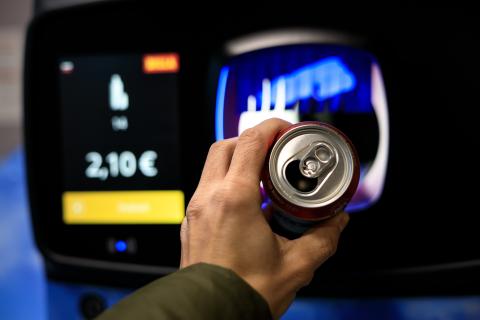
The European Deposit Return Systems Association (EDRSA) for beverage packaging was founded in 2025.
The objective is to advance best practices, policy development and collaboration in the field of deposit return systems (DRS) in Europe.
EDRSA aims to foster innovation, efficiency and environmental responsibility in DRS programmes by bringing together key players from across the industry, including system operators, policymakers, recyclers and technology providers. The association will serve as a platform for sharing expertise, advocating for effective legislation and driving improvements in circular economy initiatives.
The members of the Association operate in 15 EU Member States plus Iceland and Norway.
SMEunited represents crafts and SMEs in Europe, with around 65 member organisations from over 30 European countries. It is a recognised cross-sectoral European social partner and speaks on behalf of the 26.1 million SMEs in Europe which employ more than 89 million people. SMEunited's work promotes the integration of circular principles into SME business models. It advocates for enabling policies and frameworks at all levels. It translates complex EU frameworks into actionable guidance for SMEs and provides decision makers with reality checks on boosters and blockers for SMEs' circular business models.
Andreas Brieger is Director for Climate, Energy and Environment Policy at SMEunited, representing European SMEs in the green transition. With extensive experience in EU and national public affairs, he previously worked for German and European social partners on climate, energy and economic policy. He is a member of the European Commission’s Ecodesign Forum and the Expert Group on Circular Economy / Sustainable Production and Consumption. A strong advocate for a fair and effective green transition, Andreas is passionate about making circularity a success story for people, SMEs and the planet.
Copa and Cogeca are the united voice of farmers and agri-cooperatives in the EU. Together, they ensure that EU agriculture is sustainable, innovative and competitive, guaranteeing food security for half a billion people throughout Europe. Copa represents over 23 million farmers and their families whilst Cogeca represents the interests of 22 000 agricultural cooperatives. They have 66 member organisations from the EU Member States. Copa and Cogeca are among the founding members of the European Bioeconomy Alliance.
Oana Neagu is Director of the General Affairs team at Copa Cogeca. The team covers topics related to the circular economy and bioeconomy, the environment and climate change, research and innovation, food waste, etc. Oana is an agricultural engineer and has a Master’s degree in business administration. She previously worked at the European Commission’s Directorate-General for Agriculture as a policy officer, in charge of managing market measures. Prior to joining the Commission in 2006, she was the adviser on European integration at the Ministry of Agriculture in Romania and was involved in preparing Romania’s accession to the European Union.
She is a member of the management committee of the multi-stakeholder platform on the implementation of the Sustainable Development Goals in the EU and actively involved in various expert groups on the bioeconomy, forestry and rural development.
RREUSE is Europe’s largest network of social enterprises active in the circular economy, with a focus on reuse, repair and recycling.
Their mission is to empower, represent and support the social and circular enterprise community. They help drive its development by effecting positive change in European policy, facilitating the exchange of good practices and fostering meaningful partnerships. Their vision is an inclusive circular economy based on reuse and repair in solidarity with both people and the environment.
RREUSE has 34 member organisations spread across 22 countries, including 18 EU Member States.
Jana joined RREUSE in 2016 and in her current role she leads network development. She is responsible for coordinating, developing and monitoring services for 30+ social economy networks and organisations implementing the circular economy transition on the ground. Her educational background is in natural science and recently, data analysis. In her spare time, Jana is a volunteer at Tournevie, a non-profit tool library in Brussels.
Circular Change (CC) is a Slovenia-based think and do tank connecting ideas, people and action. Since 2016, CC has been pioneering the circular and bioeconomy transition worldwide. From international Circular Change Conferences with 500+ participants to co-creating national roadmaps, Circular Academies and CE Hubs, CC turns vision into systemic impact. They integrate creative industries, science and policy, bridging bioeconomy and circular economy to co-create regenerative and inclusive futures. As co-creator of Transition Brokers and originators of Circular Diplomacy, CC promotes network governance and collaborative leadership. Active in EU projects and global dialogues, they bring a systemic, human and creative spirit to every transformation.
Ladeja Godina Košir is an internationally recognised systemic thinker and transition broker, and Founder and Executive Director of Circular Change. For eight years she was Co-Chair of the ECESP. She co-creates CE roadmaps, foresight exercises and hubs, advancing network governance and circular diplomacy across Europe and beyond. An inspiring keynote speaker, lecturer, author and board member, she bridges bioeconomy and circular economy in policy, business and culture. Ladeja led five Circular Change International Conferences, consulted governments from Serbia to Chile, and chaired the BIOeast Circular Bioeconomy Foresight 2050 Expert Group. She serves as Chair of the International Council of the CE Forum Austria, and Member of Chapter Zero Slovenia and other international CE boards. Finalist of the Circular Leadership Award 2018 (Davos WEF), featured in #EUwomen4future (2020) and recipient of the Elle Green Style Award 2025.
The Ellen MacArthur Foundation works to accelerate the transition to a circular economy. Backed by evidence and powered by partnerships across sectors and regions, it is a systems change organisation aiming to reshape markets.
For circular economy solutions to scale, they need innovation, infrastructure and investment. The Foundation identifies where those solutions are ready to take hold and what conditions are needed to unlock their impact at regional and global levels. The Foundation is moving beyond pilots to accelerate global implementation and drive long-term value.
As an independent charity, it mobilises business and policy leaders and helps them to drive the most effective solutions faster and at scale.
Eline Boon is the EU Policy Lead at the Ellen MacArthur Foundation, where she leads the Brussels-based EU policy team to strengthen and advance the European and global circular economy agenda. A legal expert by training, Eline focuses on the critical role of public policy and legislation in accelerating systemic change, collaborating closely with policymakers at EU level.
Prior to her current role, she served as a Circular Economy Advisor to the Belgian Federal Minister for Climate, Environment and Sustainable Development. There she instrumentally contributed to creating and launching Belgium’s first federal investment fund (backed by the EU's NextGenerationEU recovery plan) dedicated to scaling circular economy projects, the National Circular Economy Action Plan, and pioneered draft legislation on the Belgian Repair Index.
Her diverse background also includes time as a Policy Officer at the European Commission (DG Research and Innovation) and co-authoring UN-level systemic initiatives on plastic pollution. She holds an LL.M. in International and European Law from the Vrije Universiteit Brussel.
FEAD represents the private waste and resource management industry across Europe. Its members, national waste management associations and companies, operate across the entire value chain, including collection, sorting, recycling, recovery and disposal. FEAD brings together around 3 000 private waste management companies, which operate in 60% of Europe’s municipal waste markets and 75% of industrial and commercial waste, supporting over 500 000 local jobs. FEAD’s vision is to shift Europe's overall material use towards recycled materials, promoting sustainable waste management as a cornerstone of the circular economy, contributing to environmental protection, resource efficiency and climate goals.
Paolo Campanella is Secretary-General of FEAD, leading the organisation’s advocacy for a stronger and more coherent European legislative framework to support the circular economy. With over ten years of experience across multiple areas of the waste sector, including plant design, operational management, consultancy and public affairs, he brings a comprehensive understanding of the industry's challenges and opportunities. Trained as an environmental engineer, he has managed the design and permitting of waste treatment facilities and assessed project proposals within the public administration of the Province of Bari (Italy). He previously served as a board member of the Italian Association of Environmental Engineers.
Interact represents all programmes run by Interreg, the EU’s instrument for territorial cooperation, helping regions and communities work together across borders on shared challenges. Through its Smarter and Greener Europe networks, Interact connects programmes and projects advancing the circular economy, from resource efficiency and waste reduction to digital and innovation-driven circular solutions. It facilitates learning, exchange and policy linkages, ensuring that results from cooperation shape regional and EU transitions alike. By linking circular innovation with territorial development, Interact showcases how collaboration across borders delivers both smarter systems and greener outcomes, turning Europe’s circular ambitions into practical, place-based action.
Nicolas Garnier is Thematic Capitalisation Manager at Interact, leading the Greener Europe policy network and supporting Interreg programmes as they step up their impact on sustainability, climate and the circular economy. He facilitates cooperation and knowledge exchange amongst regions and EU actors, helping translate project results into policy learning and strategic action. With experience in environmental governance, innovation and regional cooperation, Nicolas drives capitalisation efforts that connect circular solutions across Europe, from local experimentation to EU-wide policy dialogue. His work focuses on making cooperation a catalyst for a greener, more resilient and circular Europe.
Circul’R was established in 2017 and is now a leading voice on the circular economy in France and internationally thanks to the close links it has established with all stakeholders: large companies, VSEs/SMEs, producer responsibility organisations (PROs), public institutions and local governments. Circul’R is firmly committed to supporting organisations - whether public or private - in their transition to circular models and modes of operation.
To achieve this mission, Circul’R works at three levels: 1. Training - Raising awareness of the circular economy among managers and employees and enhancing their skills in this area. 2. Leading coalitions - Creating and leading coalitions of committed players to set new standards in circularity. 3. Consulting - Support private and public organisations in setting up circular economy projects, from roadmap to operations.
Circul'R has a team of 40 circular economy experts.
With over 10 years of experience in sustainability and the circular economy, Jean has worked across NGOs, public institutions and consulting. He started at the NGO GERES, supporting access to energy projects, then joined ReLondon to coordinate circular economy initiatives for the Municipality of London, including the “London’s Food Footprint” study. At Circul’R, he now leads projects with private companies and public authorities in France and internationally, supporting the design and implementation of circular strategies. He actively facilitates dialogue between sectors to overcome barriers to circularity, notably through coalitions and collaborative projects. As part of the ECESP Coordination Group, he aims to foster cross-sectoral cooperation and share field insights to advance Europe’s circular transition.
The Rediscovery Centre is Ireland's national centre for the circular economy. Since 2004, the centre has been leading Ireland’s transition to a circular economy and low-carbon, sustainable future. Based in Europe’s first circular economy demonstration centre, the Rediscovery Centre acts as an innovation hub, delivering education, providing research and enabling policy, citizen engagement and collaboration to support community action. Recognising that a just transition requires a social movement, they use their skills and expertise to ensure that all people benefit from, and can participate in, the circular economy. Their work is supported by key strategic partners and includes a range of public engagement, education and research programmes, workshops and training courses across broad disciplines.
Appointed Chief Executive of the Rediscovery Centre in February, Claire brings over 20 years' experience in the sector to this role and is a dedicated advocate for circular living. Claire actively contributes to national and international policy development, groundbreaking circular economy research and education initiatives in Ireland and beyond, and is a fellow of the Chartered Institute of Waste Management.
Sitra – The Finnish Innovation Fund is a pioneer in advancing the circular economy globally. As the initiator of the world’s first national circular economy road map, Sitra addresses societal challenges that shape our world. Their international programmes collaborate with partners to solve global challenges, enhance well-being and boost economic growth within the Earth’s carrying capacity. They drive systemic change through research, innovation and stakeholder collaboration. Promoting circular business models, skills, jobs and policies, they actively contribute to EU-level initiatives such as the European Circular Economy Stakeholder Platform (ECESP). Globally, Sitra advances circularity through the EU Circular Economy Resource Centre (EU CERC) and the World Circular Economy Forum (WCEF), a leading annual conference and global platform for knowledge exchange and partnership building, initiated by Sitra.
Kari Herlevi is Programme Director for Global Circular Economy at Sitra. He leads Sitra's international efforts to advance the circular economy, focusing on systemic change, foresight and cross-sectoral partnerships. Kari has played a key role in shaping global circular economy dialogues, including the WCEF and the EU CERC. With a background in sustainability and innovation policy, he works to align well-being and economic growth with planetary boundaries. Kari is a frequent speaker at international events and a driving force behind Sitra’s global initiatives to promote regenerative and inclusive circular solutions.
Reduce water use in Diageo's operations with a 40% improvement in water use efficiency in water stressed areas and 30% improvement across the company.
Other (Sustainable management of water)
To be achieved by:
Replenish more water than Diageo uses for their operations for all their sites in water-stressed areas by 2026.
Other (Sustainable management of water)
To be achieved by:
Invest in 150 projects to improve access to clean water, sanitation, and hygiene (WASH) in communities near Diageo sites and local sourcing areas in all of Diageo's water-stressed markets.
Other (Sustainable management of water)
Start Date:
Engage in collective action in all of their Priority Water Basins to improve water accessibility, availability and quality and contribute to a net positive water impact.
Recycling (also including specific waste streams)
To be achieved by:
Achieve zero waste in Diageo's direct operations and zero waste to landfill in Diageo's supply chain.
Recycled materials as part of raw materials demand (recycled content)
To be achieved by:
Ensure 100% of Diageo's packaging is widely recyclable (or reusable/compostable).
Recycled materials as part of raw materials demand (recycled content)
To be achieved by:
Continue to reduce packaging and increase recycled content in Diageo's packaging (delivering a 10% reduction in packaging weight + increasing the % recycled content of the packaging to 60%).
Recycled materials as part of raw materials demand (recycled content)
To be achieved by:
Ensure 100% of Diageo's plastics are designed to be widely recyclable (or reusable/compostable) by 2025 and achieve 40% recycled content in Diageo's plastic bottles by 2025, and 100% by 2030.
Other (Sustainable agriculture management)
To be achieved by:
Provide all of Diageo's local sourcing communities with agricultural skills and resources, building economic and environmental resilience (supporting 150,000 smallholder farmers).
Other (Sustainable agriculture management)
To be achieved by:
Develop regenerative agriculture pilot programmes in 5 key sourcing landscapes.
Other (Accelerate to a low carbon world)
To be achieved by:
Become Net Zero carbon in Diageo's direct operations.
Other (Accelerate to a low carbon world)
To be achieved by:
Reduce Diageo's value chain carbon emissions by 50%.
Other (Accelerate to a low carbon world)
To be achieved by:
Use 100% renewable electricity across all of Diageo's direct operations.
By 2025, all new PET bottling lines will be suitable for processing up to 100% high-quality rPET without compromising output quality, efficiency or effectiveness.
Other (Plastic-free secondary packaging)
To be achieved by:
By 2022, alternative secondary packaging solutions free of disposable plastics will be available for every established SKU format multipack.
Other (Advisory for recycling-friendly packaging design)
Start Date:
Krones will leverage its technological expertise to help customers design packaging that specifically facilitates post-consumer recycling.
Other (Upgrading from linear to circular economy)
Start Date:
Krones will assist its customers to adapt existing lines in order to achieve the best possible outcomes when using recycled or renewable input materials.
Other (Tethered caps)
Start Date:
With immediate effect, Krones will make available capping equipment for tethered caps.
Other (Sustainable labelling)
Start Date:
Krones makes it possible to use detachable labels to enhance recyclability. It aims to make labels jointly recyclable with containers or to eliminate separate labelling.
Other (Investing in recycling solutions)
Start Date:
Krones will continue to allocate substantial R&D resources to its recycling technology division in order to facilitate physical recycling of post-consumer plastics.
Other (Beyond PET packaging)
Start Date:
Krones will actively explore disruptive new technologies delivering beverages to consumers without conventional PET packaging (e.g. pulp bottles, no-packaging solutions).
LIPOR's Environmental Education and Intervention Program aims to create an educational offer that encourages citizens to implement good environmental practices.
Food waste reduction
Start Date:
LIPOR’s annual prevention programme includes several projects and initiatives implemented across all eight municipalities aiming to prevent and reduce food waste.
Recycling (also including specific waste streams)
Start Date:
The Strategic Plan for Urban Waste 2020 (PERSU 2020) is the reference instrument of the urban waste policy in Portugal.
LIPOR has defined a target of 50 kg per inhabitant a year in 2020 for selective
Green public procurements
Start Date:
One public tender for catering services with fully sustainable and circular criteria.
Starbucks target is to phase out plastic straws from its more than 28,000 stores worldwide by 2020, a decision that will eliminate more than 1 billion straws a year.
Recycled materials as part of raw materials demand (recycled content)
To be achieved by:
100% recycled and other sustainable sourced materials by 2030.
Other (Cotton content)
To be achieved by:
100% recycled, certified organic or sustainable sourced cotton by 2020.
Other (Waste collection)
To be achieved by:
To increase the collected volume of garments to reach 25,000 tonnes annually; achieved in 2019 with 29,005 tonnes of garments collected for recycling and reuse.
Other (Packaging)
Start Date:
100% reusable, recyclable, or compostable plastic packaging
Reduce plastic packaging by 25%
25% post recycled plastic across all packaging used
Other (Packaging)
Start Date:
100% recycled or other sustainably sourced material
Europe is one of the fastest-warming areas in the world; in response, it is working to make its industry cleaner and more sustainable.
This summit will focus on what needs to be done to make this transition both investable and competitive. Hear what the speakers have to say about energy security, AI-related energy needs,electrification and climate resilience – along with the role of circularity and what is needed to build a single market for secondary resources in Europe.
BIOEAST supports the development of circular bioeconomies in the BIOEAST countries. It has been supported by the now ending Horizon Europe project BOOST4BIOEAST.
Come and see what BIOEAST has achieved through this support project, discuss the future of the European bioeconomy and the role of the wider BIOEAST region, and learn about the new project succeeding BOOST4BIOEAST.
The CURIOST project focuses on promoting circular economy practices among SMEs and small mid-caps in Central Europe's mechanics & mechatronics, plastics, packaging and construction sectors.
This event will look at what it has achieved and what it has learned from assisting these businesses with developing circular products, processes and business models.
This conference will take a broad look at the major challenges of our time, looking at technology, sustainability, competitiveness, investment and implementation.
AI, robotics and data are advancing rapidly - but are businesses and societies becoming smarter, more sustainable and resilient?
Each year, tonnes of valuable materials are disposed of rather than being recovered – partly because Member States have varying quality standards and requirements for embedding recycled content in new products.
This webinar will examine how EU policies can increase the availability of and demand for secondary raw materials, especially from wood waste.
What do circular cities need to really make an impact? What ideas can get us out of the endless discussion loop and into action? And how do big visions turn into real commitment?
This event organised by Berlin's zero waste agency will be looking to find answers to these questions!
The 40-minute round table on the Circular Economy Act will discuss whether the Circular Economy Act can make Europe the powerhouse of the circular economy, reconciling environmental ambition with industrial competitiveness – or whether it will bring more restrictions than benefits.
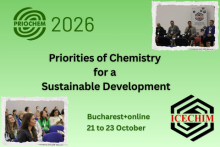
This annual event showcases research capable of converting scientific knowledge into differentiated solutions for high-priority markets.
Early-stage and experienced researchers will present their most recent results in the fields of chemistry and chemical engineering, with applications in areas including sustainable resource management, recovery, recycling and capitalisation of by-products from various agro-industrial streams.
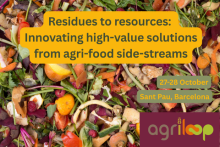
What if agri-food by-products could help tackle plastic pollution, support food security and create new revenue streams for farmers?
Join the final event of the AgriLoop project to explore how agricultural and food processing side-streams can be transformed into high-value, sustainable solutions.
Taking place on 10 September, the BIOEAST Slovenia-Croatia Pitching Event 2026 aimed to take ideas from 'well, it sounds interesting' to 'this will work'.
Innovators and experts explored what it takes to build a stronger circular bioeconomy, while participants presented their innovations, received expert feedback and connected with potential partners.
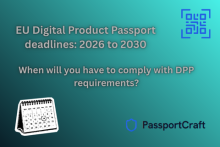
PassportCraft helps brands create, host and manage digital product passports for products sold in Europe. They have developed a useful reference timeline bringing together the key Digital Product Passport (DPP) and related EU sustainability deadlines from 2026 to 2030.
Fluorine is an essential element used across a wide range of industries, but recovering it from fluorinated waste remains challenging. At the same time, fluorspar, a major source of fluorine, is a critical raw material in the EU. TriFluorium aims to support a more circular and secure fluorine supply by recovering valuable fluorine from end-of-life materials and turning waste into useful resources.
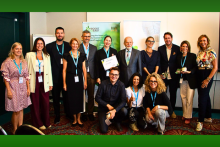
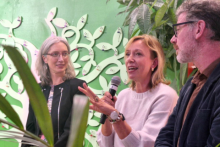
An ECESP delegation attended the Circularity Communicated Conference 2026 in Dublin, along with the Circular Economy Garden Party which took place the day before.
The conference is the first to be organised by the circular.ie project, which aims to make the circular economy part of people's everyday lives.
We are all aware of the need to use water sparingly. Still, some facilities need a lot of it – including zoos. This LIFE project is developing a way for zoos to reuse water safely.
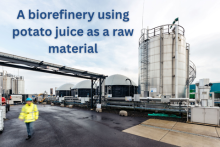
This new project aims to prove that existing infrastructure can be adapted and industrial side streams can be used to produce sustainable and industrially-relevant chemicals.
A good way to build more resilient and circular chemical value chains!
The 2027 Procura+ Conference will take place in February 2027.
The open call for contributions to the two Market Lounge sessions is now open. These will include up to 80 round tables where participants will get insights into key policies, strategies, guidance and tools.
Public authorities face considerable challenges in fields such as the circular economy, waste management, green public procurement and eco-design. Advice from someone who knows what they are talking about can sometimes be really helpful.
The TAIEX-EIR PEER 2 PEER programme is set up to facilitate just this type of assistance.
This report outlines activities pursued by the Coordination Group during the last two years of its 2023-2025 mandate, implementing an ambitious work plan that delivered 47 key activities of the platform.
It replaces the annual report for 2024 and up to October 2025.
This video prepared by the ECESP Leadership Group on Economic Incentives gives an introduction to economic incentives, their advantages over regulatory obligations and social education and their role in achieving a more sustainable future for all.
As the EU seeks to advance its transition towards circular economy, civil society organisations – backed by academic insights – are calling for a bioeconomy strategy that places sustainability, environmental resilience and social well-being on an equal footing.
This paper provides a multi-actor perspective to the challenges involved, focusing on sustainability, economic development (especially in rural areas) and regulatory frameworks. It highlights gaps in the existing strategy and proposes policy recommendations for policymakers and research institutions.
Extended Producer Responsibility (EPR) schemes are an important tool for circularity advancement. However, there is still considerable room for improvement in their form as well as scale.
The Economic Incentives Leadership Group has prepared this white paper in order to participate in the discussion on the future of EPR schemes as a crucial instrument for circular transformation.
Third-sector association Fondazione LGH is looking for Italian R&D projects in the agrifood and cosmetics industries which want to turn ideas into impact.
The goal is to transfer skills and knowledge, support innovation and make Italy more competitive. Relevant areas include the circular economy.
The Interreg Greece-Italy Programme is looking for small-scale projects supporting thecircular economy, and culture and sustainable tourism.
The goal is to make border regions more resilient to common challenges, find shared solutions and harness the untapped growth potential in border areas.
This Horizon Europe call is looking for ways to extend the life of buildings, reduce their environmental impact and facilitate the use of predictive maintenance.
Proposals should develop a tool for predictive maintenance and repair and a package of maintenance and repair measures.
euresearch provides information on EU cooperation and funding opportunities for research and innovation under the EU Framework Programme Horizon Europe.
This call supports industrial symbiosis, waste prevention, recycling, reuse and recovery.
It is intended for Lombardy-based SMEs, including innovative start-ups, and the key areas are plastics, tyres, polymers, textiles, electronics and WEEE (including solar panels), batteries and accumulators, and the recovery of phosphorus and other CRMs.
This Horizon Innovation Action is looking for tools, solutions and associated business models that facilitate the adoption of inclusive circular construction models and more efficient use of buildings.
The goal is to reduce the need to extract raw materials.
ORMAT2026is an annual French funding programme that supports investment in sorting and preparation of waste for recycling, the production of recycled raw materials and their incorporation into products, as well as the repurposing, remanufacturing and reconditioning of batteries.
Businesses in the recycling value chain can apply.
This Innovation Open Call is looking for SMEs in the agri-food production and/or processing sector, SMEs in other sectors that valorise biomass/by-products/side-streams from the agri-food sector and SMEs offering solutions and/or technology for the valorisation of these materials.
KAVA Call 14 - RIS Innovation is looking for projects developing new technologies, products, services or business models in the raw materials value chain.
The projects must focus on exploration, sustainable mining, processing, circularity, recycling or substitution.
The European Investment Fund is a specialist provider of risk finance for small and medium-sized enterprises across Europe.
It provides financial resources via intermediaries, such as banks and micro-credit providers, and its targets areas include circular economy infrastructure and the bioeconomy.
This Erasmus+ project has devised courses on topics such as circular design, waste reduction, sustainable procurement, environmental legislation, sustainability reporting, green certifications, sustainable investment and joint sustainability initiatives.
Erasmus+ project BECOME (Boosting Circular Economy Expertise through Learning Communities) has produced an educator's manual for teaching the circular economy and training for professionals worksheets.
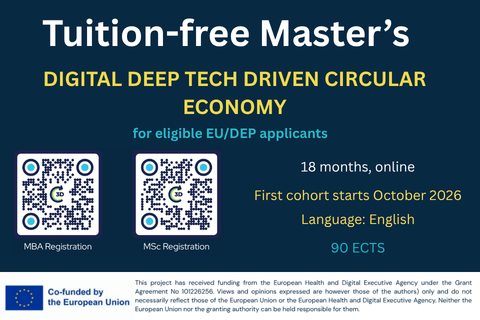
3D-CIRCULAR, a project funded under the Digital Europe Programme, is building degrees to train professionals to understand material flows and governance and work with the data infrastructure, AI and traceability systems.
The project will run until July 2029, and three master's degrees are already available. The first intake will start in October 2026 and applications are open until 25 September.
The Erasmus+ project EDU4PlastiCircular has prepared an e-learning course designed for managers and employees, higher education teachers and engineering students.
It will help them understand plastic and packaging composition and management from collection to end of life, with a focus on the potential for second life.
Digital Product Passports will be rolled out as from 2027 and many professionals are still building the skills they'll need.
To help address this skills gap, National College of Ireland's Cloud Competency Centre is launching three free, live evening courses. Taking place online, these courses offer practical, industry-focused learning you can apply in your workplace.
The WENUS project has developed an open-access digital learning platform supporting the green and digital transition of the wood and furniture sectors.
The platform provides training modules on circular economy, sustainable manufacturing, Industry 4.0 technologies and 3D printing.
"Circular Economy and Resource Efficiency" is part of the Green transition of industry and society master's programme offered in collaboration by Sweden's University of Gävle, Dalarna University and Mälardalen University.
Students will learn how society can shift to a circular economy, using resources more efficiently and minimising waste.
This European Investment Bank Guidance Note supports the integration of circular economy principles into procurement practices.
It provides practical tools and examples covering everything from early planning and market engagement to tendering, contract management and performance monitoring.
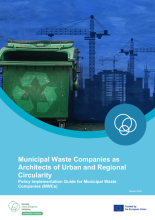
Municipal waste companies are at the forefront of the circular transition, linking waste collection and recycling systems with producer responsibility schemes. By coordinating infrastructure, investment and operations, they enable resource recovery at scale.
This guide helps them turn circular economy ambitions into effective local action.
This implementation guide helps cities integrate circular economy principles into urban planning and decision making. It shows how existing planning instruments can support the reuse, adaptation and intensification of buildings, infrastructure and land, reducing resource consumption, limiting urban sprawl and protecting valuable ecosystems.
This guide provides practical guidance, steps and tools for cities and regions interested in designing, implementing and continuously improving effective support measures, using a systemic and ecosystem-based approach.
Interested in finding out more about Extended Producer Responsibility in the field of packaging? See the factsheets, videos and documents included in this toolbox.
This white paper offersguidance to entrepreneurs on developing a circular business model.
It delivers a brief analysis of where you stand as an organisation when it comes to organising sustainably and circularly and formulating your ambition for the coming years, and an exploration of the business model that best suits your competencies and ambition.
This model sets out what is required to track post-use electronic assets.
A solid record comprises a series of events (what happened and when) which substantiate certain claims. European supply-chain requests must include certain information, and this model identifies the evidence needed to provide it.
Discover how fashion and clothing businesses can use standards to support circular design, transparent claims and more resilient operations.
Explore the regulations driving change across the fashion and clothing sector, learn how different business functions contribute to a more circular business model, and find trusted guidance to help plan, implement and scale your circularity journey.
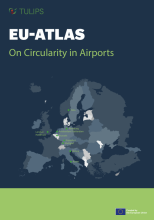
The Atlas highlights key trends, regulations and priorities shaping circular economy progress in EU airports, and outlines options for monitoring impact. Drawing on the use cases, it summarises lessons learned and identifies expected future developments in circular airport operations.
Applying circular principles in an airport environment is not straightforward.
What is needed are approaches that work within the constraints while still enabling progress. The guidance developed through the TULIPS project translates circular construction principles into practical frameworks that support decision making in real airport contexts.
The New Circularity Index scheme is a verification framework.
It is designed to measure and certify the circularity performance of products throughout their lifecycle. It assesses materials, energy, water and waste, evaluating the share of circular materials, renewable energy, recycled water and waste sent for recycling compared with the total resources used in production.
The Material Circularity Index analyses an organisation's material flows and determines what percentage of resources possesses circular potential.
The result is expressed as a percentage and broken down into two variants: ICM-Local, which focuses on circularity within organisational and operational boundaries, and ICM-Global, which takes a broader lifecycle perspective.
This report provides an analytical assessment of existing circular economy frameworks, standards and indicators from the specific perspective of automotive suppliers.
It examines the practical challenges of translating high-level circular economy objectives into measurable and operational indicators for industry.
E-circular is an NGO working to promote the circular economy in the Republic of Moldova. They have published a brief report about the country's national circularity rate and the tools used to identify that rate.
The CityLoops project was a Horizon 2020 project which ran from 2019 to 2023. It focused on circular economy solutions for bio-waste and construction and demolition waste (CDW). The project produced various tools, including this circularity assessment.
The CityLoops project was a Horizon 2020 project which ran from 2019 to 2023. It focused on circular economy solutions for bio-waste and construction and demolition waste (CDW). The project produced various tools, including this assessment method.
The CityLoops project was a Horizon 2020 project which ran from 2019 to 2023. It focused on circular economy solutions for bio-waste and construction and demolition waste (CDW). The project produced various tools, including this circularity assessment.
CircularTracker is an online circularity measurement tool. It enables businesses and institutions to assess, visualise, compare and communicate product circularity features in a standardised way.
This article identifies sustainable practices that are intended to reduce food loss and waste from the value chain, highlights the importance of sustainability accounting and reporting during each stage of food preparation, production and consumption and advances a theoretical model that clearly summarises different aspects related to environmental, social and governance dimensions.
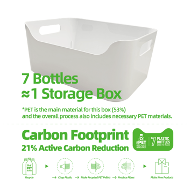
Energy Expert, an Alibaba Cloud company, uses carbon footprint accounting combined with digital technologies to track the CO2 performance of a new range of products, from the initial plastic waste to the final rPET product, and makes the information available to the consumer.