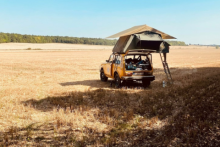
This Belgian company operates a product-as-a-service business which facilitates the renting of an item which people may own but are unlikely to be using for many days each year.
It enables owners to earn income from an underused asset and travellers to gain an alternative to buying equipment for occasional use. It also proves that the product-as-a-service model can be applied to a wide range of items.
Are you interested in learning more about the sharing economy? Libraries of things, rental platforms and sharing stations will all play a key role in meeting the EU’s circular economy goals but they need to be a viable alternative to the ‘buy now’ option.
Come and learn about what’s already in place and how to make these concepts convenient, viable and scalable, and network with sharing economy actors!
This conference will focus on the European policies, technologies and business models that are reshaping circularity, from the Circular Economy Act and textile legislation to the Digital Product Passport and artificial intelligence.
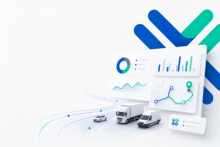
Renting a vehicle rather than buying one is a circular-economy lever in mobility: it lets more users share the same asset, maximising the resources consumed.
A good digital rental management tool makes vehicle use even more efficient, minimising wasted resources and extending the vehicle's lifecycle.
This webinar will explore how Product-as-a-Service business models can accelerate the transition toward a circular economy by shifting value creation from product sales to long-term service provision.
This webinar will look at how Product-as-a-Service (PaaS) models can contribute to the ecological and social transition, and more importantly, how their impact can be measured.
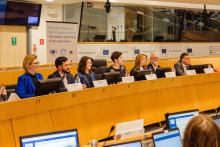
Our conference brought together EU institutions, civil society, academics, industry and young people to discuss all aspects of the circular economy, from legislation to social impact. Our new Coordination Group members shone as they spoke about the areas in which they are experts. Read about some of the major themes!