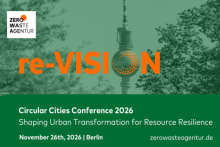
What do circular cities need to really make an impact? What ideas can get us out of the endless discussion loop and into action? And how do big visions turn into real commitment?
This event organised by Berlin's zero waste agency will be looking to find answers to these questions!
Loopami is a Milan-based platform which creates local communities of people interested in sharing and reusing items. It's still in the testing phase, but the initiative reduces consumption and waste while also forging closer ties between neighbours.
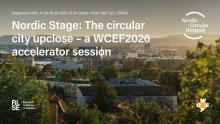
This WCEF2026 Accelerator Session offers a close-up look at Nordic circular cities: what works, what carries the transition, and what still stands in the way. New research meets real-world practice from across the Nordics and Europe.
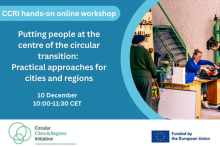
The circular transition cannot success unless it works for and with people.
You don't need to reinvent the wheel though. Across Europe, local authorities are building on existing initiatives, networks and community energy to connect social and circular objectives in practical ways.
This workshop will explore what those approaches look like in practice.
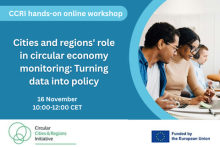
Relevant, reliable information drives stronger circular policies – but it's not so easy to identify what information you need and what data will help you make the right decisions.
This webinar will explore practical approaches to circular economy monitoring.
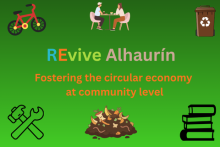
REvive Alhaurín puts the circular economy into action at community level.
It encourages local people to opt for repairing and sharing items rather than buying new ones, and provides useful advice on how to be a more responsible consumer.
The CCRI's communities of practice project has issued a short survey to gather experiences from local, intermunicipal and regional authorities across Europe on governing the circular economy transition.
It aims to identify what works, what gets in the way and what would strengthen circular economy action at local and regional levels.
The European Call for Action on Circular Construction urges the EU to address key needs and potential within the construction sector as regards circularity, reuse and reduction.
At this conference, initiators and signatories along with stakeholders from the construction and demolition sector will meet with EU decision makers to hand over the Call for Action and discuss the potential of circular construction to deliver on competitiveness, climate and conservation of raw materials.
Waste prevention innovation in cities works, with the right conditions.
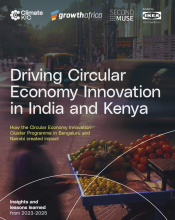
This new report reveals how two megacities built circular economy programmes that reduced waste, supported informal workers and created lasting systemic change.
It presents the lessons learned from the Circular Economy Innovation Cluster (CEIC) programme funded by the IKEA Foundation and implemented in Bengaluru, India and Nairobi, Kenya from 2023 to 2025.
The report sets out what it takes to shift urban economies away from linear, waste-making-waste-recycling models towards less waste generation in the first place.