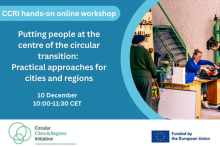
The circular transition cannot success unless it works for and with people.
You don't need to reinvent the wheel though. Across Europe, local authorities are building on existing initiatives, networks and community energy to connect social and circular objectives in practical ways.
This workshop will explore what those approaches look like in practice.
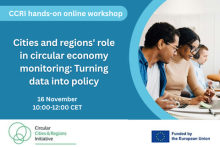
Relevant, reliable information drives stronger circular policies – but it's not so easy to identify what information you need and what data will help you make the right decisions.
This webinar will explore practical approaches to circular economy monitoring.
By bringing together businesses, public administrations, knowledge centres and civil society, connecting knowledge and capabilities, mobilising projects and supporting partnerships, reN helps translate strategy into viable, collaborative and scalable initiatives.
reN aims to accelerate the transition towards a circular tourism system and generate knowledge and experience that can inspire other island and tourism destinations.
This meeting will mark an important milestone in the Balearic Islands' circular transition by launching reN · Balear Circular Hub, a collaborative platform designed to connect organisations, share knowledge and foster initiatives that create a positive impact across the archipelago.
The European Call for Action on Circular Construction urges the EU to address key needs and potential within the construction sector as regards circularity, reuse and reduction.
At this conference, initiators and signatories along with stakeholders from the construction and demolition sector will meet with EU decision makers to hand over the Call for Action and discuss the potential of circular construction to deliver on competitiveness, climate and conservation of raw materials.
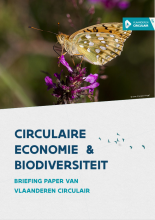
Climate change, pollution and biodiversity loss are combining to form an urgent global challenge. However, just like the crises themselves, the solutions to them are interconnected. In this briefing paper, Circular Flanders explores how the circular economy can contribute to protecting and restoring biodiversity.
You will discover why biodiversity is essential for our economy and well-being, how our current production and consumption system puts nature under pressure, and what role circular strategies can play in reversing this trend.
From reduced resource use and smarter design to regenerative production and new value models, this paper offers insight, inspiration and practical starting points.
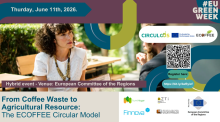
This EU Green Week Partner Event will present the innovative ECOFFEE circular model.
Discover how coffee grounds are transformed into high-value agricultural resources like natural biocides and animal feed, effectively bridging urban circularity with sustainable rural development.
Join the Hubs4Circularity Community of Practice for an online workshop to reflect, celebrate and make sense of the journey around the value of community in innovation.