IndustriALL Global Union represents 50 million workers in 130 countries in the mining, energy and manufacturing sectors and is a force in global solidarity taking up the fight for better working conditions and trade union rights around the world.
Aske is a leader and engineer within the field of the circular economy, with a focus on waste management. He combines deep technical knowledge with experience from boards of large companies and public affairs work. With a background in the public sector, NGOs and private companies, Aske spans the multiple perspectives of the many actors in a circular economy.
CirkArena is an R&D centre for the circular economy. Focusing on waste, it aims to help transform the local ecosystem and answer people's questions on the plastics value chain.
This platform provides information and updates on two key projects:
CIRCWASTE ran from 2016 to 2023, and aimed to promote the efficient use of material flows, waste prevention and new waste and resource management concepts.
PlastLIFE is an ongoing project (2022 to December 2029), aiming to promote a sustainable circular economy for plastics.
The LOOP-Ports project ran from September 2018 to November 2020. It was coordinated by Fundación Valenciaport and funded by the European Institute of Innovation and Technology (EIT) through the EIT Climate-KIC initiative. Its main goal was to facilitate the transition to a more circular economy in the port sector.
The FOODY EU project promotes entrepreneurial skills and employment of young people, using circular economy principles to combat unemployment. It provides comprehensive information on the management and environmental impacts of food waste, using the food industry and waste management sector to instill in young people the value of resource conservation.
As a growing community of European frontrunner festivals, Green Deal Circular Festivals strives for fully circular and climate neutral festivals, as festivals can play a guiding role in inspiring a green movement and accelerate society’s transition.
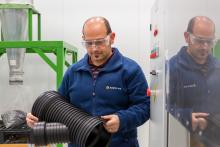
The LIFE CIRC-ELV project has developed a new process for managing end-of-life vehicles to recover bumpers and fuel tanks, recycle the materials and use them to manufacture pipes and new parts for vehicles. Using this recycled plastic in products from this industry and others will help reduce the carbon footprint by 85%.
The CLIC trans-disciplinary research project aimed to demonstrate that it is economically, socially and environmentally convenient to maintain and/or reuse cultural heritage and landscape.