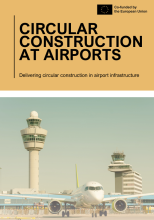
Applying circular principles in an airport environment is not straightforward.
What is needed are approaches that work within the constraints while still enabling progress. The guidance developed through the TULIPS project translates circular construction principles into practical frameworks that support decision making in real airport contexts.
A practical framework for structuring operational, traceability and material-flow evidence into buyer-readable documentation for circular value chains, procurement review and cross-border supplier due diligence.
The SUSTRACK Toolkit was developed under the Horizon Europe project SUSTRACK.
It provides practical tools, policy briefs, case studies and guidance to help policymakers, businesses and researchers accelerate the transition to a circular and sustainable bio-based economy.
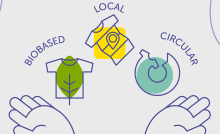
The HEREWEAR HUB is a collection of 40+ resources intended to help anyone gain the skills and find information and contacts to become part of the biobased, local and circular textile and clothing ecosystem.
CircularTracker is an online circularity measurement tool. It enables businesses and institutions to assess, visualise, compare and communicate product circularity features in a standardised way.
This comprehensive toolkit assists countries with assessing circularity within their building sectors.
It provides quantitative and qualitative assessments through a set of indicators and a structured questionnaire, helping to identify gaps and priorities for improving circular material and waste flows, reducing environmental impacts and enhancing economic and social benefits.
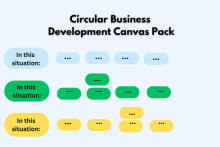
The Circular Business Development Canvas Pack is a set of tools designed to help businesses transition to circular economy models. It integrates key sustainability principles into business development, offering structured frameworks to map out circular strategies, value chains and impact.
French regulations on the circular economy in the construction sector have evolved significantly in recent years. INEC and Altes Avocats have produced an accessible guide to help stakeholders apply those regulations and share best practices.
The HOOP project has provided Project Development Assistance to eight lighthouse cities and regions, supporting them with the development of large-scale urban circular bioeconomy initiatives focusing on making bio-based products from urban biowaste and wastewater. The partners have developed a suite of open-source tools to help cities and regions launch urban circular bioeconomy projects.
This article identifies sustainable practices that are intended to reduce food loss and waste from the value chain, highlights the importance of sustainability accounting and reporting during each stage of food preparation, production and consumption and advances a theoretical model that clearly summarises different aspects related to environmental, social and governance dimensions.