Membres du Groupe de coordination

Find here detailed contacts for the Coordination Group's members. To access contact details, please click on each member's name.

You can also check Coordination Group's meeting and activities in our dedicated section.

See list of members for previous mandates: 2017-2020 | 2020-2023 | 2023-2025

Displaying 11 - 20 of 24
  • About this contact

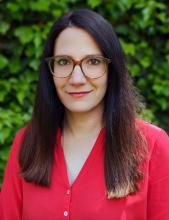
    Ms Ettinger is a lawyer in Germany and holds a Master of Law degree from George Mason University (USA). Before joining EuRIC, she worked at a Brussels-based consultancy, advising multinational companies on environmental, health and safety matters.

    EuRIC is a confederation which represents the interests of European recycling industries within the EU. It spans the majority of waste streams, and so can facilitate cooperation between national recycling and resource management federations and companies from over 23 European countries, operating both locally and globally.

    EuRIC represents:

    • 5 500+ companies generating an aggregated annual turnover of about €95 billion, including large companies and SMEs involved in the recycling of and trade in various resource streams
    • 300 000 local jobs which cannot be outsourced to non-EU countries
    • a million tons of waste recycled each year (metals, paper, glass, plastics, WEEE, ELVs, tyres, textiles, construction & demolition, etc.).

    By turning waste into resources, recycling loops recycled materials back into value chains. Recyclers play a key role in bridging resource efficiency, climate change policy and the industrial transition.

  • About this contact

    The Conseil Européen de Remanufacture (European Remanufacturing Council) is based in Brussels and represents multiple business sectors and trade associations that extend the life of products through remanufacture and refurbishment. A steering group made up of five member organisations advises on the annual work programme as we aim to increase sales of remanufactured products in Europe from €30 billion to €100 billion by 2030.

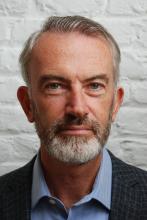
    David Fitzsimons became Director of the European Remanufacturing Council in January 2017. He represents the Council at the Ellen MacArthur Foundation, with whom he led the “BetterThanNew” project. He is currently a member of the UN working group on product life extension; a member of TC 323 for the forthcoming ISO standard (59000 series) for the circular economy; a member of the advising committee for the PLATE conference, and a member of the World Economic Forum Council for advanced manufacturing and production.

    He founded the circular economy consulting firm Oakdene Hollins in 1994 and is now director of the management board.

  • About this contact

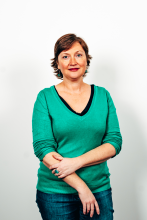
    Ladeja Godina Košir, Founder and Executive Director of Circular Change, is an internationally renowned expert on the circular economy, speaker, (co)author of several CE reports and articles, and co-creator of international circular economy events. Ladeja was the finalist for the Circular Leadership Award 2018 (Davos WEF) and named in "The #EUwomen4future campaign” featuring extraordinary women active in research, innovation, education, culture and sport by Mariya Gabriel, European Commissioner for Innovation, Research, Culture, Education and Youth in 2020. She is recognised as the regional "engine of circular economy transition". She is co-author of the first Roadmap towards the Circular Economy and creator and team leader of the annual international Circular Change Conference. Ladeja has consulted on the national circular economy roadmapping process based on stakeholder engagement for several countries and cities (Serbia, Montenegro, Norway, Israel, Chile, etc.).

    Ladeja has several international roles: chair of the coordination group of the European Circular Economy Stakeholder Platform (ECESP) in Brussels (2018/20), visiting professor at Doshisha University in Kyoto and co-leader of the Research Group Circular Economy Systems at the Bertalanfy Center for the Study of Systems Science (BCSSS) in Vienna.

    Ladeja takes a transdisciplinary systemic approach and holistic view as an entrepreneur, communications professional, speaker, moderator, lecturer, mentor and passionate connector. She is empowering a new narrative and circular culture. She bridges the bioeconomy and the circular economy; one of the EU projects to which she contributes is Effective (Horizon 2020 & BBI JU), a multi-company collaboration to produce more sustainable, bio-based fibres and plastics for large consumer products using renewable feedstocks and innovative technologies. She also chairs the expert group for the BIOeast Foresight Exercise 2050. Ladeja works with governments, city authorities, companies, NGOs, media and universities, empowering true collaboration to enable circular change.

  • About this contact

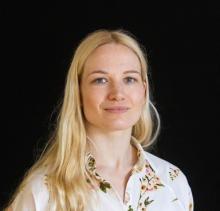
    Kari Herlevi is a circular economy multitalent. He is currently leading the circular economy area at Sitra, the Finnish Innovation Fund. There, he is focusing on the transition to a fair and competitive economy that tackles the root causes of biodiversity loss, climate change and overconsumption of resources, by facilitating the development and scaling up of the best circular solutions from Finland and the world. Previously, he worked at Tekes, the Finnish Funding Agency for Innovation, where he was responsible for the Green Growth and Vigo accelerator programmes. Kari also worked in the Tekes Silicon Valley office for a few years, and is particularly interested in new ideas and fast-growing firms in the circular economy, not least on the African continent.

  • About this contact

    The CSCP is a think and do tank that not only contributes to advancing the sustainable consumption and production (SCP) agenda through its think tank activities, but also implements innovative SCP projects and activities in the field as a do tank.  

    Michael Kuhndt is the Founder and Executive Director of the CSCP with more than 20 years' experience of international cooperation, development and sustainability.

    Michael Kuhndt has managed programmes for many multinational companies, ministries, European and UN organisations in the fields of: strategy development for sustainable supply chains & circular economy, development/set up of a sustainable consumption approach, upscaling of sustainable business models, triple bottom line innovation, sustainable finance and policy strategies based on multiple stakeholders.

  • Veerle Labeeuw
    Type of organisation or company
    Country
    Belgium
    About this contact

    Veerle works as a policy maker and facilitator for the public/private partnership Circular Flanders, which was initiated by the public waste agency of Flanders (OVAM). It serves as a hub, inspiration and matchmaker for the transition to a circular economy in Flanders.

    To move forward, six thematic strategic agendas have been identified:

    1. circular construction
    2. chemicals and plastics
    3. water cycles
    4. biobased economy
    5. food chain, and
    6. manufacturing (textiles, furniture, electronics, batteries, etc.).

    Each strategic agenda is a partnership in itself and is assigned a public and a private lead.

    Drawing up and implementing strategic agendas, however, doesn’t guarantee success. To make the transition to the circular economy a reality, there is a whole series of habits, rules and barriers inherent in the linear economy that need to be tackled. What’s more, communication, funding and robust scientific research are also required. The strategic agendas are therefore accompanied by seven levers: financing, communication, research, jobs and skills, circular procurement, innovation and entrepreneurship, and policy instruments.

  • About this contact

    The Association of Cities and Regions for sustainable Resource management is an international network of cities and regions sharing the aim of promoting a sustainable resource management, through prevention at source, reuse and recycling, and accelerating the transition towards a circular economy on their territories and beyond. The network currently counts about 100 members, mainly local and regional authorities as well as national networks of local authorities representing around 1100 municipalities. ACR+ is directly represented in 23 countries of the European Union, and the network can also rely on members in Morocco, Tunisia, Egypt, Palestine and Jordan

    Francesco LEMBO is Managing Director at ACR+, overseeing programs and projects, and ensuring that strategic plans and realistic objectives are in place and monitored. His key duties include fundraising, marketing, community and stakeholders’ outreach. He has over ten years of experience in supporting public administrations, SMEs, employers' associations, NGOs and universities in the design and management of international programs on lifelong learning and sustainable development. He has been advocating for the active involvement of citizens in the development of local and EU policies and the dissemination of inclusive educational models, also designing training programs focused on sustainable development and social inclusion. He wrote about inclusive pedagogy and recognition of prior learnings, and circular economy education. He has a Bachelor in contemporary history, and then followed MA studies in Lifelong Learning Sciences.

  • Agata Meysner
    Type of organisation or company
    Country
    Belgium
    EU
    About this contact

    Agata Meysner is a youth activist and the director of Generation Climate Europe (GCE). She holds an LLB in European Law from Maastricht University and is currently pursuing an MSc in Public Policy from University College London specialising in the circular economy and resource efficiency. Ms Meysner previously worked at the European Environmental Bureau, where she focused on the implementation of the SDGs by and in the EU.

    Generation Climate Europe is the largest coalition of youth-led networks at the European level, pushing for stronger action from the EU on climate and environmental issues. GCE brings together 460 national organisations across 47 countries in Europe. It is guided by the voices of 20 million young Europeans. GCE's mission is to create a platform for the youth to advocate for a just and green transition in Europe. 

    The circular economy is one of the key thematic areas for GCE, encompassing various issues such as textiles, digitalisation, energy and food systems.


  • Picture of Theresa Morsen
    Type of organisation or company
    Country
    Belgium
    About this contact

    At Zero Waste Europe (ZWE), Theresa Mörsen works as Waste & Resources Policy Officer and acts within the EU institutional bubble advocating for more ambitious legislation on waste prevention and resource consumption. She covers areas such as textiles, food waste and organic material, along with the broader field of municipal waste. Before joining ZWE, she worked as regulatory affairs manager in the private sector monitoring EU environmental policies, especially on electrical appliances. She also has experience working in the German and European parliaments.

    Zero Waste Europe is the European network of communities, local leaders, experts and change agents working towards the elimination of waste in our society. ZWE advocates for sustainable systems and the redesign of our relationship with resources to accelerate a just transition towards zero waste for the benefit of people and the planet.

    ZWE is also part of the Rethink Plastic alliance, an alliance of +10 European NGOs working with European policy makers to design and deliver policy solutions to tackle plastic pollution.

  • About this contact

    Neva Nahtigal is the Director of RREUSE. In addition to day-to-day management, she is involved in the organisation’s strategic development and leads its policy team. Neva worked internationally as a policy, research and communications consultant specialising in social and economic justice, sustainability and human rights. She then spent six years in the international office of a global civil society network focusing on improving working conditions in the garment industry before joining RREUSE in May 2023. She holds Masters degrees in Media Studies and Public Policy.

    RREUSE is an international network representing social enterprises active in the field of re-use, repair and recycling. Drawing on the first-hand experience of its members, RREUSE's mission is to ensure that policies, innovative partnerships and the sharing of best practices promote and develop the role of social enterprises in the circular economy. RREUSE's vision for Europe is built around circular activities that foster social value and create locally inclusive jobs whilst supporting vulnerable individuals. 

    RREUSE has 31 members across 29 European countries and the USA.

Displaying 11 - 20 of 24