
ECESP Annual Conference: a successful event with important messages
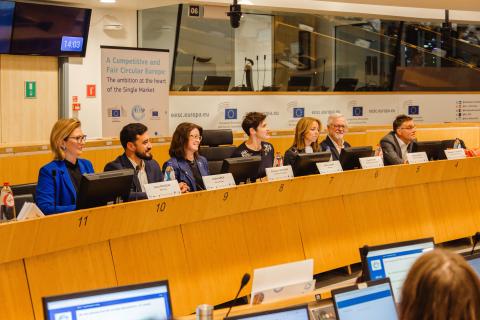
Our conference finished yesterday evening, having brought together EU institutions, civil society, academics, industry and young people to discuss all aspects of the circular economy, from legislation to social impact. Our new Coordination Group members shone as they spoke about the areas in which they are experts.
The various sessions and workshops looked at the forthcoming Circular Economy Act, designing local projects that turn abstract circular principles into tangible experiences that can help people, the need to link up the circular economy and the bioeconomy, what young people feel about circularity, the role of transition brokers – it was certainly a packed programme!
The CEA was a major theme. It will boost supply and demand for secondary raw materials and strengthen Europe's strategic autonomy, contributing to competitiveness and making Europe less dependent for critical resources. It won't be perfect, but the Commission will collect feedback on it next year.
It's clear that financing is a major barrier to real scale-up of circular businesses and projects. Bankers are reluctant to finance a type of business they are not familiar with and that doesn't have a proven track record. Two possible solutions to this were proposed: educating financiers and targeting types of capital funds that are more open to circular projects.
Another overarching theme was the social dimension. The circular economy is a huge shift in mindset – and that cannot be successful if it is imposed by legislation. Civil society has to be a key player here. People have to be shown why changing their behaviour matters, why renting rather than buying can be preferable, why they should aim to repair an item rather than throwing it out and getting a new one. Decision makers must listen to young people who will be living with the consequences of current action, and community-level projects demonstrating the practical, day-to-day value of circular principles must be supported.
The circular economy has a long way to go – after all, the circularity rate stands at 12%. However, between the climate emergency underlining in fire and flood that business as usual is not working and the geopolitical situation making it plain that relying on other countries is not viable, speakers and participants were clear: we cannot wait any longer to start delivering on the circular economy.