
Modelling to policy: Circular economy pathways towards net-zero: output of the meeting
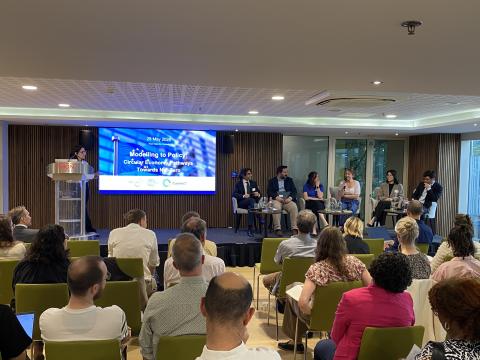
On 28 May, CircEUlar, CIRCOMOD and CO2NSTRUCT brought together more than 160 participants from policymaking, research, industry and civil society for their joint final event, Modelling to Policy: Circular Economy Pathways Towards Net-Zero.
One key message was that there is more to circular economy pathways than material recovery and recycling. Sufficiency measures, service-focused solutions, lifetime extension, digitalisation and behavioural change will all help Europe move further and faster towards net-zero.
Better alignment between modelling and policy, stronger evidence on behavioural and macroeconomic effects, and practical attention to skills, incentives, governance and policy cycle sequencing are also important.
Bringing together different modelling communities is not easy but it is valuable. Different modelling approaches, including macroeconomic models, system-oriented models and material flow models, shed light on different aspects of circular economy transitions and their implications for policy.
Data availability remains a major constraint, particularly for material use, activity levels, building stocks and product lifetimes. By sharing data and building on common evidence sources - including datasets on the European building stock - the three projects were able to improve consistency and strengthen the overall evidence base.
You can (re) watch the plenary discussions and read the report.