
The RELOOP project: designing a system that serves ready-made meals and collects the reusable packaging
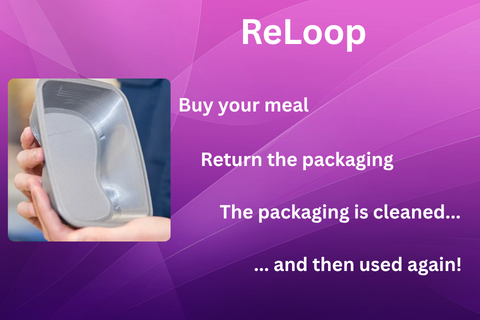
ReLoop is a Spanish project comprising the automatic dispensing of prepared food and the return of reusable, traceable containers in a closed-loop system.
The initiative is driven by a consortium: AUSOLAN, a leader in catering for institutions; AWAYTER, a manufacturer of innovative IoT and self-service solutions; ITC Packaging, a leading player in packaging; and AIMPLAS, the Plastics Technology Centre. The four partners are working together to develop a comprehensive circular model that enables the circulation of reusable packaging, monitors its lifespan and manages its return in an automated manner.
Challenges being tackled by this project:
- developing reusable and traceable food packaging which can withstand at least 40 uses whilst maintaining food contact safety, functionality and an appearance acceptable to the consumer. To achieve this, the consortium is researching new resilient materials which can be recycled at the end of their useful life.
- tracking the reusable containers to ensure that they are reused.
- developing an automated canteen that integrates the automated dispensing and return of reusable containers. This is a fully digital, 24-hour canteen service that will allow users to book food and make contactless payments, whilst also incorporating a container return system for subsequent cleaning and reuse.
- developing specific washing and drying protocols tailored to reusable containers and the food they contain. These processes are key to ensuring cleanliness without damaging the materials and to avoiding food safety risks, as inadequate drying can encourage microbial growth.
This circular model will apply mainly to catering in communal settings.
The RELOOP project is funded by the Ministry of Science, Innovation and Universities through the State Research Agency’s (AEI) 2024 Public-Private Partnership call for proposals and is co-funded by the European Union through the ERDF.