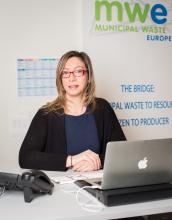
As an adviser for environmental and climate policy, Leon de Graaf particularly follows policies related to the circular economy, trade and climate, low-emission mobility, implementation of the Paris climate agreement (COP21) and the European emission trading system (EU ETS). He is also deputy manager of BusinessEurope's corporate Advisory and Support Group (ASGroup). Prior to joining BusinessEurope, Leon worked at the research consultancy Ecorys, focusing on renewable energy and international development issues, at DG COMP on energy and environmental subsidies in Europe, and at the Dutch Environmental Assessment Agency (PBL) on indirect ETS costs for energy-intensive industries. Leon has a MSc in environmental economics and climate change from the London School of Economics, and a BSc in business economics from the University of Groningen.
Municipal Waste Europe is the European umbrella association representing public responsibility for waste.
The members are national public waste associations and similar national or regional associations. They are committed to sustainable waste management that minimises the impact of waste on the environment and promotes resource efficiency, taking into account local conditions. Municipal Waste Europe promotes the interests of its members at European level, through joint positions on waste management issues and legislation and keeps its members informed on the latest EU policy developments. The association encourages the sharing of information among its members, including the exchange of good practice in the local management of waste.
Waste management services are a crucial aspect of the social responsibility for the environment and public health in Europe. This service, including collection and treatment systems, is best developed at national, regional and local level. For these reasons and also for the reason of continuity in the delivery of this indispensable service, regardless of market forces, Municipal Waste Europe promotes waste management as a service of general interest.
The SYMBI project helped improve the implementation of regional development policies and programmes related to the promotion and dissemination of industrial symbiosis and the circular economy.
Its website describes various projects based on industrial symbiosis.