The Plastics Recyclers Europe Annual Meeting, a key yearly event for the plastics recycling industry will be taking place in Brussels on 21 and 22 November 2019 and focus on the issue of recyclability.
Join Circular Flanders at the closing event of the Green Deal Circular Procurement (GDCP) in Brussels on 21 November 2019 to hear lessons learned and meet potential buyers or suppliers.
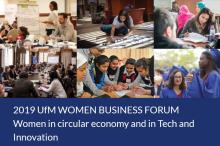
The Union pour la Méditerranée Women Business Forum aims to build skills, connect and empower female entrepreneurs to develop their business leadership and start, grow and sustain their enterprises in a regional competitive environment. The 2019 edition of the Business Forum will focus on Women in the circular economyand in Tech & Innovation Sectors.
CICERONE is organising its second workshop, "Funding the circular economy", in Berlin on 19 - 20 November 2019, to challenge and validate the policy toolkit for circular economy financing.
https://circulareconomyhotspotbelgium.be/The Circular Economy Hotspot highlights and promotes the endeavours of companies and organisations that are fostering innovation in the field of circular economy. After The Netherlands, Luxembourg and Scotland, Belgium will be hosting in 2019.
The Ellen MacArthur Foundation's DIF will return from 11 to 15 November with online webinars that shift mindsets and inspire action towards a circular economy by exploring disruptive ideas and stories across a range of topics.
Ecomondo, Italy's green technology expo, will return to Rimini for its 23rd edition from 5 to 8 November 2019 and feature a panel discussion by the Italian Circular Economy Stakeholder Platform.
RREUSE, the European network of social enterprises active in re-use, repair and recycling, is organising its third annual conference, in collaboration with the Spanish social enterprise network AERESS and Traperos de Emaús Navarra. This unique event will focus on strategies supporting longer-lasting products through re-use and repair that create local inclusive jobs, provide green products and services and contribute positively to well-being in our society.
Circular Flanders is conducting in-depth research on how car-sharing can contribute as much as possible to more efficient use of materials and a better environment, and is ready to share the outcome at this workshop in Leuven on 7 November 2019.