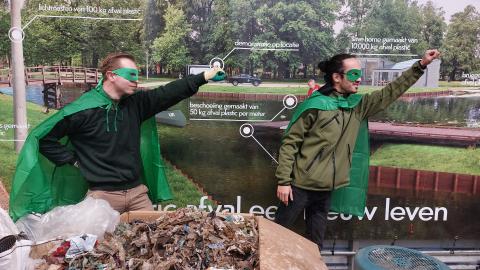
TRANSFORM-CE, an Interreg North-West Europe funded project promoting the circular economy in Europe, is pleased to offer educational programmes for primary and secondary schools to learn about the collection, treatment and recycling of plastic waste. Through these educational programmes schools get teaching materials about plastic recycling.
The research project Assessing the social impacts of circular strategies in the apparel value chain is a collaborative 4-year research project supported by the Laudes Foundation. This document presents evidence of the social impact of the circular economy in the textiles and apparel value chain in India, Spain and the Netherlands.
Following a massive open online course (MOOC) approach, the REFLOW Academy enables stakeholders to enroll in a set of free courses focusing on the circular economy.
The INSIGHT training course aims to increase knowledge, skills and competences concerning industrial symbiosis. The course, available for free on an e-learning platform, is in English, but summaries of each unit are provided in Italian, Spanish, French, Slovenian and Romanian.
The Girls Go Circular Project aims to equip 50 000 schoolgirls aged 14-18 across Europe with digital and entrepreneurial skills by 2027 through an online learning programme about the circular economy.
More than 20 organisations have come together in a global initiative to tackle the social and environmental problems of electronics. The Circular Electronics Initiative aims to encourage organisations and consumers to take a more responsible approach to the electronic goods they use. One core activity of the initiative is the annual event #CircularElectronicsDay.
Dive into the online business game The Blue Connection together with your students for a case study on introducing circularity into supply chains. The learning outcome is to have an understanding of the principles of circular supply chain management. Experience the circular way of doing business for a sustainable future!
The BetterGeoEdu project supplies primary teachers with educational material about raw materials, the circular economy and sustainability. BetterGeoEdu uses Minecraft to develop the material.
This interactive timeline of circular economythinking explores over 70 circularity concepts from the Global South and North alike. It helps researchers and practitioners better situate and navigate the concept of circular economy, both in its rich historical origins and in its theoretical diversity.