Coordination Group 2017-2020

  • About this contact

    FEAD is the European Federation representing the European waste management industry. FEAD’s members are national waste management associations covering 19 Member States, Norway and Serbia. They have an approximate 60% share in the household waste market and handle more than 75% of industrial and commercial waste in Europe. Their combined annual turnover is approximately €75 billion. FEAD represents about 3000 companies with activities in all forms of waste management. These companies employ over 320 000 people who operate around 2400 recycling and sorting centres, 1100 composting sites, 260 waste-to-energy plants and 900 controlled landfills. They play an important role in determining the best environmental option for waste management problems.

  • Type of organisation or company
    Country
    Belgium
    About this contact

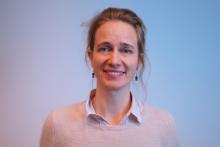
    Dorthe Nielsen, policy director at EUROCITIES, is responsible for the overall coordination and delivery of outcomes of the policy work in EUROCITIES. She focuses on sustainable urban mobility and green and smarter cities. She is also in charge of governance-related matters, including the urban agenda for the EU and creative citizenship. She previously worked for the Greater London Authority (EU office) and at the Secretariat General of the European Commission. She holds a Masters degree from the College of Europe (BE) in European politics and a Masters degree in public administration from the University of Roskilde (DK). A Danish national, she is fluent in English and French.

    EUROCITIES is the leading network of more than 140 major European cities, working together to improve the quality of urban life. It strives for a Europe where cities are genuine partners with the EU to create a better future. It puts individuals at the heart of developments to achieve inclusive, prosperous and healthy cities with future-fit local governments. It works to connect EU and local policy developments in areas such as climate, environment, mobility, economic development, social affairs, culture, digital transformation and urban development. The circular economy cuts across all those areas of work.

  • Start/End date
    to
    Country
    Belgium
    City
    Brussels
    Belgium
    Coordination Group activity type
    Abstract

    Two years after the adoption of the first EU Circular Economy Package, more than half of the initiatives included in the Action Plan were delivered. The first Circular Economy Stakeholder Annual Conference took place in Brussels in February 2018 to discuss upcoming deliverables, explore new areas of action, and share the first achievements of the European Circular Economy Stakeholder Platform.

  • Type of organisation or company
    Country
    Switzerland
    About this contact

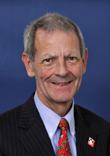
    Walter Stahel has been the founder and director of the Product-Life Institute (Switzerland) since 1983, the oldest consultancy in Europe devoted to developing sustainable strategies and policies. From 1986 to 2014, he was also director of risk management research at the Geneva Association.

    Currently, Walter Stahel works as an author, keynote speaker and storyteller. He promotes understanding of the structure of an economy in loops and its drivers and obstacles (circular industrial economy), spreads knowledge about the competitiveness of a performance economy selling goods and molecules as a service, and identifies the levers to speed up the shift from a linear industrial economy managing flows to a circular economy managing stocks. He does this through workshops, lectures and policy groups.


  • About this contact

    The CSCP is a think and do tank that not only contributes to advancing the sustainable consumption and production (SCP) agenda through its think tank activities, but also implements innovative SCP projects and activities in the field as a do tank.  

    Michael Kuhndt is the Founder and Executive Director of the CSCP with more than 20 years' experience of international cooperation, development and sustainability.

    Michael Kuhndt has managed programmes for many multinational companies, ministries, European and UN organisations in the fields of: strategy development for sustainable supply chains & circular economy, development/set up of a sustainable consumption approach, upscaling of sustainable business models, triple bottom line innovation, sustainable finance and policy strategies based on multiple stakeholders.

  • Type of organisation or company
    Country
    Austria
    About this contact

    Founded in 2015, the Circular Economy Coalition for Europe is a platform of scientists and universities in the fields of resource management, waste management and anthropogenic metabolism. Working to support the transformation of the EU to an effective and efficient circular economy, the experts provide the European institutions, national decision-makers, businesses and the interested public with facts and data based on scientific methods and evidence.

  • About this contact

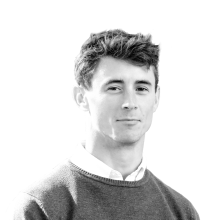
    At the European Environmental Bureau (EEB), Jean-Pierre is the policy officer responsible for Product Policy and Circular Economy.

    The EEB is Europe’s largest network of environmental citizens’ organisations with around 140 organisations in more than 30 countries. Jean-Pierre has a Master's degree in Environmental Policy from Humboldt University Berlin and in Geography from the University of Oxford.

    Prior to joining the EEB, Jean-Pierre worked for four years at the Institute for European Environmental Policy (IEEP) in Brussels, as part of their Green Economy programme where he specialised in plastics, market-based instruments and economic indicators. At IEEP, he published a number of reports on a range of environmental issues for the European Commission, the European Parliament, UN Environment and the OECD.

  • About this contact

    Laura Cutaia, researcher at ENEA, is an Environmental Engineer (1996) with a PhD in raw materials engineering (2002). Her main research topics are:

    • Industrial ecology and symbiosis,
    • Technology for raw and secondary materials treatment,
    • Resources management,
    • Life Cycle Assessment,
    • Environmental certification,
    • End of life management.

    Laura Cutaia is responsible for making the most of resources at ENEA , where she is working on the circular economy and resource efficiency, industrial ecology and symbiosis, LCA, environmental certification schemes, the REACH regulation and sustainable industrial areas (more information).

    Laura Cutaia is also president of SUN - Symbiosis Users Network (Italian network for industrial symbiosis) and president of UNI CT 057 on the circular economy that works with ISO TC 323 on the circular economy. UNI is the Italian body responsible for standardisation.

  • About this contact

    Kari Herlevi is a circular economy multitalent. He is currently leading the circular economy area at Sitra, the Finnish Innovation Fund. There, he is focusing on the transition to a fair and competitive economy that tackles the root causes of biodiversity loss, climate change and overconsumption of resources, by facilitating the development and scaling up of the best circular solutions from Finland and the world. Previously, he worked at Tekes, the Finnish Funding Agency for Innovation, where he was responsible for the Green Growth and Vigo accelerator programmes. Kari also worked in the Tekes Silicon Valley office for a few years, and is particularly interested in new ideas and fast-growing firms in the circular economy, not least on the African continent.

  • Type of organisation or company
    Country
    Belgium
    EU
    About this contact

    As an adviser for environmental and climate policy, Leon de Graaf particularly follows policies related to the circular economy, trade and climate, low-emission mobility, implementation of the Paris climate agreement (COP21) and the European emission trading system (EU ETS). He is also deputy manager of BusinessEurope's corporate Advisory and Support Group (ASGroup). Prior to joining BusinessEurope, Leon worked at the research consultancy Ecorys, focusing on renewable energy and international development issues, at DG COMP on energy and environmental subsidies in Europe, and at the Dutch Environmental Assessment Agency (PBL) on indirect ETS costs for energy-intensive industries. Leon has a MSc in environmental economics and climate change from the London School of Economics, and a BSc in business economics from the University of Groningen.