Coordination Group 2017-2020

  • About this contact

    Ladeja Godina Košir, Founder and Executive Director of Circular Change, is an internationally renowned expert on the circular economy, speaker, (co)author of several CE reports and articles, and co-creator of international circular economy events. Ladeja was the finalist for the Circular Leadership Award 2018 (Davos WEF) and named in "The #EUwomen4future campaign” featuring extraordinary women active in research, innovation, education, culture and sport by Mariya Gabriel, European Commissioner for Innovation, Research, Culture, Education and Youth in 2020. She is recognised as the regional "engine of circular economy transition". She is co-author of the first Roadmap towards the Circular Economy and creator and team leader of the annual international Circular Change Conference. Ladeja has consulted on the national circular economy roadmapping process based on stakeholder engagement for several countries and cities (Serbia, Montenegro, Norway, Israel, Chile, etc.).

    Ladeja has several international roles: chair of the coordination group of the European Circular Economy Stakeholder Platform (ECESP) in Brussels (2018/20), visiting professor at Doshisha University in Kyoto and co-leader of the Research Group Circular Economy Systems at the Bertalanfy Center for the Study of Systems Science (BCSSS) in Vienna.

    Ladeja takes a transdisciplinary systemic approach and holistic view as an entrepreneur, communications professional, speaker, moderator, lecturer, mentor and passionate connector. She is empowering a new narrative and circular culture. She bridges the bioeconomy and the circular economy; one of the EU projects to which she contributes is Effective (Horizon 2020 & BBI JU), a multi-company collaboration to produce more sustainable, bio-based fibres and plastics for large consumer products using renewable feedstocks and innovative technologies. She also chairs the expert group for the BIOeast Foresight Exercise 2050. Ladeja works with governments, city authorities, companies, NGOs, media and universities, empowering true collaboration to enable circular change.

  • Type of organisation or company
    Country
    EU
    EEA, Switzerland, candidate countries
    About this contact

    Dr Laurent Zibell led the development of industriAll European trade union's positions on the circular economy, innovation and digitalisation of industry.

    He started his career as an R&D engineer and worked in the field of high-tech and industrial innovation. He is a member of the French trade union CFDT. He holds MScs in Engineering from École Polytechnique and from Mines Paristech (FR), and a PhD in innovation economics from Cranfield University (UK).

  • Type of organisation or company
    Country
    Belgium
    About this contact

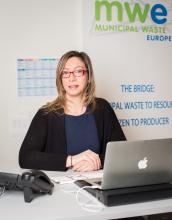
    Municipal Waste Europe is the European umbrella association representing public responsibility for waste.

    The members are national public waste associations and similar national or regional associations. They are committed to sustainable waste management that minimises the impact of waste on the environment and promotes resource efficiency, taking into account local conditions. Municipal Waste Europe promotes the interests of its members at European level, through joint positions on waste management issues and legislation and keeps its members informed on the latest EU policy developments. The association encourages the sharing of information among its members, including the exchange of good practice in the local management of waste.

    Waste management services are a crucial aspect of the social responsibility for the environment and public health in Europe. This service, including collection and treatment systems, is best developed at national, regional and local level. For these reasons and also for the reason of continuity in the delivery of this indispensable service, regardless of market forces, Municipal Waste Europe promotes waste management as a service of general interest.

  • About this contact

    The Association of Cities and Regions for sustainable Resource management is an international network of cities and regions sharing the aim of promoting a sustainable resource management, through prevention at source, reuse and recycling, and accelerating the transition towards a circular economy on their territories and beyond. The network currently counts about 100 members, mainly local and regional authorities as well as national networks of local authorities representing around 1100 municipalities. ACR+ is directly represented in 23 countries of the European Union, and the network can also rely on members in Morocco, Tunisia, Egypt, Palestine and Jordan

    Francesco LEMBO is Managing Director at ACR+, overseeing programs and projects, and ensuring that strategic plans and realistic objectives are in place and monitored. His key duties include fundraising, marketing, community and stakeholders’ outreach. He has over ten years of experience in supporting public administrations, SMEs, employers' associations, NGOs and universities in the design and management of international programs on lifelong learning and sustainable development. He has been advocating for the active involvement of citizens in the development of local and EU policies and the dissemination of inclusive educational models, also designing training programs focused on sustainable development and social inclusion. He wrote about inclusive pedagogy and recognition of prior learnings, and circular economy education. He has a Bachelor in contemporary history, and then followed MA studies in Lifelong Learning Sciences.

  • Upload document

    The circular phone

    The Circular Phone report
    Type
    Author
    Circle Economy
    Fairphone
    ABN Amro
    Allen & Overy
    ING
    PGGM
    NBA
    Circularise
    Sustainable Finance Lab
    Publication Date
    01/2018
    Country
    Netherlands
    Language for original content
    Harald Friedl

    The Circular Phone report provides practical answers to common financing pitfalls for circular businesses, using Fairphone as the real-life example.

    So far, businesses striving to implement “Product-as-a-Service” models have had the challenge of reconciling the need to find financing parties with the complexities of their own business model.

    To achieve a financeable model for the Circular Fairphone Service, the Community of Practice created a blueprint for Fairphone’s business model. Through the creation of a legal template – a 1st Circular Service Contract - and a financial cash flow tool, the group has proven that the gap between the businesses and financiers can be bridged.