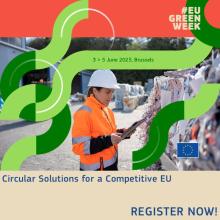
This year, EU Green Week will focus on circular solutions for a competitive EU. It will explore how the EU economy can speed up the transition from linear to circular models of production and consumption.
This report explores ways to boost stakeholder engagement in EU bioeconomy policy, a crucial step in shaping a sustainable and circular economy.
After identifying key gaps and opportunities, the study proposes seven recommendations to enhance stakeholder involvement, such as setting up an EU Bioeconomy Stakeholder Platform and a Bioeconomy Youth Forum. This will enable the EU to ensure that its bioeconomy policy is more inclusive, effective and responsive to the needs of all stakeholders.
The report sets out four case studies of successful stakeholder engagement initiatives. This includes the ECESP, which is described as having been highly successful in achieving its objectives and having inspired the establishment of similar platforms in other regions.
A total of EUR 172 million will be dedicated to advancing competitive circular bio-based industries in Europe across 13 topics. All stakeholders of the circular bio-based sector can apply: deadline 18 September!
This is the final event of the DEFINITE-CCRI project which links up high-impact circularity projects and funding institutions to boost the transition to a circular economy.
It will present key results of the DEFINITE-CCRI project, discuss relevant policy recommendations on circular economy project development assistance and engage with local start-ups and projects as well as with local government officials and investors.
Are you a manufacturing SME in the fields of machinery, food, textiles, plastics, ceramics or metals, looking to advance your SME's digital and green transformation?
The MANTRA project is preparing to support 50 European manufacturing SMEs and is looking for input!