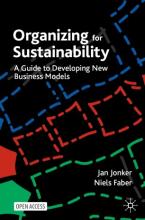
This open access book by Jan Jonker and Niels Faber aims to educate students and professionals on how to develop business models that have a positive impact on people, society and the ecological environment. It explores a different view of how to organise value creation, from a focus on almost exclusively monetary value creation to one that creates positive impact through multiple values.
This Circular Procurement toolkit outlines how businesses can redesign their procurement processes for greater ‘circularity’. This means maximising the value of products and materials while in use and recovering and repurposing them at the end of their lives, eliminating waste. This toolkit contains six simple steps for any business beginning their circular procurement journey.
Circle Economy's Circular Toolbox is a free online, step-by-step guide for apparel brands to launch rental and resale business models in 10 months. The toolbox guides users through a tried and tested circular innovation process and provides them with all the resources they will need along the way.
This new UNEP report highlights the critical role of financial institutions in advancing the growth of circularity by investing in businesses that take a more sustainable approach to production and consumption.
The Ellen MacArthur Foundation's new report highlights rapid growth in circular economy financing and investment, and describes how investors and the banking and insurance industry are capitalising on the resulting opportunities.
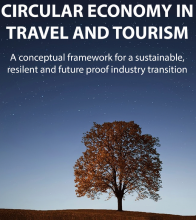
The travel & tourism industry has touchpoints with most, if not all, key value chains and material flows in society and is therefore very relevant to consider for the circular economy transition.
To guide a sustainable recovery and development of the industry post COVID-19, this publication introduces key circular economy principles and concepts in the context of travel & tourism.
The European Investment Bank's Circular Economy Guide aims to promote a common understanding of circular economy, and raise awareness about and promote circular solutions.
The Guide provides information about EIB’s lending and advisory activities in this field, and communicates the vision of how the EIB can further support the transition to a circular economy.
Professor Rebecca Earley introduces a series of short films about the design tools produced at the Chelsea College of Arts research centre, and how to use them to become a more sustainable and circular designer. The series aims to help designers access and use the research resources to stay inspired and motivated to design better futures.
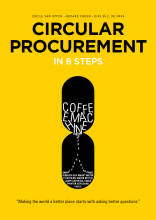
Increasingly, circular procurement is seen as one of the ways to promote a circular economy. The book Circular Procurement in 8 steps provides a practical approach to integrate circular economy principles into a procurement process.
A web-portal to help cities become circular: the Circular City Funding Guide was launched on 31 January 2020. The guide provides information and support on funding and financing of the circular economy in an urban context. It has two main target groups: fund-seekers and funders of circular projects in cities.