This second webinar in the Circular Economy Knowledge Hubs Webinar Series will showcase regional and global perspectives on implementing circular economy activities, with a focus on how knowledge platforms can drive awareness, build capacity and inspire action among policy makers, producers and consumers.
SUM 2025, the 8th Multidisciplinary Symposium on Circular Economy and Urban Mining, will take place on 21 to 23 May 2025 on the island of Procida.
The event aims to promote continuous interaction (discussion, collaboration, exchange of experiences, etc.) across disciplines, involving any science-based stakeholders or entities.
The Call for Papers is now open! Authors interested in presenting their work at SUM 2025 are invited to submit their papers on the 25 symposium topics, which range from energy and circular economy to contaminants from circular economy in the environment.
Brazilian Circular Hotspot will bring together experts and business and government representatives from around the world to discuss the challenges and opportunities in transitioning to a more circular economy.
As part of the official agenda of the World Circular Economy Forum (WCEF), the Brazilian Circular Hotspot will be a landmark in Brazil, inspiring and preparing society for the circular transition.
A tradition since 2019, the Business Council for Sustainable Development in Hungary (BCSDH) organises the Circular Economy Summit every November with the Dutch Embassy in Hungary. This year's conference will focus on the shift to a circular economy and international and domestic best practices.
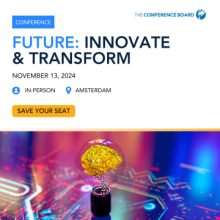
If your role requires you to lead change, then this conference is for you. It's intended for executives responsible for managing organisational transformation.
Change makers from around the globe will present cutting-edge technologies and strategies to help you deliver better results and generate more value. In her session, Ladeja Godina Košir, founder and Executive Director of Circular Change and Co-Chair of ECESP, will explore three strategies for integrating industries, policies and international partnerships in order to create a circular economy.
The ENDURANCE project has produced a handbook setting out a green acceleration methodology with defined, transferable and effective acceleration scenarios. These will serve as a roadmap for other European clusters, regardless of their sector of industrial activity.
The aim is to promote the transition towards a clean, circular and climate-neutral economy.