Upload document

Economic instruments and separate collection systems - key strategies to increase recycling

EEA
Type
Author
European Environment Agency
Publication Date
06/2023
Country
Denmark
Language for original content
Key Area
Scope

The EU has set ambitious targets to improve municipal waste management. EU Member States need effective strategies and policy instruments to achieve these targets.

This briefing provides an overview of some of the main instruments used across the EU and the performance of Member States so far.

Economic instruments can be useful policy tools for waste prevention and sustainable waste management. This is because they can make preferred management options, such as recycling, cheaper than or at least cost-competitive with their alternatives.

Like economic instruments, well-designed separate collection systems for municipal waste are a key enabler of high recycling rates and the collection of recyclables of adequate quality.

Upload document

Many EU Member States not on track to meet recycling targets for municipal waste and packaging waste

Many EU Member States not on track to meet recycling targets for municipal waste and packaging waste
Type
Author
European Environment Agency
Publication Date
06/2023
Country
Denmark
Language for original content
Key Area
Scope

Europe aims to become a circular economy. To encourage this, the EU has set targets for the 27 Member States to increase recycling and reduce landfilling. Specifically, by 2025, 55% of municipal waste and 65% of packaging waste must be prepared for re-use or recycled.

This briefing assesses Member States’ prospects of meeting these targets and its findings constitute the basis of the European Commission’s 2023 early warning report.

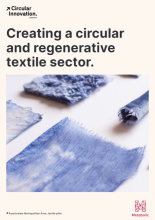
Creating a circular and regenerative textile sector
Type
Author
Anne de Valença (Metabolic)
Beatrice Marsili (Arboretica)
Chris Zganjar (Nature4Climate)
David Schriever (Metabolic)
Elise Eijs (Metabolic)
James Lloyd (Nature4Climate)
James Zhang (Arboretica)
Julie Phillips (Metabolic)
Leen Felix (Metabolic)
Louisa Durkin (Open Earth Foundation)
Patricia Da Matta (Nature4Climate)
Breanna Lujan (Environmental Defense Fund) - reviewer
Beatriz Granziera (The Nature Conservancy) - reviewer
Constanza Prieto Figelist (EarthLaw) - reviewer
Eva Gurria (UNDP) - reviewer
Kaiyang Xu (Arboretica) - reviewer

Publication Date
05/2023
Country
Netherlands
Language for original content
Scope

The Metropolitan Region of Amsterdam (MRA) aims to achieve 70% circular textiles by 2030. This report provides a clear vision and a plan on how to successfully transition to a regenerative and circular textile system.

This research is provided by the Circular Innovation Collective (CIC), a squad of three impact-driven organisations: Metabolic, Impact Hub Amsterdam and Bankers without Boundaries. It is supported by the Municipality of Amsterdam, DOEN, and Goldschmeding.

Do you struggle to find the needed resources to set up and commercialize innovative circular economy projects? This workshop on 13 June provides an overview of different funding sources available for circular innovations and of the criteria to be fulfilled in order to tap into them.

The speakers:

  • Thomas van Nieuwenhuizen, EGEN
  • Annika Kossack, EISMEA
  • Céline Rottier, European Investment Bank
  • Javier Rodrigo Aznàrez, Regional Government of Navarra
  • Lorenzo Valeriani, Metagroup.
Country
Belgium
Learning opportunities
Training opportunities

Enrol now in the new FOODRUS e-learning course to learn more about innovative solutions to reduce food waste!

Designed to empower individuals and communities, this online course developed by the EU-funded project FOODRUS offers valuable insights and practical strategies to tackle food waste and loss across various stages of the food value chain.

Subscribe to