On 20 September, the Fraunhofer EU Office in Brussels will be holding a workshop to discuss its Roadmap for the Future Development of the Circular Bioeconomy. The workshop will explore the scientific and technological potential and challenges of the bioeconomy, how the bioeconomy can meet ecological and socioeconomic needs, and the policy framework needed to achieve this.
Participants will seek to identify solutions for the four application areas of bioeconomy: nutrition, biomass material utilisation, CO2 value creation and the socio-economic aspects of the bioeconomy.
The European Recycling Conference 2023 will take place on 28 September in Brussels.
This year, EURIC is teaming up with DENUO, the Belgian waste management and recycling federation, to shine a spotlight on car recycling. Why? The automotive industry is going through a major revolution. By 2035 - practically tomorrow in terms of industrial value chains - combustion engine vehicles will be phased out and replaced by electric vehicles (EVs). This transition will have a significant impact on all the players involved, considering that the industry provides 12.6 million direct and indirect jobs in the EU. Recycling is no exception.
The European Commission has launched a new call for tenders under the European Maritime, Fisheries and Aquaculture Fund (EMFAF) which will be particularly relevant to stakeholders working on ship recycling.
The call will finance a study providing the European Commission with an up-to-date analysis of the economic dynamics and effects of the use of controversial open registers for vessels, including the impact on the environment.
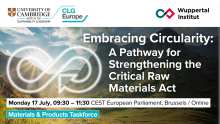
The Materials & Products Taskforce will be hosting a hybrid event centred around the launch of a new policy briefing on the Critical Raw Materials Act.
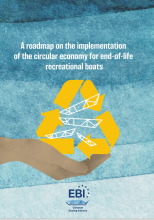
The boating industry in Europe, represented by EBI (European Boating Industry), has developed a roadmap for solving the roadblocks to end-of-life boat recycling. It sets ambitious targets and policy recommendations to reach by 2030. The boating industry also commits to phasing out unsustainable recycling practices.
The roadmap and recommendations were developed by EBI following the work of the Stakeholders’ Group on end-of-life recreational boats. The Group is co-chaired by the European Commission's DG MARE and EBI and includes national authorities of the Member States and key stakeholders (industry, users, academia and related industries).
The European Commission has launched an open public consultation to offer users of imaging equipment and stakeholders involved in all areas of the value chain (original equipment manufacturers, component suppliers, users, repairers, remanufacturers of cartridges, recyclers, etc.) the opportunity to express their views on how to best address the policy challenges outlined in the call for evidence for this initiative. The initiative aims to ensure that:
imaging equipment, such as printers, is designed to be energy- and resource-efficient
consumers have the information needed to use their devices sustainably, including through maintenance and repair
the generation of waste through the use of consumables (e.g. ink cartridges) is minimised.
On 3 July, the Court of Auditors issued a special report on the roll-out of the circular economy in the EU, entitled "Circular economy: slow transition by member states despite EU action".
The report provides recommendations on monitoring and investments. These are currently being addressed by the Commission which will take them into account when developing future circular economy policies.