The conference on Green PLM 2023 - We enable the shift to sustainability will feature presentations and discussions on data management and digital solutions for product carbon footprints, secondary material rates and circularity.
There is a fee to take part in this conference, which will be held in Berlin on 9 November 2023. The event will be partly in German and partly in English.
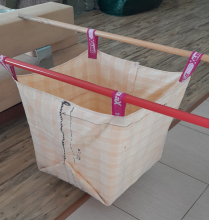
The Albanian social enterprise RecycAl reuses textile waste such as leather or canvas by turning it into heavy-duty bags that could be produced at industrial scale.
This Brussels based event on 21 November 2023 will bring together industry leaders, policymakers, and innovators to explore the path towards a more sustainable and circular textile sector.
The Corporate Sustainability Reporting Directive (CSRD) will require EU business to report on several new sustainability topics, including their circular economy performance. However, only 2% of businesses currently comply with the disclosure requirements on resource use and the circular economy. Is your organisation ready?
This online meeting on 18 September 2023 will discuss which further recycled nutrient products might be appropriate for certified Organic Farming, based on practical examples, and under what conditions they might be considered.
Questions considered: solubility and plant availability of nutrients, origin of raw materials, chemicals used in recovery process and life cycle assessment, contaminants and safety.
Examples will be: calcined phosphates, biochars, phosphate fertilisers from ashes, recovered ammonium sulphate, recovered nutrients from aquaculture and other marine wastes.
Bioremediation, the process of using living organisms to break down environmental pollutants, has real potential for the circular economy. It could help address environmental pollution while promoting resource recovery and sustainability.
The process also supports more circular use of resources, minimises waste generation and reduces the need for resource extraction.
On 12 September, the ECESP Leadership Group on Bioeconomy will bring together an expert panel to discuss ways to clean up the environment using this nature-based solution and achieve zero-pollution. Participants will learn how to reduce microplastics and pharmaceutics contamination in the soil and water.
Our experts will present innovative bioremediation solutions and how to implement them sustainably.
The European Commission has launched the LIFE Programme’s 2023 Calls for project proposals, making €611 million available for nature conservation, environmental protection, climate action, and clean energy transition projects. €81 million are set aside for projects in the field of circular economy and quality of life.