Re-think Circular Economy Forum is an event designed to present a vision on macro-trends, possible evolutionary paths, and main projects concerning the Circular Economy on a local, national and international level. It wants to encourage the development of Circular Economy in Taranto and in the rest of Apulia territory.
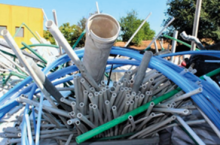
The "Waste REcycling Project" (WREP) is a pilot scheme developed by PVC Forum Italia, the national association of producers, converters and recyclers of PVC (polyvinyl chloride), in collaboration with VinylPlus, the European PVC value chain association.
It aims to make the collection, sorting and recycling of PVC waste from demolition/renovation, bulky waste and waste management centres more efficient, using a consolidated and accredited traceability methodology.
The Circular Economy Lab was set up in 2018 by Cariplo Factoryand Intesa Sanpaolo Innovation Center. It is a hub of circular economy competences that aims to help spread the principles and methods of the circular economy and support companies as they go circular.
The Lab is involved in various projects, such as the Iren Startup Award Call4Circular | Circular products and materials. It promotes the circular economy by holding workshops on key topics and by creating networking opportunities for innovative ecosystem players, such as startups, innovative SMEs, universities, research centres and technology transfer centres.
Intesa Sanpaolo has worked with the Ellen MacArthur Foundation to identify criteria for assessing the level of circularity of the initiatives proposed by companies. It has issued a new Circular Economy Plafond of EUR 8 billion for the green and circular economy.
Wood is becoming increasingly important: it is key to energy, construction and decarbonisation, as well as raw material security. In addition, a raft of legislative and non-legislative measures are being prepared by the Czech Republic and the EU on the issue of wood processing and forestry.
Analysising the sector is therefore paramount. After eight months of work, the research team (Think Tank) of the Institute of Circular Economy has published a study on Closing the Loop on Wood: Circular Bioeconomy Opportunities in the Value Chain for Forest Products and Wood in Czechia. It explores the material flow of wood in the Czech Republic and the challenges, weaknesses and opportunities for cross-sectoral use.
The ELLIPSE project seeks to optimise the use of two heterogeneous waste streams of which plentiful amounts are generated across Europe: slaughterhouse waste (bellygrass) and paper and pulp sludge. The project will produce cost-efficient polyhydroxyalkanoates (PHAs) for the agricultural and packaging sectors by co-processing these waste streams with other organic ones such as glycerol from the biodiesel industry and sludge from the dairy industry.
Skanska is a leading construction and development company that has made sustainability a crucial part of its operations. With the assistance of Cyrkl, it has taken on the challenge of deconstructing the Merkuria building, revolutionising the industry, saving materials and helping charities in the process.
If you want to help shape EU plans for a more sustainable built environment, it is time to have your say by responding to a consultation that supports the development of a new Commission roadmap for reducing whole life carbon in the building sector.
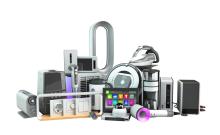
Anything with a plug, battery or cable can be recycled! An International E-Waste Day to shed light on ‘invisible’ electronic waste
This year International E-Waste Day will operate under the slogan “You can recycle anything with a plug, battery or cable!”, thus highlighting the issue of invisible e-waste – the electronic items that often fall under the recycling radar of those disposing of them, because they are not seen as e-waste.
While often associated with discarded gadgets and devices, a significant amount of electronic waste remains hidden in plain sight.