This online workshop will mark the official launch of the final version of the Self-Assessment Tool, a key component of the CCRI designed to support cities, regions and territorial clusters in monitoring circular activities. 

Country
Italy
Learning opportunities
Publications
Training opportunities

The Erasmus+ project "Circular City Through Educational Circular Economy Methods for Social Enterprises" (CIRC) has produced a free modular toolkit empowering adult educators to teach circular economy principles to marginalised adults at risk of exclusion. It includes a guide and a training format.

#EUGREENWEEK Partner Event, 30 June 2025, online webinar, Boosting the secondary materials market levering on their circular performances. The logos of ENEA, the Italian National Agency for New Technologies, Energy and Sustainable Economic Development, and UTILITALIA, Federazione Utilities acqua, ambiente, energia. Photo of people mending electronic items
Event type
City
online
Country
Italy
Scope

The circular economy's contribution to saving virgin raw materials is a widely recognised principle. Its contribution to climate neutrality is still underestimated. 

This workshop will explore how tools and policies for boosting the market in and use of secondary materials can exploit the energy and environmental performance of secondary materials.

German National Circular Economy Strategy

Germany's National Circular Economy Strategy adopts a strategic vision focused on reducing the consumption of primary raw materials. This approach is guided by the proposal from the International Resource Panel, under the United Nations Environment Programme (UNEP), which sets a global target of 6-8 tonnes of raw material consumption per capita per year by 2050.

The strategy considers every stage of the cycle: product design, material selection, production, maximising the use phase and, finally, reuse and recycling. It aims to prevent waste from being created in the first place. This can be achieved through smart product design, efficient manufacturing, extended product lifespans, easier repairability and maximising the recycling of all materials.

WCEF2025 reaffirmed the circular economy as a cornerstone of the regenerative economy and a vital strategy for decoupling well-being from resource use, placing the production sector at the centre of the transition. Read the summary to see what was discussed and shared there!

The MANTRA project, funded by the EU under Horizon Europe, aims to accelerate the green and digital transformation of manufacturing SMEs in Europe by promoting advanced technologies and social innovation. 

They have three open calls: for Manufacturing SMEs, Tech-savy SMEs and External Evaluators.

The ECESP Leadership Group on Textiles organised the #EUCircularTalks event on Circular textile policies: implementation, challenges and the role of the Circular Economy Act. 

This webinar aimed to assess the state of play of circular textile policies in the EU, examining progress made, existing gaps and next steps.

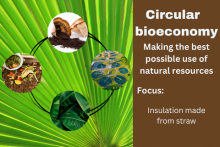
"Circular bioeconomy – making the best possible use of natural resources. Focus: a one-stop shop for learning how to farm black soldier flies". Images of coffee grounds, food waste, banana leaves and sewage ponds.
News type
Country
Finland
Scope

The ECESP website has a good selection of circular bioeconomy-themed content. We'll be shining a spotlight on some of it here!

This item looks at: a one-stop shop for learning how to farm black soldier flies.

A paper on a desk, with the following words written on it: Sign the Paris Call for the Reuse Economy, and a green circular logo beneath them. There is a pen on the desk beside the paper.
News type
Country
France
Key Area

The Paris Call for the Reuse Economy aims to form a community working to make reuse the rule, rather than the exception. It calls on people who believe in the power of the reuse economy as a driver of resilience, value creation and economic sovereignty. Do you agree? Then sign it!

Subscribe to