Image of a woman's head and shoulders made up of images representing wind energy, water, transport, biodiversity. the text: "European Environment Agency - Europe′s environment 2025 - Main report - Europe′s environment and climate: knowledge for resilience, prosperity and sustainability - EEA Report"
Type
Author
European Environment Agency (EEA)
Publication Date
09/2025
Country
EU
Language for original content
Scope

Every five years, the European Environment Agency publishes a state of the environment report.

The 2025 report stresses that climate change and environmental degradation pose a direct threat to Europe’s competitiveness, which depends on natural resources. Protecting natural resources, mitigating and adapting to climate change, and reducing pollution will build the resilience of vital societal functions that depend on nature, such as food security, drinking water and flood defences.

We need to rethink the links between our economy and the natural environment, land, water and natural resources. The circular economy is part of this dynamic, and is addressed in chapter 4 on Managing the dynamic between our economy and our natural resources.


CircularTracker is an online circularity measurement tool. It enables businesses and institutions to assess, visualise, compare and communicate product circularity features in a standardised way.


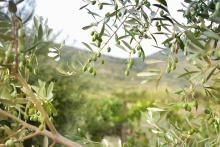
If you've ever been to Spain, for instance, you'll know that the Mediterranean has a lot of olive trees. That makes for a lot of waste. This project aims to use that waste to make animal feed, additives, packaging and biogas.

Upload document

Scaling action for nature: How the circular economy can help deliver the Global Biodiversity Framework

"Ellen MacArthur Foundation – policy brief: Scaling action for nature: How the circular economy can help deliver the Global Biodiversity Framework", with a circular image of trees, water and a man planting a small tree
Type
Author
Ellen MacArthur Foundation
Publication Date
09/2025
Country
United Kingdom
Language for original content

This policy brief aims to shed light on the circular economy’s role as a systems approach to delivering the Kunming-Montreal Global Biodiversity Framework (GBF) and addressing the global biodiversity crisis.

The circular economy does not explicitly feature in the GBF. It is often narrowly associated with waste reduction, particularly in the plastics sector. This risks obscuring the broad potential of circular approaches across sectors to help achieve biodiversity objectives, including through improved resource use, sustainable land management and funding mobilisation. 

The brief underscores the circular economy’s potential to transform the whole economic system into one that values, preserves and regenerates nature – a transformation essential to the GBF’s long-term success.

"Circular bioeconomy – making the best possible use of natural resources. Focus: converting orange waste into fabric". Images of coffee grounds, food waste, banana leaves and sewage ponds.
News type
Country
Italy
Scope

The ECESP website has a good selection of circular bioeconomy-themed content. We'll be shining a spotlight on some of it here!

This item looks at: converting orange waste into fabric

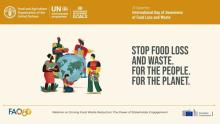
This webinar aims to highlight the vital role that stakeholder engagement, including public-private partnerships, voluntary agreements, and collaborative and multisectoral platforms, play in advancing food waste reduction. 

It will share practical insights and inspire stakeholders looking to start or strengthen their own partnerships and agreements, whether in Europe, South America or other parts of the globe.

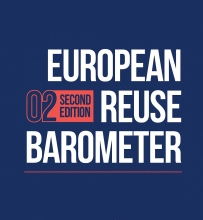
Contribute to the 2025 European Reuse Barometer! The results will highlight progress, inspire new solutions and guide decision makers towards ambitious reuse targets. All reuse businesses are invited to complete the survey. 

Deadline: 30 September!

This webinar will introduce the concept of circular sanitation and will show the benefits of closing nitrogen and phosphorus loops. Using examples from all over Europe, it will present policies and actions that local and regional authorities can implement to make circular sanitation a reality.

This online session is a side event of the European Week of Regions and Cities.

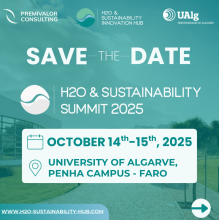
This is an international event bringing together leading experts, companies, startups, universities, research centres and institutions to promote dialogue, foster collaboration and accelerate innovation in key areas including the circular economy. It will include a high-level conference with renowned speakers addressing emerging challenges and solutions at the intersection of sustainability and technology.

Subscribe to