Re:inventex is carrying out a project for the recycling of post-industrial and pre-consumer textile waste. It is essentially the first pilot project in Ukraine to create a modern infrastructure for the collection, sorting and recycling of textile waste.
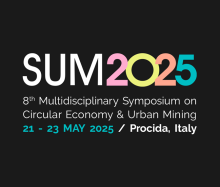
SUM 2025 aims to promote more continuous interaction and collaboration across fields, encouraging sustained, multidisciplinary dialogue and strategic partnerships.
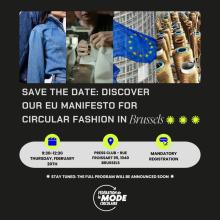
The Fédération de la Mode Circulaire (Circular Fashion Federation) is organising an event which will mark a milestone in their journey towards sustainable fashion: the release of their EU Manifesto for Circular Fashion. This manifesto outlines a policy roadmap for the European Union to leverage circular fashion as a means to bolster its textile industry, promote fair competition and champion environmental and human rights standards.
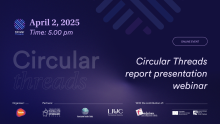
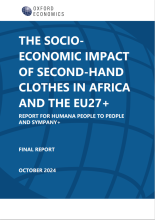
Threads of Change is a new platform created by Humana People to People that highlights the transformative role of the second-hand clothing (SHC) industry in fostering sustainability, economic growth and social equity.
This initiative calls for supporting policies with a holistic perspective for a sector that is key to reducing environmental impact, creates green jobs along the global value chain, and contributes greatly to the EU’s GDP while minimising the use of scarce resources.
The platform's main aim is to spotlight the SHC industry's critical role in shaping a more sustainable textile sector. Help us build a case for an even more efficient and ambitious textile value chain by sharing your best practices or your views on the topic!
SustainableSolutionsMatch is the first cross-sectoral virtual event empowering European businesses on their path to a sustainable and circular economy. It brings solution seekers and providers together to tackle real challenges and find practical answers.
Whether you're looking for innovative ideas or reliable partners, this event brings solution seekers and providers together to tackle real challenges and find practical answers.
Le Marché is based in Pakistan and active throughout South Asia, with partners in Germany, France, the UK and the US. It has a two-pronged approach: it collects textile waste and recycles it for use as a secondary raw material, and it uses fibres made from agricultural waste.
The European Commission's Joint Research Centre has published a study on new product priorities in connection with the Ecodesign for Sustainable Products Regulation. The ESPR entered into force this year and aims to make sustainable products the norm.
The study looked at a number of product groups and horizontal requirements to see if they were suitable for action under the ESPR. The criteria used were environmental impacts and improvement potential, market relevance, policy coverage in the EU, cost reflections, and contribution towards EU Open Strategic Autonomy.
It identified 11 final products, seven intermediate products and three horizontal requirements (durability, recyclability, recycled content) as potential priorities for the next steps in preparing the first ESPR Working Plan.
The Sustainable Fashion Academy launched the Scandinavian Textile Initiative for Climate Action (STICA) in collaboration with various apparel and textile companies. STICA aims to ensure that the Nordic region and Europe reduce their climate impacts in line with the 1.5°C global warming pathway, while transforming their businesses and the industry.
Signatories to STICA undertake to set targets on scopes 1 to 3 and report back. The focus of this report is emissions reduction, and circular business models are presented as part of the solution. The information provided by the signatory companies as part of their reporting covers circular business models, breaking down how these contribute to scope 3 reduction and their place in the companies' climate action transition plans.
The ECOFAP project aims to make shoe soles and heels from a material manufactured from tanned leather waste using 3D printing. This research project will help solve the problem of how to recycle leather scraps from the footwear manufacturing industry.
This report is part of a larger, collaborative four-year research project. It analyses the fashion value chain from a global and local perspective with an emphasis on India, Spain and the Netherlands, using a novel framework to assess social impact for circular economy called the SIAF-CE.
The report concludes that the Dutch circular ambition in policy is high and a solid ecosystem is in place. The most established circular strategies are resale and recycling, while promising ones are resale-platform-based, rental and repair. However, the social impact of most circular strategies seems to emulate linear value chain working conditions, where women workers hold the most vulnerable jobs, with low pay, short-term contracts and lower collective bargaining.