Documentation et références

Dans cette section, vous trouverez les études et rapports liés à l’économie circulaire qui ont déjà été publiés.

Ces études, publications universitaires, rapports d’entreprises et autres sont transmis par les parties prenantes, les acteurs économiques ou les auteurs de ces documents. Pour proposer votre propre publication, veuillez compléter notre formulaire en ligne [EN]

Displaying 361 - 370 of 575
  • Upload document

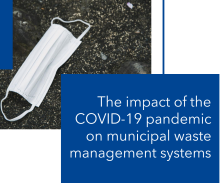
    The impact of the COVID-19 pandemic on municipal waste

    ACR+
    Type
    Author
    Jean-Benoît Bel
    Paolo Marengo
    Publication Date
    04/2021
    Country
    Belgium
    Language for original content
    Key Area

    ACR+ has run a survey targeting municipal and local authorities (and their waste operators) to understand and assess the impact of the COVID-19 on their waste systems, in particular regarding the services provided, the quantities collected, the health and safety measures, as well as the finances and communication to users.

    The report presents the main information and trends coming out of this survey. It also provides an overview of the measures taken by local authorities to tackle the first wave of the COVID-19 pandemic and the lockdown measures.

    Local data were collected to analyse the impact of municipal waste generation and sorting performances. Several illustrations of good practices addressing key challenges are also highlighted.

  • Upload document

    A circular economy for plastics: Let's turn challenges into opportunities

    NL branding
    Type
    Author
    Anna Schwarz, Netherlands Organisation for Applied Scientific Research
    Rob de Ruiter, Netherlands Organisation for Applied Scientific Research
    Esther Zondervan, Netherlands Organisation for Applied Scientific Research
    Freek van Eijk, Holland Circular Hotspot
    Lia Huybrechts, Holland Circular Hotspot
    Publication Date
    04/2021
    Country
    Netherlands
    Language for original content

    Energy efficient bubbles, solar-powered interceptors, new business and design models, smart collection solutions, high-tech and fully automated sorting practices and chemical recycling technologies: the Dutch initiative provides inspiration and innovation insights linked to a circular economy for global application. Only by international collaboration will we achieve sizeable success as the plastics value chain spans the globe.

    With this brochure, Holland Circular Hotspot and TNO bring their insights to the international level and share best practices with the hope that it will inspire everyone around the world to take action and kickstart circular development.

  • Upload document

    Growth-positive zero-emission pathways to 2050

    Sitra
    Type
    Author
    Paul Drummond, Daniel Scamman, Paul Ekins (UCL)
    Leonidas Paroussos (E3-Modelling)
    Ilkka Keppo (UCL and Aalto University)
    Publication Date
    04/2021
    Country
    Finland
    Language for original content

    Sitra commissioned this study to investigate whether and under what assumptions and policy measures the decoupling of CO2 emissions from economic growth could occur at a sufficient rate for CO2 emissions to decline to net zero by 2050. The analyses were carried out on a global level.

    The results of this study show that deep CO2 emission cuts in line with the 1.5 °C target and positive GDP growth can occur at the same time.

    A natural next step would be to analyse in detail the decoupling of other harmful environmental impacts from economic growth. For example, a global shift to more circular business models could reduce CO2 emissions and help cut the use of materials and natural resources while maintaining economic growth.

  • Upload document

    The winning recipe for a circular economy

    Sitra
    Type
    Author
    Maria Hughes, Reetta Kohonen, Antti Lehtinen, Anu Mänty and Mika Sulkinoja (Sitra)
    Lauri Byckling, Nina Ahola, Ella Tolonen, Nicolas Dolce, Miikka Simanainen (Deloitte Finland)
    Olivier Jan, Pierrick Drapeau, Andreas Mitsios, Khai Linh Lhomme, Laura Plamondon (Deloitte France)
    Akira Kato, Arisa Fukuoka (Deloitte Japan)
    Joe Solly, Jillian Rodak, Tamara Luisce (Deloitte Canada)
    Publication Date
    04/2021
    Country
    Finland
    Language for original content

    This study set out to find diverse circular economy solutions that are viable and scalable, that drive systemic circularity, and that have exceptionally positive environmental and social impacts. Over 200 organisations around the world submitted their solutions for consideration.

    The study presents 39 outstanding examples of circular economy solutions that are closing material loops and driving the circular transition while being very relevant to their own environment. 

    These solutions demonstrate the benefits of circular business operations and how different organisations across society can use circular thinking to improve the value of their business and progress towards achieving the UN’s Sustainable Development Goals.

  • HARRPA logo
    Type
    Author
    Fraunhofer Institute for Environmental, Safety and Energy Technology UMSICHT
    Publication Date
    01/2018
    Country
    EU
    Language for original content

    Crude Tall Oil (CTO) is obtained from the wood pulping industry. Tall (from the Swedish word for pine) oil soap is collected from paper mills and then acidulated to make crude tall oil which is a mixture of fatty acids, rosin acids and other neutral materials.

    CTO is a renewable material with great potential, high added value and extremely low carbon emissions. CTO can be further refined by fractionation, which separates it into tall oil fatty acids, tall oil rosins, distilled tall oil, pitch and heads.

    CTO derivatives can be used in several sectors, such as animal feed and asphalt recycling, as well as for paints, lubricants, glues and road marking agents. CTO is not yet a widespread practice and could be further explored in the EU.

  • Upload document

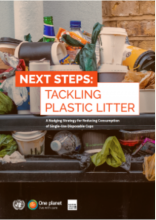
    A Nudging Strategy for Reducing Consumption of Single‑Use Disposable Cups

    Front page of the report
    Type
    Author
    Swedish Environmental Protection Agency (EPA)
    Publication Date
    03/2021
    Country
    Sweden
    Language for original content

    In this report, nudging is explored as a complement to traditional policies (regulation, economic incentives and information campaigns) to reduce the use of single-use plastics. Behavioural insights are used to develop different options to nudge consumer preferences from single-use cups to more sustainable alternatives.

    Based on careful reviews and analysis of previous nudging projects, three green nudges are proposed to catalyse this shift.

  • Upload document

    Wider environmental impacts of industry decarbonisation

    European Commission
    Type
    Author
    Wood
    Publication Date
    03/2021
    Country
    EU
    Language for original content
    Key Area
    Scope

    Industry faces major challenges with regard to handling the transition to an economy with net-zero greenhouse gas emissions by 2050. As yet, we are far from fully understanding the potential wider environmental impacts of this transformation. Furthermore, we are largely unaware of the untapped potential of industrial facilities in sectors covered by the Industrial Emissions Directive (IED) to contribute to the circular economy.

    The study aimed to provide an initial overview of the potential wider environmental impacts of industry's transition within the scope of the IED to a low carbon economy, and to gain a better understanding of how IED facilities could contribute to a circular economy.

  • Upload document

    White paper on Pathways for Extended Producer Responsibility on the road to a Circular Economy

    Utrecht University
    Author
    W.J.V. Vermeulena
    C.W. Backes
    M.C.J. de Munck
    K. Campbell-Johnston
    I.M. de Waal
    J. Rosales Carreon
    M.N. Boeve
    Publication Date
    03/2021
    Country
    Netherlands
    Language for original content
    Key Area
    Scope

    The Circular Economy and Society Hub of Utrecht University has prepared a white paper analysing the key strengths and weaknesses of the way in which Extended Producer Responsibility (EPR) is organised in the Netherlands. Based on this analysis, it then sets out three pathways for improving EPR with a view to enabling it to contribute to the circular economy goals:

    1. Optimising EPR as an instrument for post-user circularity
    2. Re-designing EPR as an instrument for circular economy transformations
    3. Beyond EPR: other means of support.


  • Upload document

    Relevance of Biodegradable and Compostable Consumer Plastic Products and Packaging in a CE

    EC logo
    Type
    Author
    Eunomia Research & Consulting Ltd
    Publication Date
    03/2020
    Country
    EU
    Language for original content
    Scope

    In 2015, the European Commission adopted the Circular Economy Action Plan to help stimulate the transition towards circular economy. The growing number of plastic products and packaging marketed as ‘biodegradable’ or ‘(home) compostable’ raises the question of the extent to which biodegradability and compostability of plastic is beneficial in the context of the transition towards a circular economy.

    The study assesses this question, identifying conditions in which (home) compostability of products could be of added value, compared to reuse and other forms of recovery. The results indicate weak evidence in favour of beneficial agronomics associated with compostable plastic material. Choices of materials for products and packaging should prioritise recyclability over compostability.

  • Upload document

    Textiles - from waste to resource by 2030

    IVA logo
    Type
    Author
    Elin Larsson
    Publication Date
    01/2020
    Country
    Sweden
    Language for original content
    Key Area
    Scope

    The Royal Swedish Academy of Engineering Sciences (IVA) has issued a report on how to make the textile sector more sustainable. It provides proposals for a more resource-efficient and smart textile sector, covering topics such as challenges and definitions of solutions towards a smarter sector. It suggests, for instance, to introduce tax relief programmes and industrial parks for resource-efficient textile production.

    This report is one of several sector reports from IVA project Resource Effectiveness and Circular Economy (ReCE). The purpose is to make Sweden more competitive in a future with finite resources in line with the UN’s Sustainable Development Goals.

    The project has established platforms for dialogue between actors in the public and private sectors.

Displaying 361 - 370 of 575