As an adviser for environmental and climate policy, Leon de Graaf particularly follows policies related to the circular economy, trade and climate, low-emission mobility, implementation of the Paris climate agreement (COP21) and the European emission trading system (EU ETS). He is also deputy manager of BusinessEurope's corporate Advisory and Support Group (ASGroup). Prior to joining BusinessEurope, Leon worked at the research consultancy Ecorys, focusing on renewable energy and international development issues, at DG COMP on energy and environmental subsidies in Europe, and at the Dutch Environmental Assessment Agency (PBL) on indirect ETS costs for energy-intensive industries. Leon has a MSc in environmental economics and climate change from the London School of Economics, and a BSc in business economics from the University of Groningen.
Dr Laurent Zibell led the development of industriAll European trade union's positions on the circular economy, innovation and digitalisation of industry.
He started his career as an R&D engineer and worked in the field of high-tech and industrial innovation. He is a member of the French trade union CFDT. He holds MScs in Engineering from École Polytechnique and from Mines Paristech (FR), and a PhD in innovation economics from Cranfield University (UK).
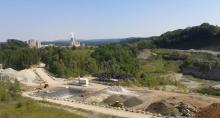
Geocycle provides solutions for recycling raw materials as inputs for cement production.
During the cement-making process, they replace carbon-intensive traditional materials and fossil fuels with low-carbon equivalents, such as waste biomass, to reduce CO2 emissions.
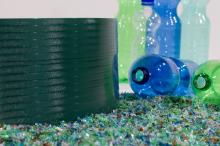
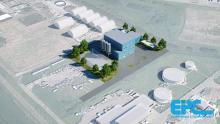
PSLoop Project is an innovative purification process for recycling expanded polystyrene foam demolition waste containing HBCD.
This innovative project employs a ground-breaking technology for dissolving expanded polystyrene foam waste and extracting and recovering bromine from the restricted flame retardant chemical, HBCD. The bromine can then be used again to make new flame retardants.
Aurubis, an expert in multi-metal recycling, and Grillo-Werke, which specialises in zinc and sulphur products, have set up a perfect closed loop for non ferrous trace elements.
Residual zinc from copper production is used by Grillo-Werke as a secondary raw material for zinc sulfate. Residues from this production - including copper, tin and lead - are then fed back to Aurubis.
The ECONYL® Regeneration System turns fishing nets, fabric scraps, carpet flooring and industrial plastic into an infinitely recyclable nylon raw material.