Examining the role of selective waste collection in a CE by focusing on two different waste streams (plastics and bio-waste) while also granting consideration to the future of highly selective collection streams.
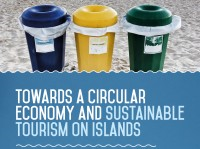
Panel discussions around tools and methodologies to assess the impact of marine litter and to address the issue of circular economy and sustainable tourism in islands.
Study on Identifying the Impact of the Circular Economy on the FMCG industry: Opportunities and Challenges for Labour Market, Supply Chains and Consumer Behaviour
The second meeting of the ECESP Coordination Group was held on 18 and 19 October 2018 in Brussels to discuss the platform's activities, define objectives for the coming year and reflect on its overall implementation.
ACR+ is co-organising a workshop to inform cities and network organisations of the opportunities of the European Circular Economy Stakeholder Platform as a portal to strategies and case studies in CE.
This EEB and Eunomia report estimates the material consumption and CO2 emissions of the furniture sector at EU level and suggests some circular scenarios and policy options to grasp improvement opportunities.
Barriers to a circular furniture sector range from low quality materials, limited logistical infrastructure, poor demand for recycled materials to a wider range identified through the course of this research, informed through stakeholder consultation and literature review.
A move towards circular economy models within the European furniture sector would benefit from a variety of complimentary policy instruments to deal with market failures on the supply side and the demand side (creating demand for these products).
Aimed at defining, identifying and quantifying employment opportunities that are needed in the circular economy, Circle Economy and the Erasmus Research Institute for Happiness Economics (Ehero) have developed a standardised and replicable methodology that measures circular employment in cities around the world.
Once identified, the circular jobs were categorised according to the seven key elements of the circular economy, showing that a large majority are focused on ‘incorporating digital technology’ and ‘preserving and extending what’s already made’. In the past fifteen years, activities that involve ‘repair & maintenance‘ have remained stable in numbers, with the ‘incorporation of digital technologies’ becoming an up and coming job provider.