incommon is a non-profit organisation that encourages people to adopt the circular economy as a way of life. They use a bottom-up approach, working with individuals, schools, businesses, institutions, groups and local authorities.
Their approach ensures that people are informed about circular economy principles and engaged in implementing them, enabling them to make sustainable choices and drive local change.
The European Commission is opening a call for membership applications for a new Ecodesign Forum under the Ecodesign for Sustainable Products Regulation. The forum will play an important role in the implementation of the ESPR by involving all stakeholders in developing rules for more circular, energy-efficient and sustainable products.
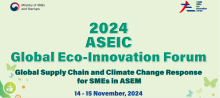
The ASEM SMEs Eco-Innovation Center will be hosting a Global Eco-Innovation Forum under the heading Global Supply Chains and Climate Change Response for SMEs in ASEM.
The forum is a unique opportunity to explore the latest strategies enabling SMEs to respond to climate change and adapt to global supply chain regulations. It will provide insights into supply chain regulations and climate change responses for SMEs and startups.
A tradition since 2019, the Business Council for Sustainable Development in Hungary (BCSDH) organises the Circular Economy Summit every November with the Dutch Embassy in Hungary. This year's conference will focus on the shift to a circular economy and international and domestic best practices.
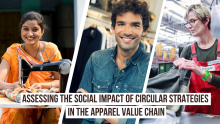
This paper examines the socio-environmental justice aspects of 11 key EU policies guiding the textile industry's journey towards circularity.
It found that action is needed to tackle overproduction and overconsumption in the EU Strategy for Sustainable and Circular Textiles. Steps must be taken to address the impacts of EU circular economy textile policies on the Global South so as to ensure positive social and environmental outcomes.
The paper also concluded that efforts are needed to make just transition policies globally accountable and alleviation mechanisms integral to the Textile Strategy rather than supplementary corrective measures. Meaningful participatory mechanisms are needed that ensure the democratic inclusion of different views and actors.
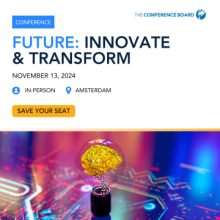
If your role requires you to lead change, then this conference is for you. It's intended for executives responsible for managing organisational transformation.
Change makers from around the globe will present cutting-edge technologies and strategies to help you deliver better results and generate more value. In her session, Ladeja Godina Košir, founder and Executive Director of Circular Change and Co-Chair of ECESP, will explore three strategies for integrating industries, policies and international partnerships in order to create a circular economy.
The webinar will delve into strategies for launching and managing an investment fund dedicated to circular economy initiatives, focusing on insights from InvestCEC, Venionaire and exelixis capital AG. It will explore the financial barriers within the circular economy and strategies to overcome them.
Emma Pipó Ollé from the BioBoost project will also share key project insights on how they accelerate circular economy initiatives in Catalunya.
The ENDURANCE project has produced a handbook setting out a green acceleration methodology with defined, transferable and effective acceleration scenarios. These will serve as a roadmap for other European clusters, regardless of their sector of industrial activity.
The aim is to promote the transition towards a clean, circular and climate-neutral economy.
The Commission has granted more than €380 million to 133 new projects across Europe under the LIFE Programme for environment and climate action. The allocated amount represents more than half of the €574 million total investment needs for these projects - the remainder coming from national, regional and local governments, public-private partnerships, businesses, and civil society organisations.
LIFE projects contribute to reaching the European Green Deal's broad range of climate, energy and environmental goals, including the EU's aim to become climate-neutral by 2050 and to halt and reverse biodiversity loss by 2030, while ensuring Europe's long-term prosperity. This investment will have a lasting impact on our environment, the economy and the well-being of all Europeans.