Documentation et références

Dans cette section, vous trouverez les études et rapports liés à l’économie circulaire qui ont déjà été publiés.

Ces études, publications universitaires, rapports d’entreprises et autres sont transmis par les parties prenantes, les acteurs économiques ou les auteurs de ces documents. Pour proposer votre propre publication, veuillez compléter notre formulaire en ligne [EN]

Displaying 501 - 510 of 535
  • Upload document

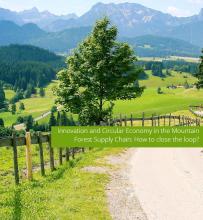
    Innovation and Circular Economy in the Mountain Forest Supply Chain: How to Close the Loop?

    Mountain Forest Supply Chain
    Type
    Author
    Sarah Whitaker, Euromontana
    Publication Date
    03/2017
    Country
    EU
    Language for original content
    Scope
    Euromontana

    Mountain areas face specific natural conditions, such as slope, climate, and soil types, that make the exploitation of mountain resources difficult.

    Other challenges associated with connectivity and transport make economic activity all the more challenging.

    The adoption of the circular economy will be particularly important in mountain areas which contain exceptional primary resources such as forests, water, and minerals, and provide ecosystems services such as carbon sequestration, clean water, landscapes, and recreation. Maximizing the value of extracted resources and managing them sustainably is particularly important for maintaining a high quality of life in mountain territories. The circular economy can create new economic opportunities that will provide much needed employment.

  • Upload document

    Slovenian companies and a circular economy: Slovenian business observatory 2017

    Slovenian companies and a circular economy
    Type
    Author
    Karin Širec
    Barbara Bradač Hojnik
    Matjaž Denac
    Dijana Močnik
    Publication Date
    03/2018
    Country
    Slovenia
    Language for original content
    Scope
    Barbara Bradač Hojnik

    Since 2000, the “Slovenian Entrepreneurship Observatory” publishes a report annually providing analysis of the situation of Slovenian companies and insight into Slovenian entrepreneurship. In 2018 this report had a thematic focus on the circular economy (CE), with the authors centring in on the drivers and barriers to SMEs integrating CE into business practice.

    This report first provides a theoretical framework for the CE, which aims to raise awareness and facilitate information exchange between companies and individuals looking to spread circular innovation. Simultaneously this report also provides an overview of the barriers companies face in transitioning towards circularity, which include a lack of comparable indicators to benchmark and track progress as well as cost of eco-design.

  • Upload document

    Economía Circular y empleabilidad de los jóvenes

    Economía Circular y empleabilidad de los jóvenes
    Author
    Eva Ramón
    Franco Llobera
    Manuel Redondo
    Publication Date
    04/2018
    Country
    Spain
    Language for original content
    Scope
    Eva Ramón

    The Centro de Documentación Europea de la Universidad Francisco de Vitoria (European Documentation Centre, UFV) has completed a project titled Economía Circular y Empleabilidad de los Jóvenes en la Comunidad de Madrid (Circular Economy and Employability of Young People in the Autonomous Region of Madrid).

    The outcomes include a report on communicating the circular economy through the lens of employment opportunities circular business models provide for young people. The project has also created a guide on communicating the circular economy to students, which introduces the subject, presents the 7R model and shows how innovative companies provide opportunities for employment in circular business.

  • INCOVER
    Author
    Enrica Uggetti, Joan García, Juan Antonio Álvarez and María Jesús García-Galán
    Publication Date
    12/2018
    Country
    United Kingdom
    Language for original content
    Juan Antonio Alvarez Rodriguez

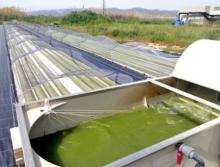
    Within the European project INCOVER, an experimental plant uses low-energy photobioreactors to cultivate micro-algae and transform wastewater into bioproducts.

    This article describes this new experimental plant and the start-up stage, starting from the new design of three semi-closed horizontal photobioreactors with low energy requirements, for microalgae cultivation (30 m3 total), using agricultural runoff and urban wastewater as feedstock.

    The inflow nutrients concentration is adjusted to select cyanobacteria, microalgae able to accumulate polyhydroxybutyrates, which can be used for bioplastics production. Part of the harvested biomass is used as substrate for anaerobic co-digestion (AcoD) with secondary sludge to obtain biogas.

  • Upload document

    Good practices in separate collection, sorting and recycling of steel for packaging

    Steel
    Type
    Author
    APEAL
    Publication Date
    06/2018
    Country
    EU
    Language for original content
    Steve Claus

    With an average of 79.5% recycled across Europe in 2016, steel for packaging is already the most recycled packaging material in Europe.

    This report compiles examples of good practices from countries across the EU showcasing the varied projects, systems and processes by which steel for packaging is recycled, bringing significant reduction in emissions, resource and energy use.

    Steel, a permanent material that can be infinitely recycled to make high quality products, can be easily sorted from the waste stream owing to its magnetic properties which make it the most economical packaging material to collect, sort and recycle over and over again.

    Good practices in separate collection, sorting and recycling of steel for packaging contribute to improving its recycling rate.

  • Upload document

    Two years later: The EU circular economy package

    IW Report
    Author
    Dr. Adriana Neligan
    Publication Date
    04/2018
    Country
    Germany
    Language for original content
    Key Area
    Scope
    Dr. Adriana Neligan

    The EU Circular Economy Package pushes forward the concepts of ‘recycle, repair and re-use’, as well as waste avoidance. To comply with the Package many EU countries will need a completely new waste treatment system, and many companies will need to re-think some established business models.

    Two years after adopting the Circular Economy Package, the EU institutions have finally agreed on a new EU waste regulation. The paper entitled Two years later: the EU Circular Economy Package evaluates recent EU policy moves and decisions. It also analyses the status quo of Germany's circular economy efforts and compares them to those of other EU member states. Finally, some of the risks and opportunities for companies are outlined.

  • Upload document

    2025 recycling target: only 10 EU countries on track

    Author
    Dr. Adriana Neligan
    Publication Date
    04/2018
    Country
    Germany
    Language for original content
    Key Area
    Scope
    Dr. Adriana Neligan

    Two years after adopting the Circular Economy Package, the EU institutions have finally agreed on new EU waste rules. Despite lower recycling targets as originally envisaged, most countries still have to push recycling to meet the goals. A single method of determining recycling rates was also decided, but an exemption will continue to allow for disparate recycling rates.

    Recycling has become increasingly important in Europe: EU recycling rates increased from 32 to 46 per cent between 2005 and 2016. Yet, more progress is needed to reach the targets.

  • Upload document

    Retaining value in the Swedish materials system - summary of the report in English

    Retaining value in the swedish materials system
    Type
    Author
    Material Economics
    Publication Date
    01/2018
    Country
    Sweden
    Language for original content
    Sector
    Scope
    Per Klevnäs
    Angelica Afzelius

    The report Retaining value in the Swedish materials system takes a value perspective on the use and recycling of materials in a circular perspective. It analyses the use of materials in the Swedish economy in monetary terms instead of tonnes and cubic metres.

    The key questions it seeks to answer include the following:

    • For each 100 SEK of raw material entering the Swedish economy, how much value is retained after one use cycle?
    • What are the main reasons that material value is lost?
    • What measures could retain more materials value, and how much could be recovered? Which business opportunities arise as a result?

    This value perspective gives a much more realistic view of how circular the Swedish materials system really is.

  • Upload document

    Master Circular Business with the Value Hill

    Master Circular Business with the Value Hill
    Type
    Author
    Elisa Achterberg
    Jeroen Hinfelaar
    Nancy Bocken
    Publication Date
    09/2016
    Country
    Netherlands
    Language for original content
    Harald Friedl

    Although the opportunities for investing in circular business models are widely available, current investment methods do not match the needs of these particular businesses. Businesses need to create an attractive business model for financiers, and financiers need to change the way they perceive the risks and opportunities associated with these models.

    To help businesses position themselves in a circular context and develop future strategies for doing business in a circular economy, Sustainable Finance Lab, Circle Economy, Nuovalente, TUDelft, and het Groene Brein got together to create the Value Hill that proposes a categorisation based on the lifecycle phases of a product: pre-, in- and post-use.

  •  Livre Blanc Systèmes agricoles et agroalimentaires circulaires
    Type
    Livre blanc
    Author
    Institut National de l'Economie circulaire (INEC)
    Groupe de Travail "Systèmes agricoles et agroalimentaires"
    Publication Date
    11/2018
    Country
    France
    Language for original content

    L'Institut national de l'Economie circulaire (France) a lancé en 2017 un Groupe de travail sur les systèmes agricoles et agroalimentaires, dont ce Livre Blanc présente les conclusions. Il explore les solutions que les orinicpes d'économie circulaire peuvent apporter pour des systèmes agricoles et agro-alimentaires durables.

    Trois thématiques prioritaires ont été sélectionnées (par le Livre blanc):

    • Systèmes agricoles et agroalimentaires circulaires: définitions, état des lieux et bonnes pratiques, sensibilisation des parties prenantes (consommateurs, professionnels, décideurs, distributeurs);
    • L'écologie territoriale appliquée aux systèmes agricoles et agroalimentaires: les synergies entre les entreprises, le niveau d’application (exploitation agricole, région, etc.), les circuits courts, l’agriculture urbaine et périurbaine;
    • Le retour au sol de la matière organique: identification des freins et leviers (acceptation sociétale, réglementation, etc.), compostage, méthanations et autres processus de transformation;
    • Valorisation des services rendus (qualité des sols, puit de carbone, approvisionnement durable…).
Displaying 501 - 510 of 535