Documentation et références

Dans cette section, vous trouverez les études et rapports liés à l’économie circulaire qui ont déjà été publiés.

Ces études, publications universitaires, rapports d’entreprises et autres sont transmis par les parties prenantes, les acteurs économiques ou les auteurs de ces documents. Pour proposer votre propre publication, veuillez compléter notre formulaire en ligne [EN]

Displaying 491 - 500 of 530
  • Upload document

    Circular Prague

    Prague
    Roadmap
    Author
    Circle Economy
    INCIEN
    Publication Date
    06/2019
    Country
    Czechia
    Language for original content

    The Circular Prague report is a visual roadmap that identifies the strategies that are best positioned to kick-start the Czech capital’s transition towards a circular economy.

    The report marks the culmination of Prague’s Circle City Scan; a 12-month collaborative innovation process involving local government, research organisations and businesses. The collaborative Circle City Scan process has highlighted the potential to promote circular lifestyles in ReUse Hubs using public procurement, to boost the construction through circular procurement, and to use the city’s food waste as biomethane to power the city’s waste collection fleet.
     

  • Upload document

    The circular service platform

    Circular Service Platform
    Type
    Author
    Elisa Achterberg (Sustainable Finance Lab, Circle Economy)
    Publication Date
    04/2019
    Country
    Netherlands
    Language for original content

    In a circular economy, assets are no longer sold. Rather, the assets are collectively maintained by a network of stakeholders involved in the ongoing functioning of the assets - the circular service (CISE) network.

    A CISE network however requires unprecedented levels of cooperation and coordination between participants, leading to high administrative costs and the need for trust and transparency in the network. CISE networks are a totally different way of doing business, requiring different financial, legal and governance structures. Would it be possible for assets to be owned and procured by a network that creates value from them? Could this, simultaneously, reduce administrative costs?

  • Upload document

    Circular Economy in Cities - Project Guide

    Circular Economy in Cities - Project Guide
    Type
    Resources collection
    Author
    Ellen MacArthur Foundation
    Publication Date
    05/2019
    Country
    United Kingdom
    Language for original content

    Explore how city governments around the world are taking action to enable circular economy opportunities that deliver on a range of mayoral priorities, Sustainable Development Goals, and climate objectives.

    1. Vision: What will the implementation of circular economy principles in cities look like?
    2. Factsheets: What benefits can a circular economy transition in key urban systems bring to cities?
    3. Policy levers: What can urban policymakers do to accelerate this transition?
    4. Case studies: What examples are there of urban policymakers already putting this into action?
    5. Other networks & resources: What are other organisations doing on the topic of circular economy and cities?


  • Upload document

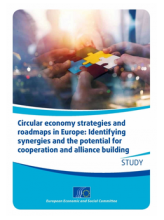
    Circular economy strategies and roadmaps in Europe: Identifying synergies and the potential for cooperation and alliance building – Study

    EESC
    Type
    Author
    Giacomo Salvatori
    Frank Holstein
    Kai Böhme
    Publication Date
    05/2019
    Country
    EU
    Language for original content
    Scope

    Circular economy strategies have been under development in European cities, regions, and countries in the last few years. 33 strategies have been adopted since 2014, and at least 29 more are under development. Existing strategies were reviewed for this study, to identify similarities and differences, and to assess the involvement of civil society organisations, and potential for collaboration.

    The study argues that documents developed in the future should put more focus on including broader sections of value chains, and on ensuring inclusive partnership approaches in all phases of the strategy’s cycle. To date, circular economy strategies show different degrees of inclusiveness in terms of value chains and partner involvement.

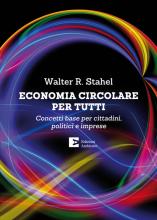
  • Front page of Economia circulare per tutti. Concetti base per cittadini, politici e attori economici.
    Type
    Author
    Walter R. Stahel
    Publication Date
    05/2019
    Country
    Italy
    Language for original content

    The potential of reusing and extending the life of products is well documented, but there is also huge untapped innovation potential in the industrial circular economy.

    This involves reusing and extending the life of manufactured molecules. It's an area which is under-researched and under-exploited. It entails reusing high-purity loops of atoms and molecules rather than recycling mixed waste. Considerable chemical expertise is required, including the design of new molecules and mini-mill technologies to separate existing materials. Innovative collection and sorting processes which are not destructive and do not mix materials will also need to be developed. Policy could close the invisible liability loop by stipulating Extended Producer Liability.

    This book is in Italian and must be bought.

  • Upload document

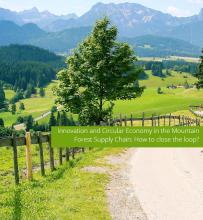
    Innovation and Circular Economy in the Mountain Forest Supply Chain: How to Close the Loop?

    Mountain Forest Supply Chain
    Type
    Author
    Sarah Whitaker, Euromontana
    Publication Date
    03/2017
    Country
    EU
    Language for original content
    Scope
    Euromontana

    Mountain areas face specific natural conditions, such as slope, climate, and soil types, that make the exploitation of mountain resources difficult.

    Other challenges associated with connectivity and transport make economic activity all the more challenging.

    The adoption of the circular economy will be particularly important in mountain areas which contain exceptional primary resources such as forests, water, and minerals, and provide ecosystems services such as carbon sequestration, clean water, landscapes, and recreation. Maximizing the value of extracted resources and managing them sustainably is particularly important for maintaining a high quality of life in mountain territories. The circular economy can create new economic opportunities that will provide much needed employment.

  • Upload document

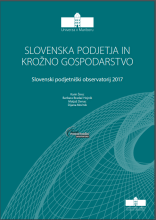
    Slovenian companies and a circular economy: Slovenian business observatory 2017

    Slovenian companies and a circular economy
    Type
    Author
    Karin Širec
    Barbara Bradač Hojnik
    Matjaž Denac
    Dijana Močnik
    Publication Date
    03/2018
    Country
    Slovenia
    Language for original content
    Scope
    Barbara Bradač Hojnik

    Since 2000, the “Slovenian Entrepreneurship Observatory” publishes a report annually providing analysis of the situation of Slovenian companies and insight into Slovenian entrepreneurship. In 2018 this report had a thematic focus on the circular economy (CE), with the authors centring in on the drivers and barriers to SMEs integrating CE into business practice.

    This report first provides a theoretical framework for the CE, which aims to raise awareness and facilitate information exchange between companies and individuals looking to spread circular innovation. Simultaneously this report also provides an overview of the barriers companies face in transitioning towards circularity, which include a lack of comparable indicators to benchmark and track progress as well as cost of eco-design.

  • Upload document

    Economía Circular y empleabilidad de los jóvenes

    Economía Circular y empleabilidad de los jóvenes
    Author
    Eva Ramón
    Franco Llobera
    Manuel Redondo
    Publication Date
    04/2018
    Country
    Spain
    Language for original content
    Scope
    Eva Ramón

    The Centro de Documentación Europea de la Universidad Francisco de Vitoria (European Documentation Centre, UFV) has completed a project titled Economía Circular y Empleabilidad de los Jóvenes en la Comunidad de Madrid (Circular Economy and Employability of Young People in the Autonomous Region of Madrid).

    The outcomes include a report on communicating the circular economy through the lens of employment opportunities circular business models provide for young people. The project has also created a guide on communicating the circular economy to students, which introduces the subject, presents the 7R model and shows how innovative companies provide opportunities for employment in circular business.

  • INCOVER
    Author
    Enrica Uggetti, Joan García, Juan Antonio Álvarez and María Jesús García-Galán
    Publication Date
    12/2018
    Country
    United Kingdom
    Language for original content
    Juan Antonio Alvarez Rodriguez

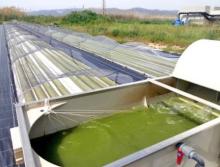
    Within the European project INCOVER, an experimental plant uses low-energy photobioreactors to cultivate micro-algae and transform wastewater into bioproducts.

    This article describes this new experimental plant and the start-up stage, starting from the new design of three semi-closed horizontal photobioreactors with low energy requirements, for microalgae cultivation (30 m3 total), using agricultural runoff and urban wastewater as feedstock.

    The inflow nutrients concentration is adjusted to select cyanobacteria, microalgae able to accumulate polyhydroxybutyrates, which can be used for bioplastics production. Part of the harvested biomass is used as substrate for anaerobic co-digestion (AcoD) with secondary sludge to obtain biogas.

  • Upload document

    Good practices in separate collection, sorting and recycling of steel for packaging

    Steel
    Type
    Author
    APEAL
    Publication Date
    06/2018
    Country
    EU
    Language for original content
    Steve Claus

    With an average of 79.5% recycled across Europe in 2016, steel for packaging is already the most recycled packaging material in Europe.

    This report compiles examples of good practices from countries across the EU showcasing the varied projects, systems and processes by which steel for packaging is recycled, bringing significant reduction in emissions, resource and energy use.

    Steel, a permanent material that can be infinitely recycled to make high quality products, can be easily sorted from the waste stream owing to its magnetic properties which make it the most economical packaging material to collect, sort and recycle over and over again.

    Good practices in separate collection, sorting and recycling of steel for packaging contribute to improving its recycling rate.

Displaying 491 - 500 of 530