Circular Change, a globally recognised think-tank, is celebrating its tenth anniversary.
It was founded in 2016 by Ladeja Godina Košir, currently Co-Chair of the ECESP, with a view to collaborative leadership and cross-border cooperation, strengthening international dialogue and advancing the circular transition.
Achievements include organising conferences geared to co-creation and systemic change, assuming a European leadership role by chairing the ECESP and gaining global recognition with a Circular Leadership Award nomination at the World Economic Forum in Davos. Circular Change has also contributed to national circular economy roadmaps in Serbia and Chile, advanced the concept of transition brokers and highlighted the need for circular diplomacy.
The first step towards circular financing in the Nordics
The circular economy is a resource and energy-efficient economic model, built on high value retention in products and materials. It is suggested as a core strategy to tackle the climate and environmental crises that face humanity. Business models that promote and drive value retention play a key role to achieve a more circular economy, and for circular business to thrive, financing of these circular business models is a must.
The Transition Group for Circular Finance is a working group within the Nordic Circular Hotspot. It was initiated by RISE (Research Institutes of Sweden) and aims to address challenges and develop solutions for financing circular business models.
This booklet describes selected best practice initiatives for the collection of small waste of electrical and electronic equipment (WEEE) and portable batteries implemented within Europe. It aims to inspire producers, producer responsibility organisations and distributors of electrical and electronic equipment (EEE) and batteries, and policy makers in the organisation of similar initiatives.
At the beginning of this work stands the question of what to consider best practice for the collection of small waste of WEEE and batteries in the context of this report. For this purpose the key criteria have been defined (scalability, replicability, etc.) and at least one of them has to be fulfilled by each of these initiatives for it to be included in the collection.
The events sector is particularly affected by sustainability and resource preservation issues. Aware of the need to reconcile events organisation and the circular economy, stakeholders need to do more to capitalise on existing measures.
A broad selection of articles on Circular Economy and its practices in Poland collected by prof. Joanna Kulczycka. After definitions and interperatations, this work is about circular economy related issues
indicators in selected EU countries
financing of business activities
matching circular business models with priority sectors in Poland
establishing measurement for circular economy transformation and its socio-economic impacts in Poland
indicators in Polish regional perspective
assessment of material consumption
supporting managerial accounting instruments
system upgrade
solutions for mining and processing waste
sustainable consumption
good practices at national and international level.
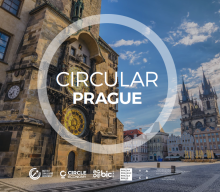
The Circular Prague report is a visual roadmap that identifies the strategies that are best positioned to kick-start the Czech capital’s transition towards a circular economy.
The report marks the culmination of Prague’s Circle City Scan; a 12-month collaborative innovation process involving local government, research organisations and businesses. The collaborative Circle City Scan process has highlighted the potential to promote circular lifestyles in ReUse Hubs using public procurement, to boost the construction through circular procurement, and to use the city’s food waste as biomethane to power the city’s waste collection fleet.