Enterprise Europe Network Flanders, Flanders, Wallonie Entreprendre and Hub.Brussels are organising an official WCEF2024 side-event: a global online matchmaking session focusing on circular innovation. There'll be an online part (8-14 April) and an in-person part (17 April).
ICLEI Europe and the City of Lisbon (Portugal) are proud to announce that the 11th Procura+ Conference will be held in the Portuguese capital on 13 and 14 March 2024.
The conference will showcase how cities and public authorities can use public procurement to implement step changes that make a big impact.
InvestCEC, working with the DEFINITE-CCRI project as part of the CCRI initiative, is hosting a webinar on "Empowering entrepreneurs for investment success". It will take place on 11 April and aims to enable entrepreneurs to overcome funding challenges and attract investments in the circular economy.
This is an official side event of the World Circular Economy Forum.
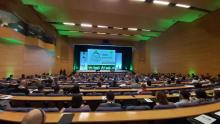
Waste Management Europe 2024 (WME2024) is a high-level summit featuring international, national and sector-specific keynote speakers, panel discussions and interactive sessions. It will give attendees valuable insight into how to improve waste management practices, implement circular economy principles and achieve sustainability goals.
The conference will take place in Bergamo, Italy on 9-11 April. You'll be able to find, compare and validate suppliers that will deliver for your company and discuss technical issues and budgets in the field of waste management.
The sixth edition of MeetingPack, the event organised every two years by AIMPLAS and AINIA, will attract members of the entire food packaging value chain on 10-11 April 2024 at the Valencia Conference Centre in Spain.
Through the prism of the circular economy, MeetingPack 2024 will address the challenges and opportunities the sector is expected to face in coming years, as well as the latest innovations and trends in materials and barrier packaging.
Climate Action Week for Fashion & Apparel will take place on 18 to 22 March, organised by the Scandinavian Textile Initiative for Climate Action (STICA).
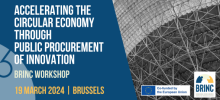
The BRINC(Brokering cross-border Innovation through Clusters) project is holding a workshop where participants will be able to meet the BRINC network of public authorities and other key actors working on public procurement of innovation and circular economy in order to exchange insights and learn from each other.
The European community PACCT for Sustainability (Product as a service to Accelerate Cooperation and Circular Transformation) will host a new webinar on 19 March 2024 (from 10:30 to 12:00 CET) to explore product-as-a-service governance and operations with experts.
Participants to the workshop will be able to interact with Michelin, Xarvio and Aston Business School, who will be sharing their experience operating product-as-a-service models.
The European Commission is hosting a webinar on 18 March showing how the EU Level(s) framework for sustainable buildings can help industry professionals navigate changes in the rules governing sustainable finance as regards construction and real estate.
Take part in the high-level event organised by the European Commission as part of the Bioeconomy Changemakers Festival!
This high-level event is part of the Bioeconomy Changemakers Festival, a collection of events organised by the European Commission (DG Research and Innovation) in cooperation with the Bioeconomy Youth Ambassadors from 11 to 17 March.
Along with the high-level event, the festival will comprise over 30 satellite events organised by third party organisations all over Europe. The festival aims to engage young people as drivers of the transformative change needed to address the multiple challenges facing Europe and to unlock the potential of the bioeconomy to make that transformation happen.