EuroCommerce is the principal European organisation representing the retail and wholesale sector. It embraces national associations in 27 countries and millions of companies, both leading global players such as Carrefour, Ikea, Metro and Tesco, and many small businesses.
Tasks:
Representing national and sectoral associations and companies in the retail and wholesale sector
Informing its members about EU policy and legislation
Advocacy for suitable policy and legislative outcomes
Communicating on retail's contribution to society and the European economy
Facilitating knowledge exchange among members
The circular economy is an opportunity for retail and wholesale: consumers are demanding more sustainable products and businesses need to shrink their carbon footprint.
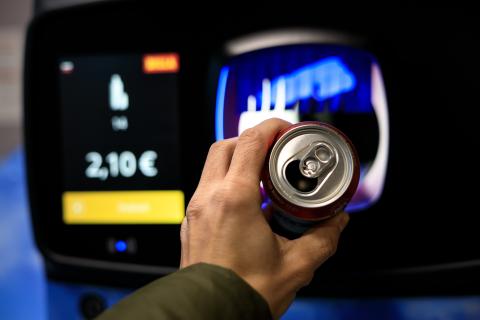
The European Deposit Return Systems Association (EDRSA) for beverage packaging was founded in 2025.
The objective is to advance best practices, policy development and collaboration in the field of deposit return systems (DRS) in Europe.
EDRSA aims to foster innovation, efficiency and environmental responsibility in DRS programmes by bringing together key players from across the industry, including system operators, policymakers, recyclers and technology providers. The association will serve as a platform for sharing expertise, advocating for effective legislation and driving improvements in circular economy initiatives.
The members of the Association operate in 15 EU Member States plus Iceland and Norway.
Fab City Challenge is an initiative launched in 2014 by the then mayor of Barcelona, challenging cities to become self-sustainable by 2054. The project has now expanded into a sustainable cities network working on the digital transition, localisation and regenerative economy. One focus is combating food waste and using fresh produce which would otherwise have been thrown out.
Members have access to knowledge exchange, network events, research opportunities and engagement with like-minded cities around the world. They meet once a year at the Fab City Summit, where new cities also join the Network.
Distributed Innovation Workshops are also organised, where participants learn about various areas of innovation and sustainability.
The Circular Economy Foundation is an independent, Iberian foundation active in the field of environmental, economic, social and cultural sustainability.
It gathers knowledge about the circular economy and promotes it in Spain and Portugal, Europe, the Mediterranean basin, Latin America and the islands. It conducts research, provides advice on reducing business' carbon footprint and was involved in setting up the Educacircular educational programme. It also organises events related to the circular economy.
By using residual streams, we can take a big step towards a circular, sustainable food system. This shift does require cooperation, however...
Foodvalley NL aims to promote the shift to a sustainable global food system. One of its projects is the Upcycling Community: an international group of partners collaborating on upcycling food losses. There are still many barriers to this circular approach, however, so they are focusing on:
bringing together a diverse and impactful group of business partners with a shared interest in upcycling food losses;
encouraging purchasers and product developers to replace virgin ingredients;
Forest Sharing is a platform for the shared and innovative management of privately-owned forests.
It follows PEFC standards, and helps people who own woodland but do not know how to manage it effectively. The platform forges links between owners and economic operators in the supply chain. It creates the economies of scale needed to make forest activities (sale of wood or derived products, recreational areas, adventure parks, thematic routes, management of Rural Development Plans etc.) economically viable.
The project promotes the sustainable management of Italian woodland, by tackling parcels of forest as a whole and applying circular and sharing economy principles.
The Circular Economy Task Force (CETF) is a business consortium convened by the Green Alliance. The CETF is a forum for policy, innovation and business thinking on resource use in the UK, and pioneers new approaches to preventing and reducing waste.
With the support of the CETF, Green Alliance conducts independent, objective research and analysis to inform resources policy. It brings together stakeholders from government, civil society and industry to develop and test ideas. It has influenced UK Government policy.
The CETF has produced a number of reports on resource policy, recycling opportunities and manufacturing productivity. These include Circular business: what companies need to make the switch and Design for a circular economy: reducing the impacts of the products we use.
Green Tech Valleyis a technology hotspot for climate protection and the circular economy. It has over 2300 scientists working on green solutions. It is home to over 600 green technologies and services for renewable energy and the circular economy, with an emphasis on recycling.
The Green Tech Valley Cluster drives the development of green innovation in the Green Tech Valley through match-making and knowledge transfer. It links up businesses with contacts in the green tech sector.
The platform has a directory of projects, which can be used to identify potential partners. The projects are categorised by theme, including Circular. It also has a section on courses for green skills.
Holland Circular Hotspot is a private foundation that aims to accelerate the international transition to a circular economy.
It does this by connecting companies, knowledge institutes and (local) authorities, and supporting international collaboration and knowledge exchange on the Dutch circular economy.
HCH:
Offers insights into and access to the network of Dutch circular pioneers;
Develops and exchanges knowledge about international market opportunities for circular economy;
Creates circular opportunities internationally by matching offer and demand;
Supports companies and organisations that want to contribute to the internationalisation of the circular economy;
Stimulates cooperation between the private sector, knowledge institutions, governments and other relevant parties.
The HOOP Network of Cities and Regions seeks to facilitate the exchange of knowledge and mutual learning among cities and regions willing to recover valuable resources from urban bio-waste and wastewater to make bio-based products.
By joining the network, cities and regions gain information about innovative urban bioeconomy solutions and engage in activities relevant to their context and specific interests. Participants have direct exchanges with the eight HOOP lighthouse cities and regions, sharing experiences and expertise.
The HOOP network is only open to organisations that plan, organise or operate municipal waste management or wastewater treatment activities, for instance local or regional authorities and waste management companies.