The transformation into a circular economy entails factoring resource flows into production, sales and consumption processes and thus massively reducing the use of materials (raw or otherwise), as well as the volume of waste and the strain on the environment.
Austria's circular economy strategy therefore aims to:
This International Labour Organization (ILO) report analyses the impact of the transition to low-carbon and resource-efficient economies, providing new insights into likely occupational skill effects in declining and growing industries by 2030 based on the global scenarios of "energy sustainability" and "circular economy". Evidence of good practices collected demonstrates how skills development can underpin the green transition.
This International Labour Organization (ILO) report examines environmental sustainability in the world of work.
It focuses on how climate change and environmental degradation will have an impact on labour markets by affecting the volume and quality of employment, and quantifies the shifts expected to take place within and between sectors. It also models employment shifts by region and sector under a circular economy scenario.
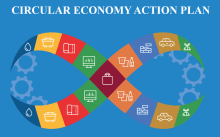
The Romanian Government has approved an Action Plan promoting the Circular Economy as part of the National Strategy for the Circular Economy (NSCE). The action plan sets out a national vision for speeding up the transition to a circular economy, with measures geared to the nine economic sectors with the greatest potential for circularity in Romania's economy: agriculture and forestry; automotive; construction; food and beverages; packaging; textiles; electrical and electronic equipment; waste; water; wastewater.
The action plan has a cross-sectoral strand including promotion activities and a monitoring platform. It also stipulates 52 priority measures scheduled to be rolled out between 2024 and 2032.
With 14 automotive brands around the globe, Stellantis is a major industry player. In March 2022, it presented its Dare Forward 2030 strategic plan, aiming to achieve carbon net zero by 2038 while reducing its consumption of natural resources. The plan is steered by the Circular Economy Business Unit and is based on remanufacture, repair, reuse and recycle.
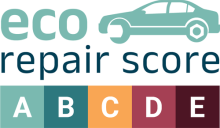
Eco Repair Score NV and VITO have developed the Eco Repair Score® to assess the environmental impact of a specific car repair job. It does this using a single score, with categories from A to E and associated colour coding.
Fast fashion and disposing of clothes at the end of their lives are generally considered to be the main issues in terms of textile waste. However, pre-consumer waste is another major problem. This occurs a few steps further back in the manufacturing process, and deals with all waste materials created in the supply chain when a product is being made.
Unlike post-consumer waste, it is easier to keep pre-consumer waste away from a landfill or an incinerator as the fabric or garment is essentially brand new, despite one or more repairable defects.
So, finding ways to re-use or use up the resources created is the key to creating an endless supply of materials without further depleting natural resources.
At European level, the built environment is responsible for 40% of CO2-eq emissions and roughly 60% of material consumption.
By applying bio-based alternatives to conventional ‘mineral’ construction materials, the environmental impact of the EU27+UK sector can be reduced by 18%.
However, there is a limit to the sustainable wood supply that can be harvested without compromising vital functions provided by forests, and the projected increase in wood consumption is not compatible with the realistic growth potential of harvesting activities. Therefore resource efficiency, bio-based added value or demand for new housing should be carefully weighted in to ensure a sustainable shift, the study concludes.
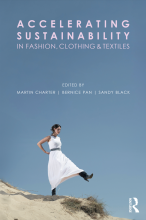
This book collates leading-edge research and industry best practice to provide a ‘one-stop shop’ exploring the complex and interconnected issues surrounding sustainability in the sector.
It includes innovative examples from different regions, addressing topics from policies to supply chain issues and materials innovation. Five unique case studies of sustainable businesses provide examples of pioneering practice. The book brings together both academic and industry perspectives on the critical areas that require immediate action to move towards a more sustainable fashion, clothing and textile sector.
Part VI features five chapters by leading authors covering the circular economy in the sector, including a chapter by Professor Jacqueline Cramer.
The ECOSWEEE project has received EU funding under the LIFE programme. It aims to increase the collection rate of small WEEE and portable batteries.
The project recognises the importance of stakeholder engagement as a catalyst for change. It aims to create a collaborative platform on Linkedin where stakeholders can come together, share knowledge, and collectively work towards improving collection rates and promoting sustainable practices.
The project will harness the power of stakeholders' expertise and commitment to drive tangible impact and contribute to a more sustainable future.