This report is the outcome of a collaborative endeavour by IFC, the Romanian Government, PIVOT-C and FEPRA GROUP.
A year of in-depth consultations and workshops (2023-2024) involving Romanian experts from the public and private sectors resulted in a guide setting out operational actions and recommendations for Romania's circular economy transition. The recommendations are intended for the Romanian government and central authorities and aim to facilitate the implementation of the National Circular Economy Strategy and the Circular Economy Action Plan launched in 2023.
The proposals cover regulatory frameworks, financial incentives, educational initiatives and infrastructure development.
The ERASMUS+ CIRCVET project on Circular economy practical training materials for plastics manufacturing industries is organising a workshop on Closing the Loop: Circular Packaging and Company Study Cases.
The workshop will present the project and the e-learning platform and share interesting corporate case studies.
The World Circular Economy Forum is one of the biggest circular events of the year. WCEF2025 will take place in São Paulo, Brazil on 13-16 May under the heading Tropical solutions for sustainable growth!
The programme has now been released, with a rich selection of plenaries and parallel sessions.
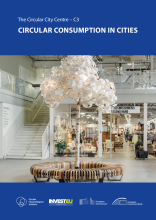
The Circular City Centre - C3 is a competence and resource centre within the European Investment Bank, which supports EU cities in their circular economy transition. It is organising a webinar to present its new guidance document on Circular consumption in cities, highlighting how cities can facilitate access to, promote and incentivise more circular consumption options.
Recycling Albania was set up in 2022, based on the zero waste hierarchy. It aims to transform Albania’s waste sector into a model for sustainable resource management and lead the way in circular economy solutions in the Western Balkans.
It's setting up a Circular Economy Park, with a Multifunctional Education Centre, Recycling Yard and Second-Hand Store. The environmental, economic and social dimensions of the circular economy are covered!
The European Bioeconomy Clusters’ Alliance is a new strategic initiative uniting 12 national and regional bioeconomy clusters across Europe. Its mission is to amplify the voice of the bioeconomy sector, drive policy advocacy for a circular and sustainable economy, and enhance cross-sector collaboration.
The launch event will bring together key representatives from the European Commission, industry leaders and bioeconomy sector stakeholders.
The topic this year is Circular solutions for a competitive EU.
On 3-4 June, the conference will feature high-level debates on policy aspects of circular economy. On 5 June, in-depth discussions among stakeholders will focus on unleashing the circular economy’s potential for a competitive and resource-efficient Europe.
The Basque Government has approved a list of 64 clean technologies eligible for tax deductions amounting to 30% of the investment. The goal is to make production processes more efficient by using equipment with a high environmental performance and so accelerate the climate and circular transition of SMEs in the Basque Country.
The European Commission has just released its Competitiveness Compass, a roadmap for EU action over the next five years which lists what needs to be done to enable the European economy to flourish.
It sets out ways and means to deliver on the imperatives identified by the Draghi Report to boost competitiveness: closing the innovation gap, a joint roadmap for decarbonisation and competitiveness, and reducing excessive dependencies and increasing security.
The circular economy is seen as part of the answer.
Re:inventex is carrying out a project for the recycling of post-industrial and pre-consumer textile waste. It is essentially the first pilot project in Ukraine to create a modern infrastructure for the collection, sorting and recycling of textile waste.