Fortunale is entirely eco-friendly, and it is inspired by modern principles of circular economy: a Fortunale sweater is designed, from its origin, to be recycled at the end of its natural use until 80%, because it is made of pure wool, and this precious characteristic allows us to regenerate its fibers into new prime materials.
McKinsey & Company and Global Fashion Agenda (GFA) has published the report, Fashion on Climate - How the fashion industry can urgently act to reduce its greenhouse gas emissions (2020). The report is an analysis of the current situation of emissions produced by the fashion industry, and presents solutions as to how the industry can intensify their efforts to meet climate targets. The report outlines the two scenarios for the industry’s abatement efforts. The first one outlines the current pace trajectory if the industry continues with the current decarbonisation initiatives, and the accelerated abatement to reduce current emissions to align with the 1,5 degree pathway. Read more here.
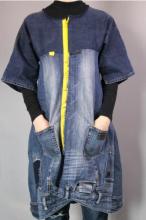
Quid provides jobs for vulnerable people, especially women, in a field for which Italy is renowned: fashion. Quid markets its ethical and sustainable clothing under the label Quid Project. The project sources the raw material from the Italian fashion and textile world, using production surpluses and end-of-series fabrics. It therefore combines social and environmental impact.
SECOND HAND COUNTS is a market survey on second-hand clothes in the EU. It aims to provide facts needed for decision making on second-hand clothes both in general and on a country by country basis for all EU countries plus the United Kingdom, Norway and Switzerland.