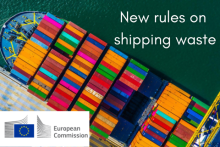
The revised Waste Shipment Regulationbecame effective on 21 May, facilitating shipments of waste for recycling in the EU and improving monitoring of exports of waste to third countries.
The Digital Waste Shipment System (DIWASS) has also been launched, and will cut red tape for businesses and authorities. Read all about it!
The Ellen MacArthur Foundation has issued a business statement to policymakers calling for coordinated policy action across finance, environment and industry portfolios.
These changes would enable governments to rebalance the economics of fashion in favour of circular business models. See what it calls for!
What would it take to turn resale and repair into a source of economic growth that uses fewer resources, produces fewer emissions and creates more local jobs?
That's the question at the heart of this new report. It demonstrates how a targeted mix of policy incentives could lift gross margins to 55% for resale and 41% for repair. It covers three policy shifts:
reducing VAT/sales tax on secondhand goods and on repair services
lowering labour taxes for jobs in resale and repair
Extended Producer Responsibility
The report focuses on existing levers that governments can pull, not new frameworks to invent. Together, they improve margins per unit, reduce labour costs and ensure producers pay more of the true costs of linear production, giving resale and repair the conditions they need to scale.
The new Directive on Empowering Consumers for the Green Transition will introduce stricter criteria governing sustainability marketing practices as from 27 September 2026.
This webinar will clarify the implications of these new anti-greenwashing provisions for moulded fibre products and outline strategies for remaining competitive while ensuring full compliance with the revised legislation.
This technical publication analyses why the EU-Mercosur agreement may reduce tariff friction but does not remove the evidentiary burden created by EU product, circularity, carbon, deforestation and supply chain rules.
It focuses on Brazilian suppliers, the Ecodesign for Sustainable Products Regulation, Digital Product Passport readiness, the Carbon Border Adjustment Mechanism, the EU Regulation on Deforestation-free Products, the Corporate Sustainability Due Diligence Directive and the need to convert operational reality into audit-grade, buyer-readable evidence for European procurement, compliance and board-level review.
Three EU Horizon Europe projects — CIRCOMOD, CircEUlar and CO2NSTRUCT — are hosting their joint final conference on circular economy pathways to net-zero. It will bring together researchers, policymakers and sustainability experts to explore how circular economy strategies can drive the EU's transition to net-zero.
The opening plenary session is freely accessible via livestream.
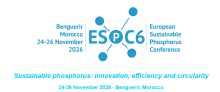
The European Sustainable Phosphorus Conference is the world’s leading event dedicated to sustainable phosphorus.
It brings together policymakers, industry, researchers and practitioners to explore European policy developments, practical implementation of phosphorus sustainability and global trends shaping the phosphorus value chain.
The Advanced Recycling Conference will bring together international recycling experts for collaboration and partnership across various value chains.
It will highlight how innovative technologies maximise the valorisation of complex waste streams, including mixed plastics, textiles and automotive materials.
The Close the Glass Loop initiative aims to achieve a 90% glass collection for recycling rate.
Its Annual Event 2026 brings together the entire glass packaging value chain to explore how Europe can sustain industrial-scale circularity while maintaining competitiveness and advancing decarbonisation goals.