Are you ready to make sustainability your business’ competitive edge? Have you wondered about the new EU green claims and sustainable products policies and how to apply them? Would you like to learn more about the EU Ecolabel?
Recycling Europe's flagship annual gathering is a central meeting point for the entire recycling value chain.
This year’s conference will focus on one central question: how do we deliver circularity in practice? Discussions will explore the policy, market and industrial conditions needed to turn Europe’s circular ambitions into measurable results across value chains.
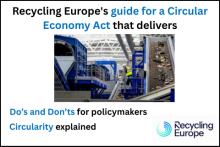
In this document, Recycling Europe outlines its “DOs and DON’Ts” for the upcoming CEA, presenting key policy recommendations that can stimulate demand for high-quality recycled materials, expand recycling capacity and identify measures that could, conversely, undermine the competitiveness of the recycling industry by restricting the recycled materials market or increasing administrative burdens.
Circular Change, a globally recognised think-tank, is celebrating its tenth anniversary.
It was founded in 2016 by Ladeja Godina Košir, currently Co-Chair of the ECESP, with a view to collaborative leadership and cross-border cooperation, strengthening international dialogue and advancing the circular transition.
Achievements include organising conferences geared to co-creation and systemic change, assuming a European leadership role by chairing the ECESP and gaining global recognition with a Circular Leadership Award nomination at the World Economic Forum in Davos. Circular Change has also contributed to national circular economy roadmaps in Serbia and Chile, advanced the concept of transition brokers and highlighted the need for circular diplomacy.
The Green Product Awards will host a full-day event comprising the Summit and the awards ceremony.
Find out about how requirements for communication, material selection, product design, repairability and packaging changing are changing and what that means in practice, then celebrate the Green Product Awards winners!
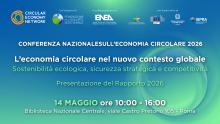
The Conference will serve as a platform for dialogue on national and European strategies with a view to the EU's Circular Economy Act, foster discussion among businesses, institutions, associations and research organisations, and present the 2026 Circular Economy Report.
During this project, ten European cities laid the foundations for a sustainable, just and productive transition towards a functioning circular economy, designing Integrated Action Plans for the circular economy.
This flipbook is the project's final output, containing results, recommendations and numerous good practices.
This is a flagship annual event and community platform dedicated to accelerating the green transition, climate neutrality and environmental resilience across the Mediterranean region.
It will host two of the ISE Mission's main annual gatherings: the MED Innovation Summit and the ISE Community of Practice.
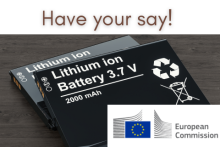
The European Commission has launched a public consultation on new rules setting out additional product exemptions from EU requirements on the removability and replaceability of portable batteries.
They are proposing to add six new product categories. Good idea, bad idea - tell them what you think by 26 May!
This webinar will explore how verified product data is shaping design decisions, market access and product selection in a more regulated and increasingly digital economy.