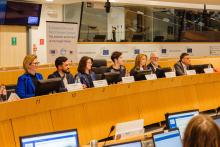
Our conference brought together EU institutions, civil society, academics, industry and young people to discuss all aspects of the circular economy, from legislation to social impact. Our new Coordination Group members shone as they spoke about the areas in which they are experts. Read about some of the major themes!
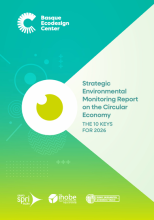
This is the fourth edition of the strategic environmental monitoring reports that the Basque Ecodesign Center produces based on the knowledge acquired through its monitoring system.
The report compiles the latest regulatory and market developments driving the transition towards a decarbonised, more circular economy and explores how they are relevant to the value chains in which the Basque Ecodesign Center’s partner companies operate.
It identifies new standards and recognised methodologies that are relevant to those chains and identifies ten key challenges for the circular economy for 2026, such as security of supply and self sufficiency of materials as keys to competitiveness and circularity in the new geopolitical context.
Adelphi and Ecopreneur.eu are hosting a free 1-hour webinar for SMEs delivering indoor cleaning services. The goal is to collect SME input to feed directly into the official JRC stakeholder meeting two days later on 30 April.
Hear about the proposed changes to the criteria changes, the EU industry's position, and share your views with the organisers who will pass them on to the European Commission.
The ECESP Annual Conference will provide a high-level platform to discuss the ambitions, scope and policy direction of the Circular Economy Act, situating it within the broader EU framework, investment needs and global developments.
It will be two days of talks, discussions and workshops. The networking village will shine a spotlight on interesting circular initiatives, and there will be plenty of opportunities for networking!
Registration for in-person participation is now closed, but most of the sessions will be livestreamed.
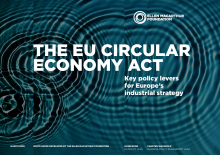
This is the Ellen McArthur Foundation's key policy recommendations for the Circular Economy Act.
They argue that by rapidly aligning regulatory requirements and fiscal incentives across the EU single market without further delay, the CEA can enable a European secondary raw materials market and circular business models to succeed, while harmonising environmental and industrial policy goals.
They propose three core policy levers:
Build a true EU single market where circular products and secondary materials can move freely.
Leverage price and demand signals to make upstream circular solutions the most accessible and affordable choice for buyers.
Treat the circular economy as a core industrial strategy to strengthen circular supply and value chains through industrial collaboration.
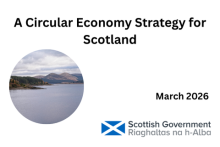
The strategy aims to make a robust and successful circular economy a central pillar in driving Scotland’s innovation and growth towards a sustainable future.
Published in March 2026, it sets out what Scotland aims to achieve by 2045. It focuses on sectors and products in order to optimise the impacts of individual materials, such as plastics, critical materials and chemicals, across the supply chain as a whole.
The goal is to make Scotland a net zero and nature-positive nation, helped by the significant progress in transitioning towards a circular economy with sustainable levels of material use. Scotland will have a thriving economy that meets societal needs and is based on circular economy principles, and will have reduced the negative global impact of its production and consumption.
Cities and regions across Europe are facing similar challenges - at different stages and in different contexts - when implementing the circular transition. Over the past year, CCRI communities of practice have brought practitioners together to openly share what works, what doesn’t, and where they get stuck.
This CCRI online workshop series builds directly on these insights, turning peer exchange into practical, hands-on sessions designed to help you move from ambition to concrete actions - no matter where you are in your transition.
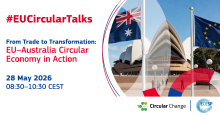
Why does the EU–Australia relationship matter more than ever?
Because this is no longer just about trade. It is about resilience, access to resources and the ability of like-minded partners to navigate a volatile world together.
This EU Circular Talk explored how the evolving EU-Australia partnership — shaped by trade negotiations, climate commitments and shifting geopolitics — is becoming a testing ground for the circular economy as a strategic framework.
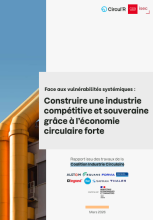
The Circular Industry Coalition, led by Circul’R and CEA ISEC with the support of the French Ministry of Economy and Finance, brings together nine major industrial companies to address the growing systemic risks facing European industry.
After a year of collective work, the coalition has published a report highlighting the limits of the linear model and positioning a strong circular economy as a strategic lever for competitiveness, resilience and industrial sovereignty.
The report provides a shared assessment of industrial vulnerabilities and an operational roadmap to accelerate circular transformation at scale.