This workshop is a unique opportunity to have a direct influence on the policies that will transform the sustainability of the plastics, packaging and bio-waste value chain.
Take part in this collaborative process and promote the shift towards a more efficient and greener circular economy.
This European Commission Staff Working Document covers the carbon-efficient design, material supply, construction and operation of buildings. It considers the supply and demand for materials, energy and built space.
Packaging uses large quantities of primary raw materials. Increasing quantities of packaging are generated in the EU while the levels of re-use, collection and recycling remain low.
See what the Packaging and Packaging Waste Regulation covers and aims to achieve.
This petition calls for a change to the current EU policy which allows imported plastic waste to count toward European recycling targets, creating a gap between reported progress and real circularity.
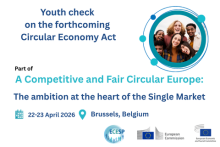
The Commission is asking young people for their views on the coming Circular Economy Act.
It's set to be adopted later this year, and aims to keep products and materials in use for as long as possible. This will reduce waste, resource consumption and our dependence on third countries.
There are various ways to engage: read all about them!
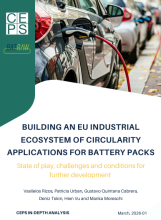
Electric vehicles are rapidly transforming the transportation landscape. Circularity solutions, namely recycling and second-life applications, are central to addressing environmental impacts and securing access to valuable materials in electric vehicle batteries (EVBs).
Consolidating lessons learnt from the BATRAW project, this report identifies three key enabling conditions for scaling up circularity applications for EVBs in the EU: (i) effective implementation of the EU policy framework underpinned by the Batteries Regulation; (ii) strengthened financial support for scaling up battery circularity applications; and (iii) further harmonisation of the standardisation landscape impacting EVB circularity.
The European Investment Bank and the European Commission's Directorate-General for the Environment are organising an event to mark the launch of their joint report on Transitioning to a circular economy: Closing the investment gap in Europe.
This webinar will explore the latest developments in the Ecodesign for Sustainable Products Regulation and what it means for the fashion, clothing and textile industry, especially SMEs.
Businesses are key drivers of regional transformation. Support from public authorities and cooperation with research institutions, local administrations and networks is key to overcoming barriers and unlocking the potential of the circular economy.
This publication shows how companies in rural regions can drive the transition towards a circular economy. Drawing on examples from German and European model regions, it highlights how local enterprises implement circular business models, what opportunities arise for regional value creation and resilience, and which policy and governance frameworks can foster this transformation.
The findings show that the circular economy is not only an ecological necessity but also a strategic pathway towards sustainable and resilient regional development.
The European Commission is seeking feedback on possible revisions to the criteria of the EU Taxonomy, the classification system for sustainable economic activities. The goal of the revision is to make the framework simpler and easier to use.