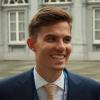
Neva Nahtigal is the Director of RREUSE. In addition to day-to-day management, she is involved in the organisation’s strategic development and leads its policy team. Neva worked internationally as a policy, research and communications consultant specialising in social and economic justice, sustainability and human rights. She then spent six years in the international office of a global civil society network focusing on improving working conditions in the garment industry before joining RREUSE in May 2023. She holds Masters degrees in Media Studies and Public Policy.
RREUSE is an international network representing social enterprises active in the field of re-use, repair and recycling. Drawing on the first-hand experience of its members, RREUSE's mission is to ensure that policies, innovative partnerships and the sharing of best practices promote and develop the role of social enterprises in the circular economy. RREUSE's vision for Europe is built around circular activities that foster social value and create locally inclusive jobs whilst supporting vulnerable individuals.
RREUSE has 31 members across 29 European countries and the USA.
The CSCP is a think and do tank that not only contributes to advancing the sustainable consumption and production (SCP) agenda through its think tank activities, but also implements innovative SCP projects and activities in the field as a do tank.
Michael Kuhndt is the Founder and Executive Director of the CSCP with more than 20 years' experience of international cooperation, development and sustainability.
Michael Kuhndt has managed programmes for many multinational companies, ministries, European and UN organisations in the fields of: strategy development for sustainable supply chains & circular economy, development/set up of a sustainable consumption approach, upscaling of sustainable business models, triple bottom line innovation, sustainable finance and policy strategies based on multiple stakeholders.
Laura Cutaia, researcher at ENEA, is an Environmental Engineer (1996) with a PhD in raw materials engineering (2002). Her main research topics are:
Industrial ecology and symbiosis,
Technology for raw and secondary materials treatment,
Resources management,
Life Cycle Assessment,
Environmental certification,
End of life management.
Laura Cutaia is responsible for making the most of resources at ENEA , where she is working on the circular economy and resource efficiency, industrial ecology and symbiosis, LCA, environmental certification schemes, the REACH regulation and sustainable industrial areas (more information).
Laura Cutaia is also president of SUN - Symbiosis Users Network (Italian network for industrial symbiosis) and president of UNI CT 057 on the circular economy that works with ISO TC 323 on the circular economy. UNI is the Italian body responsible for standardisation.
As an adviser for environmental and climate policy, Leon de Graaf particularly follows policies related to the circular economy, trade and climate, low-emission mobility, implementation of the Paris climate agreement (COP21) and the European emission trading system (EU ETS). He is also deputy manager of BusinessEurope's corporate Advisory and Support Group (ASGroup). Prior to joining BusinessEurope, Leon worked at the research consultancy Ecorys, focusing on renewable energy and international development issues, at DG COMP on energy and environmental subsidies in Europe, and at the Dutch Environmental Assessment Agency (PBL) on indirect ETS costs for energy-intensive industries. Leon has a MSc in environmental economics and climate change from the London School of Economics, and a BSc in business economics from the University of Groningen.
Following the business model of a sustainable repair shop, R.U.S.Z is a social business which started in 1998 as a work integration social enterprise for long-term unemployed persons.